
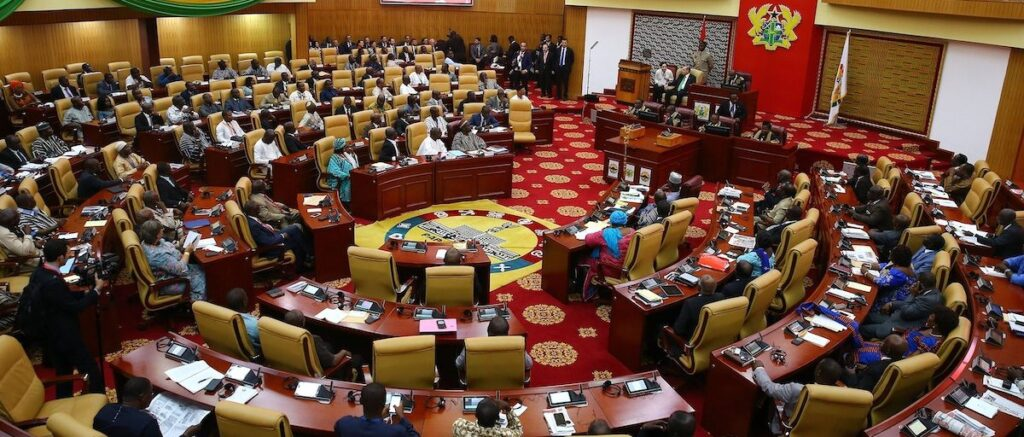
IEA Ghana: Backs Proposal to Bar MPs as Ministers
Summary
- The Institute of Economic Affairs (IEA) supports a proposal to prevent Members of Parliament (MPs) from simultaneously serving as ministers, deputy ministers, or regional ministers.
- This proposal, initially from the Constitution Review Committee chaired by Professor H. Kwasi Prempeh, was rejected by the government.
- The IEA argues that separating these roles would strengthen the separation of powers and improve Parliament's ability to hold the Executive accountable.
- The government maintained that the President should retain discretion in appointing ministers from within or outside Parliament.
- An 11-member Constitution Review Implementation Committee, chaired by Marietta Brew Appiah-Oppong, was inaugurated to translate accepted recommendations into constitutional amendments and legislation.
Advocacy for Legislative Independence
A meaningful separation of powers Ghana is indispensable for bolstering Parliament's autonomy and its capacity to effectively scrutinize the Executive.
The Institute of Economic Affairs (IEA), a prominent policy think tank in Ghana, has publicly affirmed its support for a significant constitutional reform aimed at enhancing the independence of the legislative branch. In a statement released on Wednesday, September 2, 2026, the IEA Ghana backed a proposal to bar Members of Parliament (MPs) from simultaneously holding ministerial, deputy ministerial, or regional ministerial positions. This endorsement underscores a broader push to strengthen the country's democratic institutions and improve governance.
The IEA's position aligns with a recommendation initially put forth by the Constitution Review Committee, which suggested that MPs should not be appointed to executive roles while retaining their parliamentary seats. This specific proposal, however, faced rejection from the government. Despite the government's decision, the IEA maintains that such a separation is crucial for fostering a more robust system of checks and balances within the Ghanaian political landscape.
Constitutional Review and Government's Stance
The recommendation to prevent MPs from serving as ministers originated from the Constitution Review Committee, a body established in 2025 by then-President John Dramani Mahama. Chaired by Professor H. Kwasi Prempeh, this committee was tasked with reviewing previous constitutional reform proposals, engaging with citizens, and ultimately recommending amendments to the 1992 Constitution. The committee presented its comprehensive report to the President in December 2025, outlining various suggested changes, including the contentious proposal regarding MPs ministerial appointments Ghana.
Strengthening Separation of Powers Ghana
The IEA's advocacy for this reform is rooted in its conviction that a meaningful separation of powers Ghana is indispensable for bolstering Parliament's autonomy and its capacity to effectively scrutinize the Executive. The think tank argues that the current arrangement, where a significant number of MPs also serve in ministerial capacities, inherently weakens Ghana parliamentary oversight. This is because some Members of Parliament may find their ability to provide robust scrutiny compromised by their dependence on presidential appointments for executive office.
The Institute emphasized that separating the membership of Parliament from ministerial office would empower lawmakers to fulfill their oversight responsibilities without the potential influence or perceived conflict of interest arising from executive appointments. This, they contend, would lead to a more independent and accountable legislature, ultimately benefiting democratic governance in the nation.
Implementation Committee's Role
Following the government's review of the Constitution Review Committee's report, an 11-member Constitution Review Implementation Committee was inaugurated on August 28, 2026. This committee, chaired by Presidential Legal Counsel and former Attorney-General Marietta Brew Appiah-Oppong, was established by Attorney-General and Minister for Justice Dr Dominic Ayine. Its primary responsibility is to translate the recommendations that were accepted by the government into concrete constitutional amendments, new legislation, and other practical measures.
While the specific proposal to bar MPs from ministerial roles was not among the accepted recommendations, the ongoing work of the Implementation Committee signifies the broader commitment to constitutional reform in Ghana. The IEA's continued support for the rejected proposal, however, keeps the conversation alive regarding the optimal structure for executive-legislative relations and the future of Ghana's democratic institutions.
Practical Implications
Lawyers advising on public law or governance in Ghana should monitor the ongoing constitutional review and implementation process. While this specific proposal to bar MPs from ministerial roles was rejected by the government, the IEA's continued advocacy highlights persistent concerns about executive-legislative balance, which could inform future reform efforts or legal challenges related to constitutional interpretation.
Source
How does this affect you?
Get an AI analysis of this article grounded in your jurisdictions, practice areas, and any policy documents you've uploaded to Wansom.
Finish Reading the Full Story and the Expert Analysis.
Wansom is AI and can make mistakes.