
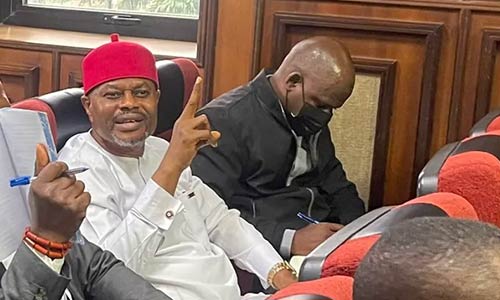
ICPC Witness: Geoffrey Nnaji Certificate Fraud Alleged, UNN/NYSC Disown Credentials
Summary
- An ICPC witness testified in a Federal High Court in Abuja regarding former Minister Geoffrey Nnaji's certificates.
- The University of Nigeria, Nsukka (UNN) and the National Youth Service Corps (NYSC) disowned certificates linked to Nnaji.
- The institutions stated that Geoffrey Nnaji failed to achieve the required grades for his academic records.
- Former Minister Geoffrey Nnaji is alleged to have received ₦29.5 million in salary.
- This testimony is part of an ongoing salary fraud trial against the ex-Minister.
Court Proceedings Reveal Certificate Discrepancies
Such a development highlights the rigorous scrutiny of academic and service credentials for public office holders in Nigeria, and the ICPC's active prosecution of cases involving alleged certificate forgery or misrepresentation.
During a recent session at the Federal High Court in Abuja, a witness for the Independent Corrupt Practices and Other Related Offences Commission (ICPC) presented testimony alleging significant irregularities concerning the academic and service credentials of former Minister of Innovation, Science and Technology, Geoffrey Nnaji. The witness, identified as SP Yakubu, informed the court on Monday that both the University of Nigeria, Nsukka (UNN) and the National Youth Service Corps (NYSC) have officially disavowed certificates purportedly belonging to the ex-Minister.
SP Yakubu's testimony detailed that the institutions in question explicitly stated that Mr. Nnaji's academic records did not meet the required grading standards. This assertion forms a critical part of the ongoing legal proceedings, which also involve allegations that the former minister improperly received a substantial salary. Specifically, the court heard that Geoffrey Nnaji was paid a total of ₦29.5 million in salary during his tenure.
Allegations of Certificate Fraud and Public Service Integrity
The Independent Corrupt Practices and Other Related Offences Commission (ICPC) is actively prosecuting this case, which centers on the alleged certificate fraud involving Geoffrey Nnaji. The commission's witness provided crucial evidence in the Federal High Court Abuja, highlighting the rigorous scrutiny applied to the academic and service records of individuals holding public office. The disowning of Nnaji's certificates by both UNN and NYSC underscores the gravity of the accusations.
This case forms part of a broader ex-Minister Nnaji salary fraud trial, where the validity of his foundational qualifications is directly linked to the legitimacy of his public service earnings. The ICPC's involvement signifies a commitment to upholding integrity within government ranks and ensuring that public officials possess verifiable and legitimate credentials. The proceedings aim to establish whether the former minister's academic records were indeed fraudulent and if his receipt of ₦29.5 million in salary was therefore unlawful.
Implications for Public Office and Accountability
The revelations from the ICPC witness regarding Geoffrey Nnaji's academic records carry significant implications for public accountability and the standards expected of government officials. The assertion that UNN and NYSC disowned Nnaji's certificates due to a failure to meet required grades brings into sharp focus the necessity for thorough verification of all academic and service credentials presented by those seeking or holding public trust. This Federal High Court Abuja certificate case serves as a potent reminder of the legal consequences associated with misrepresentation of qualifications.
Such a development highlights the rigorous scrutiny of academic and service credentials for public office holders in Nigeria, and the ICPC's active prosecution of cases involving alleged certificate forgery or misrepresentation. The outcome of this trial could reinforce the importance of integrity in public service and send a clear message about the severe legal repercussions for individuals found to have falsified their academic records or service documents to attain positions of power and financial benefit.
Practical Implications
This development highlights the rigorous scrutiny of academic and service credentials for public office holders in Nigeria, and the ICPC's active prosecution of cases involving alleged certificate forgery or misrepresentation. Lawyers advising public officials or those involved in public service appointments should note the potential for detailed verification and the severe legal consequences of discrepancies.
Source
How does this affect you?
Get an AI analysis of this article grounded in your jurisdictions, practice areas, and any policy documents you've uploaded to Wansom.
Finish Reading the Full Story and the Expert Analysis.
Wansom is AI and can make mistakes.