
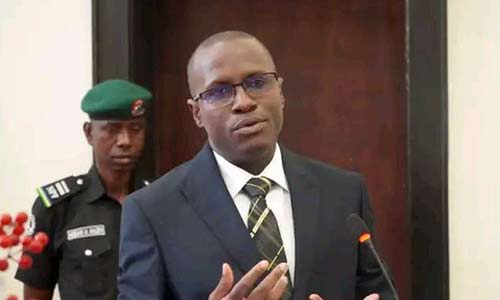
ICPC: Recovers ₦5.3 Billion From LG Accounts Across 7 States, FCT
Summary
- The Independent Corrupt Practices and Other Related Offences Commission (ICPC) has recovered over ₦5.3 billion from local government accounts.
- These funds were retrieved from local government entities in seven states and the Federal Capital Territory (FCT).
- The ICPC's actions are aimed at strengthening financial accountability and preventing the mismanagement of public funds at the grassroots.
- The commission has launched a pilot initiative to publish the financial details of all 774 local government councils online to enhance transparency, with plans for nationwide rollout.
Recent Enforcement Actions
The Independent Corrupt Practices and Other Related Offences Commission (ICPC) has recently undertaken significant enforcement actions, resulting in the recovery of over ₦5.3 billion from various local government accounts.
The Independent Corrupt Practices and Other Related Offences Commission (ICPC) has recently undertaken significant enforcement actions, resulting in the recovery of over ₦5.3 billion from various local government accounts. These substantial financial recoveries were executed across seven distinct states within Nigeria, in addition to the Federal Capital Territory (FCT). This decisive intervention by the ICPC underscores a heightened focus on combating financial irregularities and ensuring fiscal integrity at the foundational levels of governance. The commission's efforts are part of a broader strategy to address systemic issues that contribute to the misuse of public resources.
These recovered funds represent a tangible outcome of the ICPC's commitment to strengthening financial accountability within local government entities. The operation specifically targeted accounts where discrepancies or evidence of mismanagement were identified, reflecting a proactive approach to safeguarding public assets. The scale of the ₦5.3 billion ICPC recovery highlights the prevalence of financial challenges at the grassroots and the necessity for robust oversight mechanisms to protect taxpayer money.
Driving Financial Accountability and Responsibility
The primary impetus behind the ICPC's recent recoveries and its ongoing investigative activities is a resolute commitment to bolstering financial accountability frameworks across Nigeria's local government system. The commission explicitly aims to prevent the mismanagement of public funds, which are critically earmarked for community development projects, essential public services, and the overall welfare of citizens at the grassroots level. This intensified focus on fiscal discipline is indispensable for ensuring that resources are not diverted but rather channeled effectively to their intended beneficiaries.
In articulating its operational philosophy, the ICPC has emphasized that "Autonomy Brings Responsibility," a principle that posits increased self-governance for local government entities must be inherently coupled with a heightened sense of diligence and transparency in financial administration. This perspective frames the recent recoveries not merely as punitive measures for past infractions but as integral components of a strategic, nationwide push to cultivate a pervasive culture of transparency and prudent spending across all 774 local councils. The Independent Corrupt Practices Commission Nigeria's actions serve as an unequivocal signal regarding the stringent expectations for financial conduct at this crucial administrative tier, particularly concerning ICPC local government finances.
Enhancing Transparency Through Digital Disclosure
Looking towards a future of enhanced public oversight, the Independent Corrupt Practices Commission has launched a pilot initiative to publish financial details for all 774 local government councils online. This groundbreaking move is specifically engineered to provide unprecedented public access to granular information regarding local government finances, thereby fostering significantly greater external scrutiny and substantially diminishing opportunities for corruption and illicit financial activities. The online platform, which began its pilot in Nasarawa State, will empower citizens, civil society organizations, and other stakeholders to meticulously examine how public funds are allocated, disbursed, and ultimately utilized by their local administrations, with plans for nationwide rollout.
This digital disclosure represents a pivotal advancement towards achieving comprehensive Nigerian local government financial transparency. By systematically making financial records publicly accessible, the ICPC aims to establish a powerful deterrent against future instances of public funds mismanagement and to actively promote a more open, ethical, and accountable system of governance at the local level. Such progressive measures are not only vital for rebuilding and sustaining public trust but also for ensuring that the autonomy granted to local governments genuinely translates into tangible, positive impacts and improved service delivery for the communities they serve. This initiative directly addresses concerns about ICPC public funds mismanagement by creating a public audit trail.
Practical Implications
Lawyers advising local government entities or businesses transacting with them must be aware of heightened financial scrutiny and potential investigations by the ICPC. Compliance officers should prepare for increased transparency requirements and potential audits as the ICPC plans to publish council finances online.
Source
How does this affect you?
Get an AI analysis of this article grounded in your jurisdictions, practice areas, and any policy documents you've uploaded to Wansom.
Finish Reading the Full Story and the Expert Analysis.
Get the latest legal & regulatory intelligence in Nigeria
Wansom is AI and can make mistakes.