
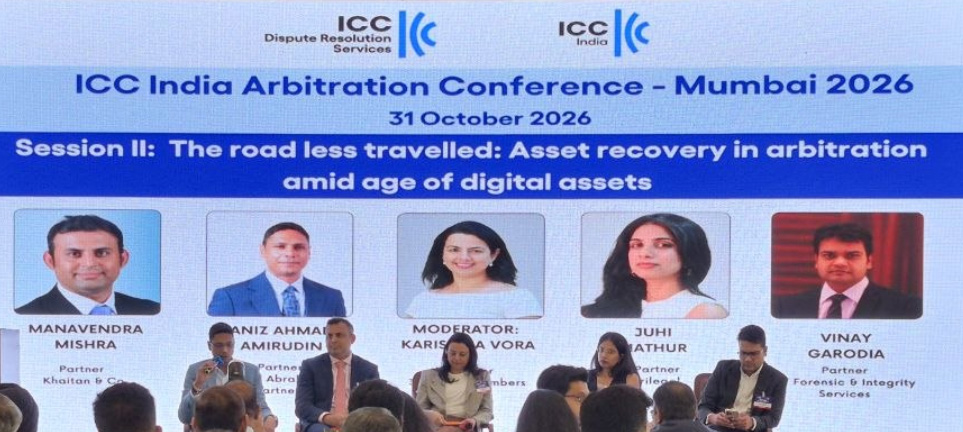
ICC India Conference: Digital Asset Recovery Arbitration Challenges in India
Summary
- The ICC India Arbitration Conference 2026 featured a panel on digital asset recovery in arbitration.
- Key topics included identifying beneficial owners, tracing cryptocurrency across jurisdictions, and securing timely disclosure.
- Discussions also covered obtaining effective freezing orders and navigating parallel legal proceedings for digital assets.
- The session highlighted the unique challenges of digital asset recovery arbitration in India and globally.
- Legal professionals must understand these complexities to advise clients on digital asset disputes.
Key Discussions at ICC India Arbitration Conference 2026
Lawyers and compliance officers should monitor developments from discussions like those at the ICC India Arbitration Conference 2026 to understand the evolving legal strategies and challenges in tracing, freezing, and recovering digital assets within arbitration proceedings, particularly concerning cross-jurisdictional issues and beneficial ownership identification.
The ICC India Arbitration Conference 2026 recently hosted a significant panel discussion titled "The Road Less Travelled: Asset Recovery in Arbitration Amid the Age of Digital Assets." This session brought together experts to explore the intricate challenges and potential remedies associated with recovering digital assets within arbitration proceedings. The discussion underscored the growing complexity of disputes involving cryptocurrencies and other digital holdings, particularly in a globalized legal landscape.
The panel's agenda was comprehensive, addressing several critical aspects of digital asset recovery. Key topics included the often-difficult task of identifying the beneficial owner of digital assets, which is a foundational step in any recovery effort. Experts also delved into the technical and legal hurdles involved in tracing cryptocurrency across various wallets and multiple jurisdictions, highlighting the cross-border nature of these assets.
Further points of focus for the panelists encompassed strategies for securing timely disclosure of information pertinent to digital assets, a crucial element for effective asset identification and recovery. The discussion also covered the process of obtaining effective freezing orders specifically tailored for digital assets, which presents unique challenges compared to traditional assets. Finally, the session addressed the complexities of navigating parallel legal proceedings that frequently arise in multi-jurisdictional digital asset disputes, offering insights into managing these concurrent actions.
Challenges in Digital Asset Recovery Arbitration India
The discussions at the ICC India Arbitration Conference 2026 shed light on the significant hurdles faced in digital asset recovery arbitration, particularly within the Indian legal framework. Identifying the true beneficial owner of digital assets often proves challenging due to the pseudonymous nature of many blockchain transactions and the use of various custodial and non-custodial solutions. This anonymity complicates the process of establishing a clear chain of ownership necessary for legal claims.
Tracing cryptocurrency wallets across different platforms and international borders presents another formidable obstacle. The decentralized and global nature of digital assets means that a single transaction can involve multiple jurisdictions, making traditional asset tracing methods less effective. This necessitates innovative approaches and international cooperation to follow the digital trail. The panel emphasized that effective freezing digital assets India requires a robust understanding of both blockchain technology and the specific legal instruments available to enforce such orders across diverse digital platforms.
Legal Tools and Procedural Considerations
A central theme of the panel was the critical importance of securing timely disclosure in digital asset disputes. Without adequate and prompt disclosure of relevant information, such as wallet addresses, transaction histories, and exchange records, the ability to effectively trace and recover assets is severely hampered. Arbitral tribunals and national courts are increasingly grappling with how to compel such disclosures from reluctant parties or third-party service providers.
Obtaining effective freezing orders for digital assets requires careful consideration of the asset's nature and location. Unlike physical assets or bank accounts, digital assets can be moved rapidly and across borders, making the enforcement of freezing orders complex. The panel explored various legal remedies and strategies for implementing these orders to prevent the dissipation of assets. Furthermore, the navigation of parallel legal proceedings, which often involve both civil claims and potential criminal investigations, adds another layer of complexity to digital asset recovery arbitration, demanding coordinated legal strategies to avoid conflicting judgments and ensure efficient resolution.
Why It Matters for Legal Professionals
The insights shared at the ICC India Arbitration Conference 2026 are highly pertinent for legal practitioners and compliance officers operating in the digital asset space. The evolving landscape of digital asset recovery arbitration India demands a sophisticated understanding of both technological intricacies and cross-jurisdictional legal principles. The discussions highlighted that the ability to effectively trace, freeze, and recover digital assets hinges on a proactive approach to identifying beneficial owners, leveraging disclosure mechanisms, and executing robust freezing orders.
Lawyers and compliance officers should monitor developments from discussions like those at the ICC India Arbitration Conference 2026 to understand the evolving legal strategies and challenges in tracing, freezing, and recovering digital assets within arbitration proceedings, particularly concerning cross-jurisdictional issues and beneficial ownership identification. This insight is critical for advising clients on potential exposures and effective remedies in disputes involving digital assets, ensuring they are equipped to navigate the complexities of this rapidly developing area of law.
Practical Implications
Lawyers and compliance officers should monitor developments from discussions like the ICC India Arbitration Conference 2026 to understand the evolving legal strategies and challenges in tracing, freezing, and recovering digital assets within arbitration proceedings, particularly concerning cross-jurisdictional issues and beneficial ownership identification. This insight is critical for advising clients on potential exposures and effective remedies in disputes involving digital assets.
Source
Source: Original reporting via SCC Times
How does this affect you?
Get an AI analysis of this article grounded in your jurisdictions, practice areas, and any policy documents you've uploaded to Wansom.
Wansom is AI and can make mistakes.