
MP High Court: Sons Have No Ancestral Property Right During Father's Lifetime
Summary
- The Madhya Pradesh High Court ruled that sons born after 1956 have no birthright claim to ancestral property during their father's lifetime.
- Land a father receives in partition from his own father is classified as his self-acquired property, not coparcenary property.
- The ruling, in Prembai and Others vs Ramswaroop and Others, dismissed an appeal by a wife and her sons seeking to prevent the father from selling land.
- The court relied on Section 4 of the Hindu Succession Act, 1956, and the precedent set in Uttam v. Saubhag Singh.
- This decision clarifies a father's absolute right to alienate such self-acquired property without the consent of his sons during his lifetime.
The High Court's Ruling
The court's decision underscores that land acquired by a father through partition from his own father is considered his self-acquired property, over which his sons have no birthright claim during his lifetime.
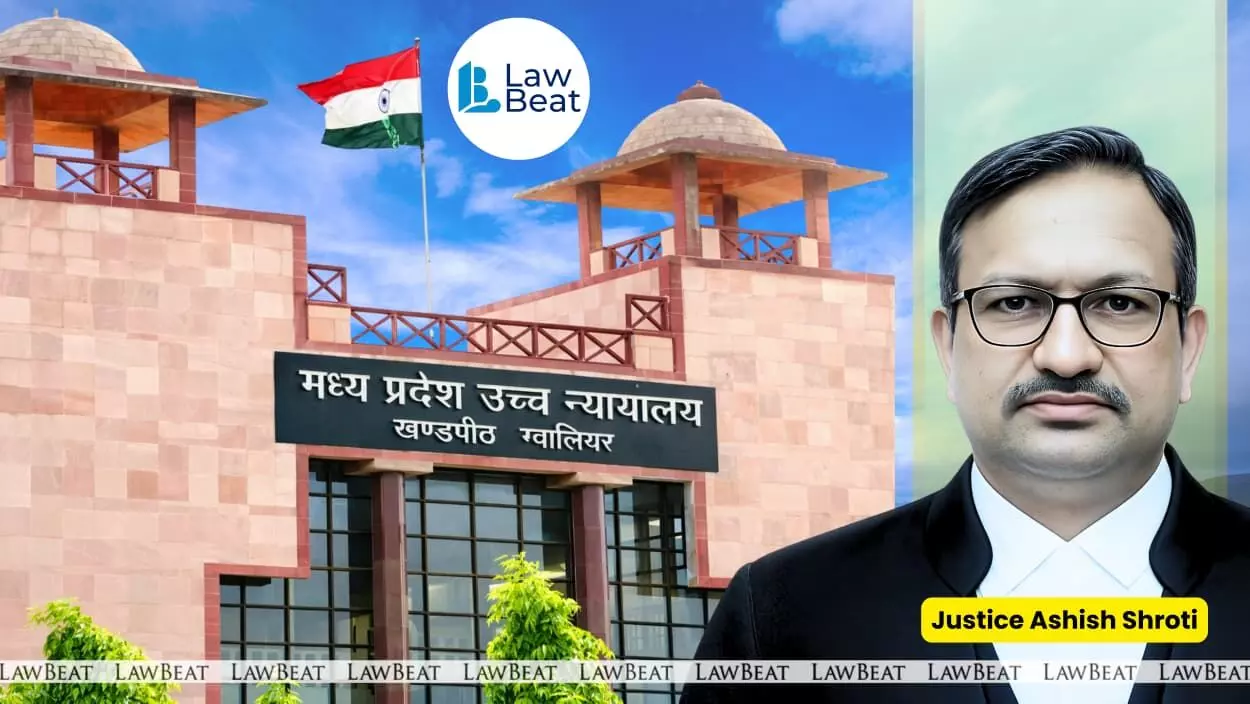
The Madhya Pradesh High Court, sitting at Gwalior, recently affirmed that sons born after the enactment of the Hindu Succession Act of 1956 possess no inherent birthright in ancestral property during their father's lifetime. This significant pronouncement came in a judgment delivered by Justice Ashish Shroti on October 26, 2026, in the case of Prembai and Others vs Ramswaroop and Others. The court specifically held that any land a father obtains through partition from his own father is to be considered his self-acquired property, thereby precluding his family, including his wife and sons, from asserting a claim over it during his lifetime.
The ruling emerged from a second appeal filed by Prembai and her two sons, who sought to prevent Ramswaroop, the husband and father, from selling a 5.908-hectare parcel of land spread across 13 survey numbers in village Baskhedi, Guna district. The plaintiffs initiated a civil suit for a declaration of title, possession, and a permanent injunction, alleging that Ramswaroop had threatened to sell the land on July 21, 2010, without providing them any share. They contended that because the property was ancestral, they held a birthright interest, which should prevent its sale. While the litigation was ongoing, Ramswaroop proceeded to sell a portion of the land to a third party on April 20, 2011, prompting the plaintiffs to amend their complaint to include the buyer and seek to nullify the sale deed.
Legal Framework and Precedent
The High Court's decision is rooted in the provisions of the Hindu Succession Act, 1956, particularly Section 4, which fundamentally alters and overrides prior Hindu law and customs concerning inheritance. This legislative change abolished the traditional concept of a birthright in ancestral property for sons born after its commencement. The court also referenced the Supreme Court-affirmed precedent established in Uttam v. Saubhag Singh, which reinforces the principle that the theory of birthright in property no longer exists after the 1956 Act came into force, and a son's share in property typically materializes only upon the father's demise.
Justice Shroti clarified that a wife, in this context, does not fall under the category of a coparcener, thereby denying Prembai any claim based on coparcenary property rights. The court explained that when an ancestor passes away after the Hindu Succession Act, 1956, a notional partition is deemed to occur immediately before their death. This legal fiction transforms the property from joint family property into holdings by heirs as tenants-in-common, further solidifying the father's right to sell land that is considered his self-acquired property in India.
The Court's Reasoning and Dismissal
In its analysis, the Madhya Pradesh High Court meticulously examined the plaintiffs' own pleadings, which explicitly stated that Ramswaroop had acquired the disputed land through partition from his own father. This crucial detail led the court to conclude that the property, upon partition, became Ramswaroop's self-acquired property. Consequently, during his lifetime, his sons could not assert any claim or share in it. The court's decision effectively upheld the findings of the lower courts—the Fourth Civil Judge Class-I, Guna, which dismissed the suit on May 17, 2012, relying on Chandrakanta v. Ashok Kumar, and the First Additional District Judge, Guna, which affirmed this decision on May 16, 2015.
While the appellants' advocate, Ashish Shrivastava, conceded that the family might not claim a share during the father's lifetime, he argued that the father should not be permitted to sell the land in a manner that would defeat their future inheritance rights. However, the High Court ultimately dismissed the appeal, concluding that it was "
Practical Implications
Lawyers advising on property disputes, inheritance, or family law in India, particularly Madhya Pradesh, must note this ruling: land received by a father in partition is his self-acquired property, and sons born after 1956 have no birthright claim to it during the father's lifetime. This clarifies the father's absolute right to alienate such property, impacting strategies for property division, sales, and inheritance planning.
Source
Source: Original reporting via Live Law
How does this affect you?
Get an AI analysis of this article grounded in your jurisdictions, practice areas, and any policy documents you've uploaded to Wansom.
Wansom is AI and can make mistakes.