
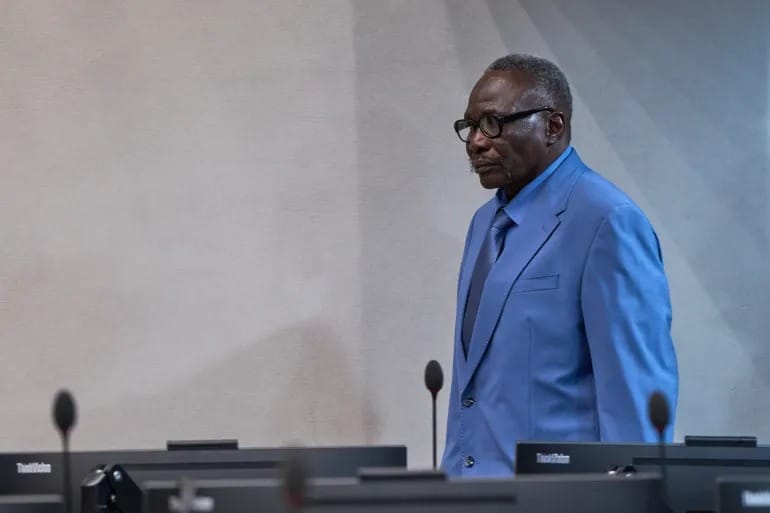
ICC: Ali Kushayb Victim Reparations Hearing Scheduled
Summary
- The International Criminal Court will hold a public hearing on September 8 to consider reparations for victims of Ali Kushayb's crimes.
- Ali Kushayb, a former Janjaweed militia leader, was sentenced to 20 years in prison on December 9, 2025, following his conviction on October 6, 2025, for 27 counts of war crimes and crimes against humanity in Darfur.
- The hearing will involve arguments from victims' representatives, the prosecution, the ICC Trust Fund for Victims, and the defense, with no final reparations order expected at this session.
- Kushayb voluntarily surrendered to Central African Republic authorities on June 9, 2020, before being transferred to the ICC.
- The ICC's system allows victims to seek reparations for harm suffered once a responsible individual is convicted.
Upcoming Reparations Hearing
Lawyers advising clients on international justice matters or representing victims of war crimes should monitor this Kushayb compensation hearing for insights into the ICC's approach to determining and awarding compensation, as it will offer valuable precedents for future cases involving Darfur war crimes compensation and other international crimes.
The International Criminal Court (ICC) has announced a significant upcoming public hearing focused on victim reparations in the case against Ali Muhammad Ali Abd-Al-Rahman, widely known as Ali Kushayb. This crucial session, scheduled for September 8, will convene the First Trial Chamber to address the compensation claims of those who suffered from the crimes for which Kushayb was convicted. The court's statement indicated that the purpose of this particular hearing is to receive arguments concerning reparations, setting the stage for judicial deliberations that will follow.
During the September 8 proceedings, various parties are expected to present their arguments. These include the Joint Legal Representatives for the victims, the Prosecution, the ICC Trust Fund for Victims, the Registry of the Court, and the Defense team. Additionally, Amici Curiae (friends of the court) will participate, and there is a possibility that Sudanese authorities may also be involved. It is important to note that while this hearing is a vital step in the reparations process, the court does not anticipate issuing a final order for compensation during this specific session.
Background of the Kushayb Case
Ali Kushayb, identified as a former leader of the Janjaweed militia, was convicted by the International Criminal Court on October 6, 2025, and sentenced on December 9, 2025. He received a 20-year prison sentence after being found guilty on 27 counts, encompassing both war crimes and crimes against humanity. These grave offenses were committed between August 2003 and April 2004 in various locations within Darfur, including Kutum, Bindisi, Mukjar, and Deleig.
The conviction stemmed from Kushayb's role in orchestrating and executing systematic attacks against civilian populations across multiple regions of Darfur. His surrender was voluntary, occurring on June 9, 2020, when he presented himself to authorities in the Central African Republic, subsequently leading to his transfer into the custody of the International Criminal Court.
The ICC's Reparations Framework
The International Criminal Court's framework explicitly allows victims of crimes to seek reparations for the harm they have endured, provided that the individual responsible for those crimes has been convicted. This mechanism underscores the ICC's commitment not only to prosecuting perpetrators but also to addressing the suffering of those affected by international atrocities. The upcoming ICC Ali Kushayb victim reparations hearing is a direct application of this fundamental principle, aiming to determine appropriate forms of redress for the extensive damage caused.
This development highlights the ongoing process for victim reparations in international criminal law, particularly within the ICC framework. The involvement of the ICC Trust Fund for Victims, alongside other key stakeholders, emphasizes the comprehensive approach taken to ensure that victims' rights to compensation are upheld. Lawyers advising clients on international justice matters or representing victims of war crimes should monitor this Kushayb compensation hearing for insights into the ICC's approach to determining and awarding compensation, as it will offer valuable precedents for future cases involving Darfur war crimes compensation and other international crimes.
Practical Implications
This development highlights the ongoing process for victim reparations in international criminal law, particularly within the ICC framework. Lawyers advising clients on international justice matters or representing victims of war crimes should monitor this hearing for insights into the ICC's approach to determining and awarding compensation.
Source
How does this affect you?
Get an AI analysis of this article grounded in your jurisdictions, practice areas, and any policy documents you've uploaded to Wansom.
Finish Reading the Full Story and the Expert Analysis.
Wansom is AI and can make mistakes.