
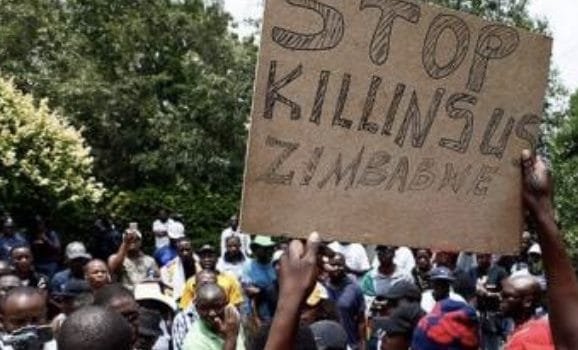
Human Rights Report August 2026
Summary
- A human rights report for August 2026 documented 137 violations affecting 1,151 people in Zimbabwe.
- Violations included restrictions on freedom of expression and assembly, unjustified arrests, and denial of social services.
- ZANU PF members, local authorities, government officials, traditional leaders, and the Zimbabwe Republic Police were identified as primary perpetrators.
- The report highlighted concerns regarding the abuse of customary authority by traditional leaders and human rights issues during vendor removals.
- Manicaland province recorded the highest number of documented human rights violations with 25 incidents.
Key Findings from Zimbabwe's August 2026 Human Rights Report
The findings from the Zimbabwe August 2026 human rights report underscore an urgent imperative to bolster accountability mechanisms, ensure all duty-bearers operate strictly within constitutional parameters, and prioritize the rights, dignity, and protection of citizens at the core of governance and public action.
A comprehensive human rights report for August 2026 in Zimbabwe has documented 137 distinct violations, impacting a total of 1,151 individuals across the nation. These incidents are not isolated occurrences but rather indicative of persistent patterns of abuse, discrimination, and coercion, highlighting systemic failures by duty-bearers and other actors to uphold fundamental rights and human dignity. Among those affected, 626 were male, 525 were female, and 10 individuals identified as persons with disabilities, all experiencing restrictions on their freedoms and access to essential rights.
The documented violations spanned a wide spectrum, including the denial of social services, significant restrictions on freedom of expression and assembly, unjustified arrests and detention, forced displacement, violations of personal security, and various forms of discrimination. These abuses frequently occurred in contexts influenced by political, institutional, or personal interests, underscoring the complex challenges to human rights protection within the country.
Identifying Perpetrators and Regional Hotspots
The profile of perpetrators remains a critical concern, with members of the ruling ZANU PF party accounting for the largest share at 30.85% of documented incidents. Following closely were local authorities and government officials, each responsible for 14.95% of the violations. Traditional leaders were implicated in 14.02% of cases, while members of the Zimbabwe Republic Police (ZRP) were responsible for 11.21% of the human rights violations Zimbabwe experienced during the month. Other perpetrators included state security agents (3.74%), school authorities (1.87%), and artisanal miners (0.94%), with 7.47% of cases lacking a clear institutional or organizational link for the perpetrators.
Geographically, Manicaland province recorded the highest number of violations with 25 incidents. Harare followed with 20, Mashonaland Central with 19, and Mashonaland West with 16. Masvingo and Midlands provinces each registered 14 violations, while Mashonaland East had 11, Matabeleland South 8, Bulawayo 6, and Matabeleland North 4, illustrating a widespread distribution of human rights challenges across the country.
Systemic Concerns: Traditional Authority and Vendor Rights
The Zimbabwe Peace Project's August 2026 human rights report, specifically in its section titled 'Ten Steps Backwards,' draws attention to two particularly concerning issues that demonstrate how unchecked authority can erode fundamental rights. The first involves traditional leadership and the abuse or politicisation of customary authority, highlighting instances of Zimbabwe traditional leaders customary authority abuse. This practice directly impacts citizens' dignity, freedoms, livelihoods, and access to justice when not guided by constitutional principles.
The second critical issue examined is the protection of dignity and livelihoods during the removal of vendors from undesignated trading spaces, touching upon Zimbabwe vendor removal human rights. Both scenarios exemplify how the exercise of authority, when not adequately constrained by constitutional principles, can have profound and detrimental effects on the populace, undermining their basic rights and economic stability.
A Call for Accountability and Constitutional Adherence
The overarching message from the August 2026 findings is an urgent call to strengthen accountability mechanisms across all levels of governance. The report emphasizes the imperative for all duty-bearers to operate strictly within constitutional limits, thereby safeguarding the rights and dignity of every citizen. This includes addressing the documented patterns of restrictions on freedom of expression and assembly, as well as other forms of abuse.
Ultimately, the report advocates for a governance framework and public action that places the rights, dignity, and protection of citizens at its absolute core. The recurring nature of these violations underscores the critical need for sustained efforts to ensure constitutional compliance and prevent further erosion of human rights in Zimbabwe.
Practical Implications
Lawyers should note the documented patterns of human rights violations by state and non-state actors in Zimbabwe, particularly concerning freedom of expression, assembly, and the treatment of vendors, as these may inform litigation strategies, client advisory on risk exposure, or advocacy efforts regarding constitutional compliance.
Source
How does this affect you?
Get an AI analysis of this article grounded in your jurisdictions, practice areas, and any policy documents you've uploaded to Wansom.
Finish Reading the Full Story and the Expert Analysis.
Get the latest legal & regulatory intelligence in Zimbabwe
Wansom is AI and can make mistakes.