
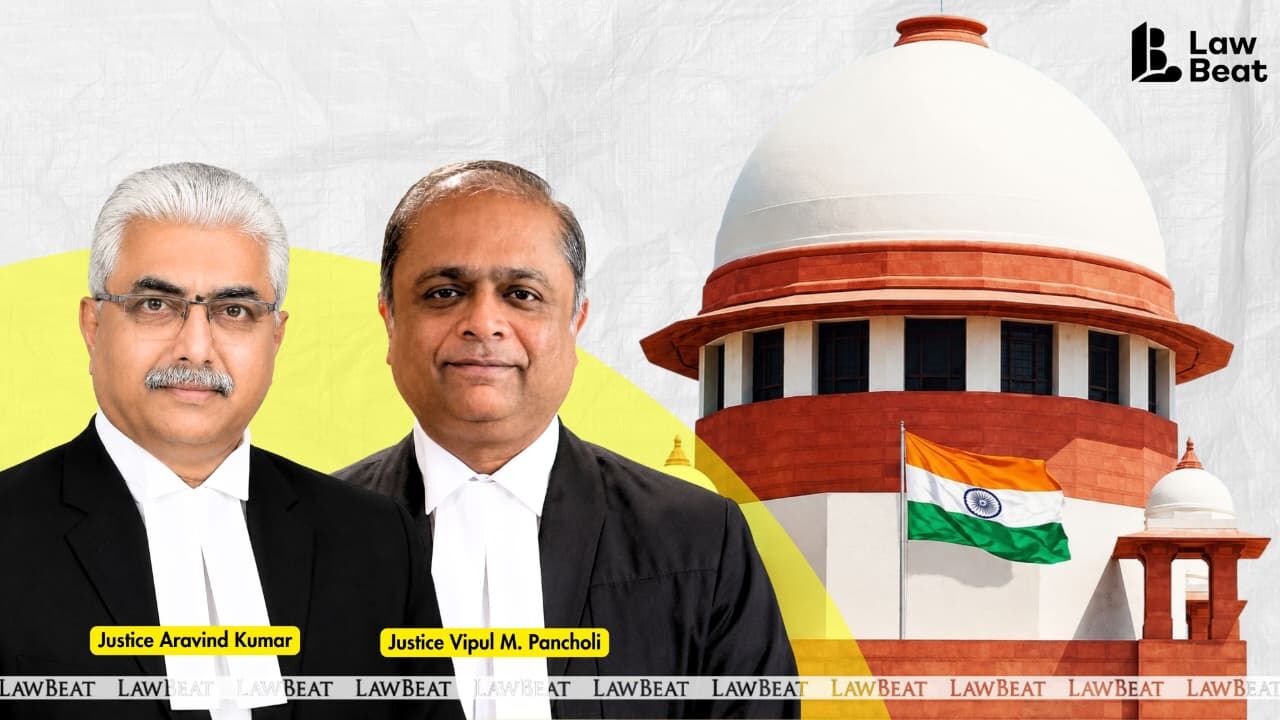
Hindu Religious Endowments Act Not Applicable to Mixed Hindu-Christian Trust: Supreme Court
What Happened
Home / Top Stories / Supreme Court Judgments Hindu Religious Endowments Act Not Applicable to Mixed Hindu-Christian Trust: Supreme Court X Supreme Court appoints receiver to manage disputed Trust. Supreme Court held the Hindu Religious Endowments Act does not apply to a Trust comprising Hindus and Christians, directing civil court oversight under Section 92 CPC. The Supreme Court has held that the Hindu Religious Endowments Act is applicable only to Hindu Religious and Charitable Trusts and its provisions cannot be applied to a Trust comprising both Hindus and Christians. A Bench of Justices Aravind Kumar and Vipul M Pancholi made the observation while dealing with a dispute concerning the management of the Virudhunagar, Thirumangalam, Palayampatti, Kovilan Kulam and Periyakarisalkulam five villages of Sriman Narayana Madam, Panikar Community of Paripalana Manging Trust. The Bench appointed Justice Ananthi, former Judge of the Madras High Court, as receiver to administer, manage and preserve the Trust and its properties until a duly constituted body is elected under the supervision of the jurisdictional civil court. The dispute over Trust’s management The dispute arose after the tenure of the last trustees, including the appellants in the case, ended in August 2021, but fresh elections were not conducted. The Trust was originally named “Virudhunagar, Thirumangalam, Palayalapatti, Kovilan Kulam, Periyakarisalkulam Hindu, Christian Panikar Community Trust”. Following an order dated January 11, 2017, its name was changed to “Virudhunagar, Thirumangalam, Palayampatti, KovilanKulam, Periyakarisalkulam five villages of Sriman Narayana Madam, Panikar Community of Paripalana Manging Trust”. The management of the Trust is governed by a decree passed in 1946. Under the decree, six managers, which included three from the Hindu Panikkar community and three from the Christian Panikkar community, were empowered to manage the Trust’s properties and the income arising from them for a period of five years. The decree further provided that the first committee of managers would hold office for five years, after which fresh elections would be conducted every five years. The outgoing committee of managers was responsible for conducting the subsequent elections. However, when the five-year tenure of the existing committee ended in 2021, the committee did not conduct fresh elections. R Bhagavath Sing and P Saravanan, members of the Hindu and Christian Panikars communities, subsequently filed a suit in 2023 against the trustees, including the appellants. They sought a direction to convene a General Body Meeting to elect new administrators to manage the Trust’s properties and also sought appointment of a court commissioner to facilitate the election process. Madras High Court order The Madras High Court, in an order dated December 5, 2025, passed on a writ petition, appointed an Election Commissioner and directed that elections to the Trust be conducted in accordance with the 1946 decree. The matter then reached the Supreme Court. The Supreme Court said the 1946 decree itself provided the answer to the disputes concerning the management of the Trust. “The decree is a complete answer to all the questions raised not only in these appeals but also to all the disputes. We say so for the simple reason that even the parties to the scheme suit, which resulted in decree to be passed in wayback in the year 1946, were ad idem as to how to workout the future disputes,” the Bench said. Court noted that the parties had agreed that if there was any difficulty in implementing the scheme, any member of the community, whether Christian or Hindu, could approach the court for suitable directions. Why did Supreme Court reject the Hindu Religious Endowments Act argument? The appellants’ counsel argued that the provisions of the Hindu Religious Endowments Act would apply to the Trust. The Supreme Court rejected the contention, holding that Section 3 of the Act makes it cle
Practical Implications
This ruling clarifies the jurisdictional scope of the Hindu Religious Endowments Act, confirming it does not apply to trusts with mixed Hindu-Christian beneficiaries. Lawyers advising or managing such multi-religious trusts must ensure they are operating under the correct legal framework, relying on the trust's governing instruments or general civil law (e.g., Section 92 CPC) for management and dispute resolution, rather than the specific Hindu Endowments Act. This impacts compliance and strategic advice for charitable entities with diverse religious compositions.
Source
Source: Original reporting via LawBeat
How does this affect you?
Get an AI analysis of this article grounded in your jurisdictions, practice areas, and any policy documents you've uploaded to Wansom.
Finish Reading the Full Story and the Expert Analysis.
Get the latest legal & regulatory intelligence in India
Wansom is AI and can make mistakes.