
Kenya High Court: Retired Presidents Retain Benefits While in Politics
Summary
- The Kenya High Court has declared sections of the Presidential Retirement Benefits Act unconstitutional, allowing retired presidents to engage in politics.
- Justice Bahati Mwamuye ruled that former presidents revert to private citizen status and should not be barred from political activity.
- The court explicitly stated that Parliament cannot withhold or withdraw former President Uhuru Kenyatta's benefits due to his political involvement.
- This judgment overturns a previous ruling by Justice Lawrence Mugambi, which had deemed it reasonable for retired presidents to avoid politics.
- The case was brought before the court by Sheria Mtaani na Shadrack Wambui.
What Happened
It unequivocally affirms that retired leaders can actively engage in the political arena without jeopardizing their constitutionally mandated retirement benefits.
A recent decision by the Kenya High Court has significantly altered the legal landscape surrounding the post-presidency activities of former heads of state, particularly concerning their involvement in active politics. High Court Judge Bahati Mwamuye delivered a judgment that declared several provisions of the Presidential Retirement Benefits Act unconstitutional. This ruling effectively grants former President Uhuru Kenyatta, and by extension all future retired presidents, the right to participate in political affairs without facing the forfeiture of their retirement benefits.
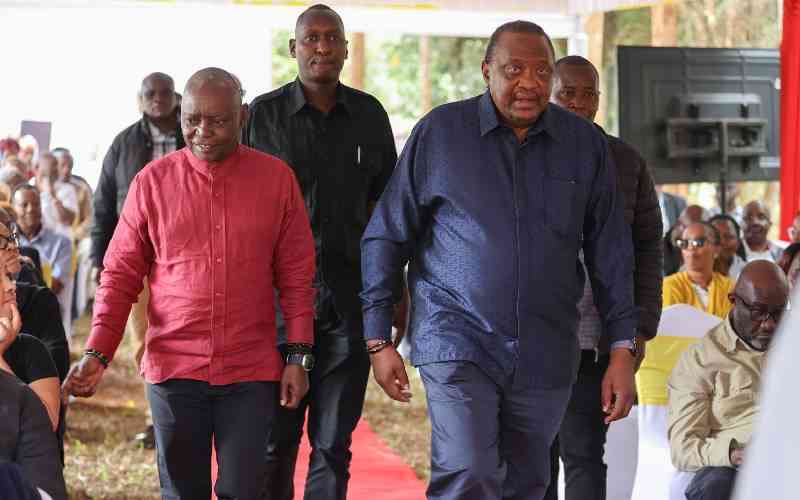
The specific sections of the law invalidated by the court are Section 4(1), 4(2), 4(3), and Section 6 of the Presidential Retirement Benefits Act. This landmark decision stems from a case initiated by Sheria Mtaani na Shadrack Wambui. The judgment clarifies that Parliament is now legally prohibited from either withholding or withdrawing benefits from former President Kenyatta, or any other retired president, solely on the basis of their continued engagement in politics. This development comes as former President Kenyatta was noted attending a burial ceremony in Gikuu village, Kiharu Constituency, Murang'a County, on September 18, 2026.
Judicial Rationale
Justice Mwamuye's reasoning centered on the fundamental shift in status that occurs when a president leaves office. He articulated that once a president's constitutionally defined term concludes, they shed the coercive and executive authority of the state, transitioning into the role of a private citizen. The judge emphasized that while such an individual has occupied the highest elective office, their constitutional standing becomes fundamentally different from that of an incumbent. This perspective formed the bedrock of his decision, asserting that it is unjust to exclude a retired president from political life once they return to private citizenship.
Furthermore, the court highlighted a perceived constitutional incongruity in the existing legal framework. Justice Mwamuye pointed out the irony of Parliament assigning former presidents a consultative and advisory capacity to the government and the people of Kenya, while simultaneously imposing statutory restrictions that substantially limit their participation in the political process. He argued that it would be inconsistent to value a former president's counsel and experience for the nation's benefit, yet simultaneously disable them politically merely due to their past office. This judgment directly contrasts with an earlier verdict by Justice Lawrence Mugambi, who had previously maintained that it was reasonable for a retired president to abstain from politics.
Broader Significance
This ruling by the Kenya High Court on retired president politics establishes a crucial new precedent for the political rights of former presidents in the nation. It unequivocally affirms that retired leaders can actively engage in the political arena without jeopardizing their constitutionally mandated retirement benefits. The judgment, particularly the Justice Bahati Mwamuye Uhuru ruling, ensures that the "Presidential Retirement Benefits Act unconstitutional" declaration safeguards the financial entitlements of former heads of state, irrespective of their political activities.
The decision has significant implications for Kenya former presidents political rights, effectively removing a legal barrier that previously constrained their post-presidency involvement. It clarifies that the state cannot penalize former President Uhuru Kenyatta or any other retired president for exercising their rights as private citizens to participate in political discourse and activities. This legal clarity regarding Uhuru Kenyatta benefits politics underscores a broader principle: once out of office, former presidents retain their fundamental political freedoms, and these cannot be used as leverage to control their public engagement.
Practical Implications
This ruling establishes a new legal precedent regarding the political rights and post-office conduct of former presidents in Kenya, overturning previous restrictions. Lawyers advising former high-ranking public officials or involved in constitutional challenges should note this judgment, as it clarifies that retired presidents can actively participate in politics without forfeiture of benefits.
Source
How does this affect you?
Get an AI analysis of this article grounded in your jurisdictions, practice areas, and any policy documents you've uploaded to Wansom.
Finish Reading the Full Story and the Expert Analysis.
Get the latest legal & regulatory intelligence in Kenya
Wansom is AI and can make mistakes.