
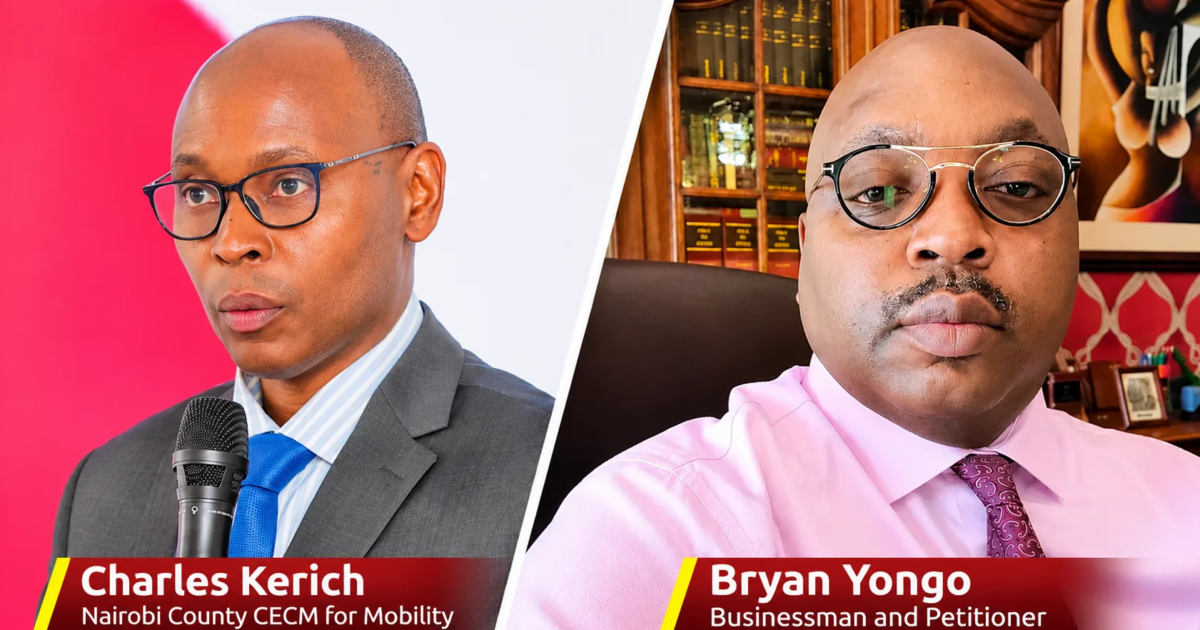
Kenya High Court: Dismisses Yongo Kerich Petition as Premature
Summary
- The High Court dismissed a petition seeking to remove Nairobi CECM Charles Kerich from office.
- Justice Patricia Nyaundi ruled the petition was premature due to the petitioner's failure to exhaust statutory removal procedures.
- Businessman Bryan Yongo had alleged Kerich was unfit for office following a contempt of court finding over an unpaid Sh106 million debt.
- The court affirmed that initial jurisdiction for such matters lies with the Governor, County Assembly, and EACC.
- The ruling reinforces the legal principle that administrative and statutory remedies must be exhausted before judicial intervention.
High Court Dismisses Removal Petition
Lawyers advising on public officer accountability or removal proceedings must ensure strict adherence to and exhaustion of all statutory and administrative procedures before initiating judicial review, as courts will deem direct petitions premature without prior compliance.
The High Court has rejected a petition that sought the removal of Charles Kerich, who is no longer Nairobi's County Executive Committee Member (CECM) for Mobility, from his public office. Justice Patricia Nyaundi, presiding over the case, ruled that the petition, initiated by businessman Bryan Yongo, was premature and therefore struck it out. The core reason for the dismissal was the petitioner's failure to adhere to and exhaust the established statutory procedures for removing a county executive committee member.
Justice Nyaundi affirmed a preliminary objection presented by Kerich, emphasizing that the matter initially falls under the purview of the Governor, the Nairobi County Assembly, and the Ethics and Anti-Corruption Commission (EACC). The court clarified that judicial intervention would only be appropriate if it could be demonstrated that the legally mandated bodies or authorities had failed to act on the matter.
Background of Allegations Against Kerich
Bryan Yongo's petition contended that Charles Kerich was unfit to continue serving in public office. This assertion stemmed from a High Court finding on October 14, 2025, which held Kerich in contempt of court. The contempt arose from his failure to settle a legal fees debt owed to Kwengu and Company Advocates.
At the time of the contempt finding, Kerich was serving as the Nairobi CECM for Finance and Economic Affairs. He had been sentenced to a three-month prison term, but he ultimately avoided incarceration. The committal orders were lifted after an agreement was reached to settle the outstanding debt of Sh106 million. This agreement stipulated an immediate payment of Sh30 million, with the remaining Sh73.4 million to be paid in two installments of Sh36.7 million each.
Legal Arguments and the Exhaustion Doctrine
Yongo argued that the contempt finding, coupled with an alleged failure to purge it, disqualified Kerich from holding public office under Article 75(3) of the Constitution of Kenya. He also sought declarations that Kerich had violated constitutional provisions and engaged in gross misconduct, as defined by Section 40 of the County Governments Act. Furthermore, the petitioner requested a court order compelling Nairobi Governor Johnson Sakaja to remove Kerich from his position within 30 days.
Kerich, however, challenged the petition, asserting its prematurity, incompetence, and characterization as an abuse of the court process. His defense centered on Yongo's failure to invoke the statutory mechanisms designed for the removal of a county executive committee member. Kerich maintained that the court lacked jurisdiction to initiate his removal without first adhering to the prescribed procedures outlined in the Constitution and the County Governments Act. Yongo countered by arguing that the court's constitutional mandate to enforce the Constitution should not be restricted by statutory procedures, claiming his petition raised broader constitutional accountability questions that justified an an exception to the exhaustion doctrine. Despite Yongo's arguments, Justice Nyaundi upheld Kerich's preliminary objection, striking out the petition due to its premature filing.
Implications for Public Officer Accountability
The High Court's decision in the High Court dismisses Yongo Kerich petition case underscores a critical principle in Kenyan administrative law: the exhaustion doctrine. This ruling reinforces the requirement that individuals seeking the removal of public officers must first pursue and exhaust all available statutory and administrative remedies before resorting to judicial review. Lawyers advising on public officer accountability or removal proceedings must ensure strict adherence to and exhaustion of all statutory and administrative procedures before initiating judicial review, as courts will deem direct petitions premature without prior compliance.
This judgment highlights that the judiciary serves as a last resort, intervening only when the designated bodies—such as the Governor, County Assembly, or EACC—have either failed to act or have acted unlawfully. It sets a precedent for how challenges to public office tenure must be channeled, emphasizing the importance of following established legal frameworks rather than bypassing them for direct court intervention.
Practical Implications
Lawyers advising on public officer accountability or removal proceedings must ensure strict adherence to and exhaustion of all statutory and administrative procedures (e.g., via Governor, County Assembly, EACC) before initiating judicial review, as courts will deem direct petitions premature without prior compliance.
Source
How does this affect you?
Get an AI analysis of this article grounded in your jurisdictions, practice areas, and any policy documents you've uploaded to Wansom.
Finish Reading the Full Story and the Expert Analysis.
Get the latest legal & regulatory intelligence in Kenya
Wansom is AI and can make mistakes.