
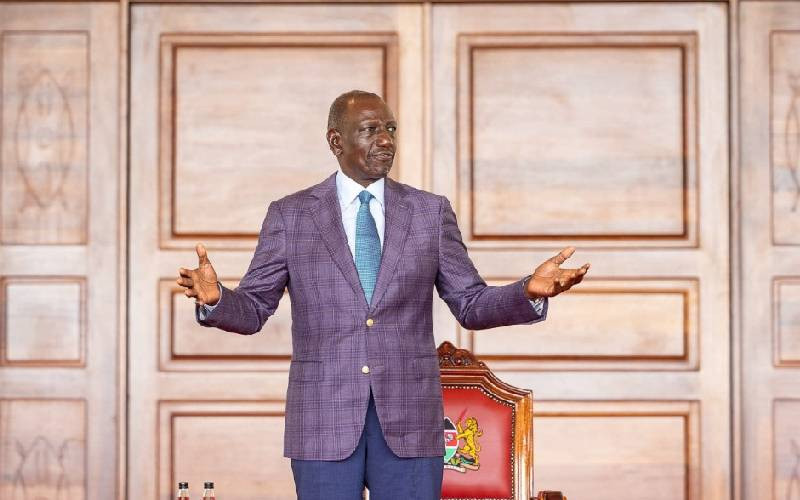
Kenya High Court: Ruto State Departments Unconstitutional, 6-Month Grace
Summary
- The Kenya High Court declared seven state departments established by President William Ruto as unconstitutional.
- Justice Roselyne Aburili ruled that the government failed to demonstrate compliance with constitutional requirements for public participation and consultation with the Public Service Commission.
- The court quashed Executive Order No. 1 of 2025 but suspended the order for six months to allow the Executive to regularize the departments.
- The ruling emphasized that parliamentary vetting of Principal Secretaries does not cure constitutional deficiencies in the creation of offices.
- The decision highlights the necessity for meaningful public participation, including access to information, when establishing new government structures.
Court Declares Key State Departments Unconstitutional
The High Court's declaration that the Ruto government unconstitutional departments were established without due process highlights a critical check on executive power.
The Kenya High Court has ruled that seven state departments established by President William Ruto were created unconstitutionally, granting the government a six-month period to rectify their formation or face their dissolution. This significant decision, delivered by Justice Roselyne Aburili, found that the Executive failed to demonstrate adherence to critical constitutional requirements concerning public participation, transparency, accountability, and necessary consultation with the Public Service Commission.
The ruling specifically quashed the directive contained within Executive Order No. 1 of 2025, which had formalized the creation of these departments. However, Justice Aburili opted to suspend the implementation of this order for half a year. This suspension aims to prevent immediate disruption to public administration and provides the Executive with an opportunity to undertake the establishment process anew, ensuring compliance with legal and constitutional mandates. The affected entities include the State Department for Public Investments and Assets Management, the State Department for National Government Coordination, and the State Department for Justice, Human Rights and Constitutional Affairs, among others.
Legal Basis for the Ruling
Justice Aburili's judgment underscored that while the President possesses constitutional authority under Article 132 to establish government offices, this power is not absolute and must be exercised strictly within the confines of the law, subject to oversight by the Public Service Commission. The court determined that the respondents, representing the government, could not provide evidence that the process leading to the establishment of the impugned state departments complied with Articles 10, 129, and 132 of the Kenya Constitution, nor with Sections 27 and 30 of the Public Service Commission Act, 2017.
A crucial aspect of the court's reasoning revolved around the absence of meaningful public participation. While Parliament had invited public memoranda and conducted hearings for the approval of Principal Secretaries, the judge clarified that this process addressed the suitability of individuals for office, not the fundamental necessity or legality of the offices themselves. This distinction is vital, as public engagement regarding office holders cannot substitute for public participation concerning the creation of the offices. The court noted a lack of evidence that Kenyans were informed about the proposal to create these departments, provided with justifications or financial implications, or given a chance to influence the decision before it was finalized. Meaningful public participation, the court emphasized, necessitates access to information regarding the rationale, intended functions, relationship with existing structures, and financial impact of such governmental changes.
Implications for Executive Action and Governance
The High Court's declaration that the Ruto government unconstitutional departments were established without due process highlights a critical check on executive power. The ruling explicitly states that the President's decision contravened Articles 10, 129, and 132(2) of the Constitution and failed to demonstrate compliance with Sections 27 and 30 of the Public Service Commission Act, 2017. This judgment serves as a powerful reminder that even presidential authority to establish offices must adhere to constitutional principles and statutory requirements.
Lawyers advising government entities or contemplating challenges to executive actions must carefully note this precedent. The six-month suspension period offers a crucial window for the Executive to regularize these departments, but it also introduces potential legal uncertainty for decisions made by these bodies if their foundational legality is not rectified. Compliance officers and legal counsel interacting with these specific state departments will need to monitor developments closely, as the ruling underscores the strict constitutional and statutory requirements for establishing public offices, particularly regarding public participation and consultation with the Public Service Commission.
Practical Implications
Lawyers advising government entities or challenging executive actions must note this precedent, which underscores the strict constitutional and statutory requirements for establishing public offices, particularly regarding public participation and consultation with the Public Service Commission. The six-month suspension period offers a window for the Executive to regularize these departments, but also creates potential legal uncertainty for decisions made by these bodies if not rectified, requiring close monitoring by compliance officers and legal counsel interacting with these specific state departments.
Source
How does this affect you?
Get an AI analysis of this article grounded in your jurisdictions, practice areas, and any policy documents you've uploaded to Wansom.
Finish Reading the Full Story and the Expert Analysis.
Get the latest legal & regulatory intelligence in Kenya
Wansom is AI and can make mistakes.