
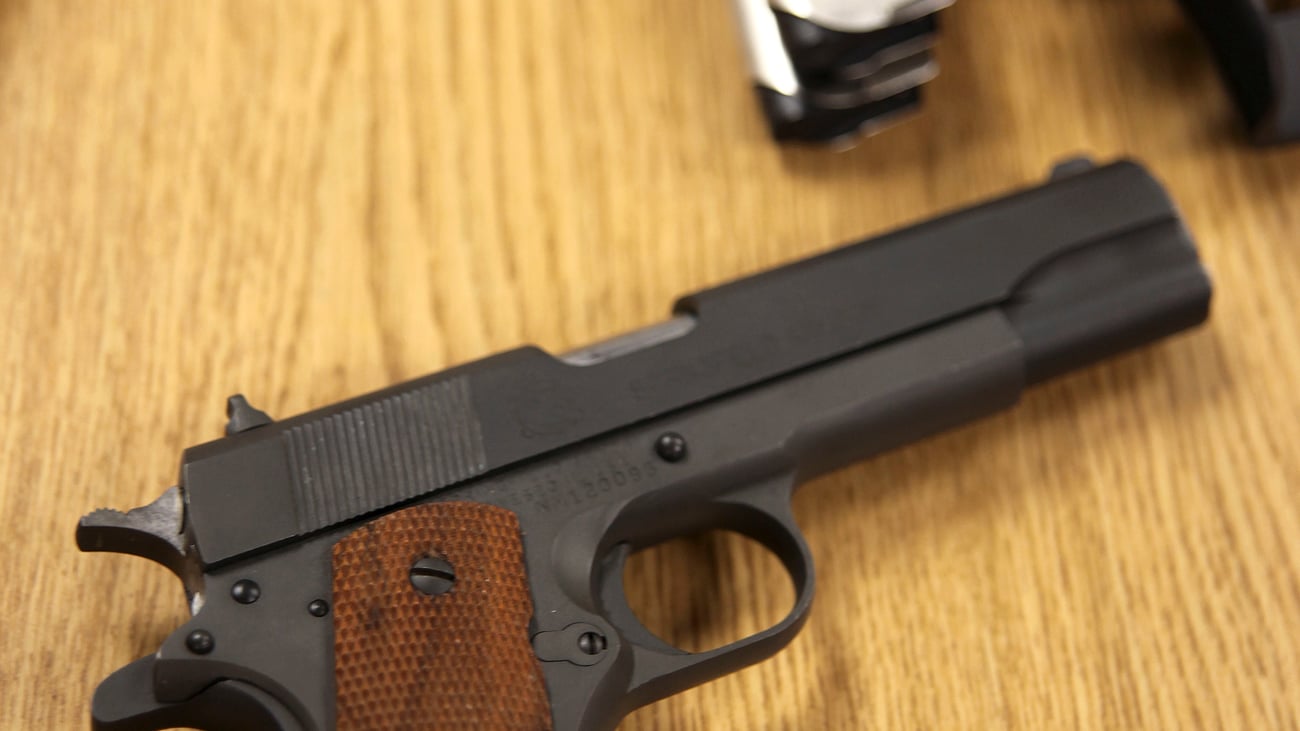
Hawaii Age 21 Gun Law Upheld By Federal Judge Under Bruen Test
Summary
- A federal judge upheld Hawaii's law requiring individuals to be 21 years old to acquire firearms.
- U.S. District Judge Jill Otake ruled that the restriction aligns with the nation's historical tradition of firearm regulation.
- The decision in *Juda Roache v. Hawaii* applied the *Bruen* historical test, citing founding-era contract law and 19th-century state statutes.
- The court found that historical precedent supports restricting firearm access for those under 21 due to concerns about judgment and maturity.
- This ruling denies a challenge from an 18-year-old resident and two gun dealers seeking to overturn the age requirement.
Hawaii's Age-21 Gun Law Upheld
The court thus concluded that the founding era's practical prohibition on acquisition, combined with the explicit prohibitions of the 19th century, reveals a consistent principle of restricting firearm acquisition for people under 21, a tradition within which Hawaii's current age restriction falls.
A federal judge has affirmed the legality of Hawaii's statute mandating that individuals be at least 21 years old to acquire firearms. U.S. District Judge Jill Otake issued a ruling that sided with the state, rejecting a Second Amendment challenge to the age restriction. This decision effectively upholds the existing requirement for firearm ownership in the state.
The legal challenge, known as *Juda Roache v. Hawaii*, was initiated by Juda Roache, a Honolulu resident who is over 18 but under 21, and who sought to purchase or receive a firearm as a gift. He was joined in the lawsuit by two licensed Hawaii gun dealers who are prohibited from selling firearms to customers in his age bracket. Hawaii state law stipulates that a police permit is necessary to acquire a firearm, and these permits are generally issued only to those aged 21 and above, with very limited exceptions for activities such as hunting, target shooting, or short-term rifle loans. Judge Otake's ruling denied the plaintiffs' motion to declare the law unconstitutional and granted the state's counter-motion for summary judgment.
Applying the Historical Tradition Test
Central to Judge Otake's determination was the application of the historical tradition test established by the Supreme Court in *New York State Rifle & Pistol Ass’n, Inc. v. Bruen*. While the state had argued that individuals between 18 and 20 years old might not fall within the constitutional class of "the people" protected by the Second Amendment, Judge Otake explicitly rejected this threshold argument, acknowledging that this age group is indeed covered. However, she concluded that Hawaii's age restriction on firearm acquisition is consistent with the nation's historical tradition of firearm regulation, a key requirement under the *Bruen* framework. This finding was pivotal in her decision to uphold the law.
Historical Analogues and Legal Reasoning
Judge Otake's analysis drew upon two primary historical pillars to support her conclusion. First, she identified "solid evidence" in founding-era common law indicating societal restrictions on the practical ability of individuals under 21 to acquire goods, including firearms. This was rooted in concerns about their judgment and maturity. A significant factor was the doctrine allowing those under 21 to void contracts for items beyond basic necessities. An 1822 South Carolina ruling, for instance, categorized liquor and pistols, alongside whips and fiddles, as non-necessities that minors could not contract for. Otake noted that contemporary states still impose age restrictions on the purchase of alcohol and tobacco, suggesting a consistent societal view on the maturity of young adults.
Second, the ruling cited a proliferation of state laws enacted in the decades following the Civil War. This period saw the widespread availability of inexpensive, mass-produced handguns, coupled with rapid urbanization and growing concerns about gun violence and young people. For example, an 1875 Indiana law criminalized selling or giving pistols, dirks, bowie knives, or pistol cartridges to anyone under 21. Judge Otake identified similar bans on selling or giving pistols to individuals under 21 in at least 15 other states and jurisdictions by the late 1800s, including Maryland, Texas, and Wyoming. She clarified that these historical laws do not need to be exact matches to Hawaii's current statute, but rather must be similar in their underlying purpose and operational mechanics, aligning with the standard set by the Supreme Court in *United States v. Rahimi* (2024) for applying the *Bruen* historical test. The court thus concluded that the founding era's practical prohibition on acquisition, combined with the explicit prohibitions of the 19th century, reveals a consistent principle of restricting firearm acquisition for people under 21, a tradition within which Hawaii's current age restriction falls.
Implications for Age-Based Restrictions
This ruling carries significant implications for the landscape of Second Amendment challenges, particularly those targeting age-based firearm restrictions. By affirming Hawaii's age-21 gun law, the court has provided a robust example of how the *Bruen* historical tradition test can be applied to uphold such regulations. The decision underscores the judiciary's willingness to look beyond direct firearm statutes to founding-era common law, such as contract principles, and 19th-century state legislation as valid historical analogues for modern firearm regulation. For legal practitioners advising clients on Second Amendment challenges to age-based firearm restrictions in other states, this precedent, with its detailed reliance on historical context, offers a compelling framework. It reinforces the existing age-21 requirement for firearm acquisition in Hawaii, confirming its alignment with the nation's historical tradition of firearm regulation.
Practical Implications
This ruling confirms the validity of Hawaii's age-21 gun ownership law, applying the historical tradition test from *Bruen* and *Rahimi*. Lawyers advising clients on Second Amendment challenges to age-based firearm restrictions in other states should consider this precedent, particularly its reliance on founding-era contract law and 19th-century state statutes as historical analogues. For compliance officers in Hawaii, it reinforces the existing age-21 requirement for firearm acquisition.
Source
How does this affect you?
Get an AI analysis of this article grounded in your jurisdictions, practice areas, and any policy documents you've uploaded to Wansom.
Finish Reading the Full Story and the Expert Analysis.
Wansom is AI and can make mistakes.