
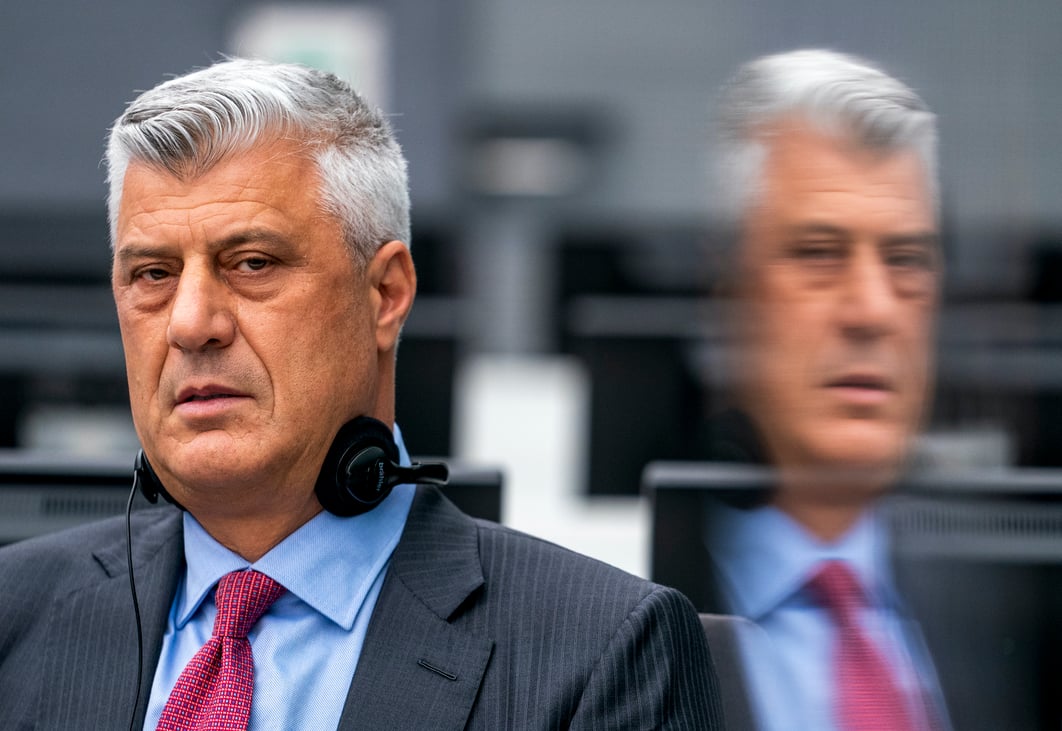
Hashim Thaçi: Witness Obstruction Conviction Adds 17 Months to Sentence
Summary
- Hashim Thaçi, Kosovo's former president, received an additional 17-month sentence for witness obstruction, contempt, and revealing confidential information.
- This new sentence is separate from his existing 25-year war crimes conviction for murder and torture, which remains subject to appeal.
- Thaçi used detention visits in 2023 to send instructions to witnesses via associates, including advice to deny contact if questioned.
- Judge Christopher Gosnell relied on recordings, messages, and computer evidence linking instructions from Thaçi's detention to his associates.
- An expert noted the court's use of Kosovo's domestic law for group obstruction and viewed the sentences as a compromise for nonviolent interference.
What Happened
This judgment underscores the complexities of prosecuting witness tampering in an international legal framework, especially when leveraging domestic legal principles for group obstruction.
Hashim Thaçi, Kosovo's former president, has been handed an additional 17-month prison sentence for witness obstruction, contempt of court, and revealing confidential witness information. This new conviction, delivered by the Kosovo Specialist Chambers, mandates that the sentence be served independently of his existing 25-year term for war crimes, which includes charges of murder and torture and remains subject to appeal. Thaçi, who previously served as a leader in the Kosovo Liberation Army before ascending to the roles of prime minister and president, had resigned from the presidency to address the initial charges of crimes against humanity and war crimes.
The obstruction charges stem from actions Thaçi took in 2023 while detained in The Hague. He utilized visits from associates to transmit instructions to prospective witnesses regarding their testimony, thereby circumventing established restrictions on witness contact. One notable incident involved guerrilla veteran Fadil Fazliu, who, following a July visit, met with witness Rrustem Mustafa in Pristina. Fazliu conveyed Thaçi’s directives, which included advice for Mustafa to deny any communication from Thaçi if questioned by prosecutors.
In another instance, former intelligence chief Bashkim Smakaj received written instructions intended for witness Bislim Zyrapi, subsequently meeting with Zyrapi. These actions formed the core of the prosecution's case, highlighting a deliberate effort by Thaçi to influence testimony from within his detention facility.
Court's Findings and Evidence
Judge Christopher Gosnell's judgment relied on a combination of compelling evidence, including court-authorized recordings, messages, telephone records, and computer data. Crucially, instructions recovered from Smakaj’s residence were electronically linked to a computer located within Thaçi’s detention center. Judge Gosnell emphasized that Thaçi's repeated insistence to Mr. Fazliu that he meticulously record the messages indicated these were not casual recollections of wartime events between old acquaintances, but rather explicit instructions intended for onward transmission to witnesses.
The Kosovo Specialist Chambers ultimately convicted Thaçi of attempted obstruction, a charge that required demonstrating a clear step beyond mere preparation. The court's decision also saw Smakaj and Fazliu each receive 12-month sentences for attempted obstruction and for assisting Thaçi in violating court orders. Both individuals had already completed their sentences while in detention and have since been released. Conversely, former commander Isni Kilaj was fully acquitted, with the court citing a lack of evidence regarding any steps taken to contact a protected witness or the involvement of a third party, which are prerequisites for a group obstruction conviction. Hajredin Kuçi, a former deputy prime minister and justice minister, received a one-month suspended sentence for prohibited witness contact.
Legal Context and Expert Commentary
The case provides significant insight into the court's interpretation of witness obstruction laws, particularly the distinction between preparatory acts and a criminal attempt. Alexander Heinze, an Assistant Professor at the University of Göttingen School of Law, affirmed the court's differentiation between these two stages of criminal conduct. Heinze observed that prosecutors, in pursuing group obstruction charges, had drawn upon Kosovo's domestic criminal law, focusing on Thaçi's use of persuasion and loyalty rather than employing threats or bribes. This approach raised questions from the defense, which contended whether a domestic legal provision typically applied to physically obstructive crowds could legitimately extend to cover witness coaching.
Hainze further suggested that the sentences imposed, which were considerably less than the six years prosecutors had sought for Thaçi, reflected a compromise. He noted that these penalties aligned more closely with how other international courts have addressed nonviolent witness interference, likely in anticipation of potential public backlash within Kosovo. While acknowledging the genuine risks of witness interference, Heinze cautioned against automatically equating such risks with lengthy periods of detention, stressing that continued confinement necessitates concrete, individualized justifications. This judgment underscores the complexities of prosecuting witness tampering in an international legal framework, especially when leveraging domestic legal principles for group obstruction.
Practical Implications
This case provides insight into the Kosovo Specialist Chambers' interpretation and application of witness obstruction laws, particularly regarding the distinction between preparation and criminal attempt, and the use of domestic law for group obstruction in an international context. Lawyers should note the court's approach to sentencing for non-violent witness interference and the evidentiary requirements for such convictions.
Source
Source: Original reporting via CN/AP
How does this affect you?
Get an AI analysis of this article grounded in your jurisdictions, practice areas, and any policy documents you've uploaded to Wansom.
Finish Reading the Full Story and the Expert Analysis.
Get the latest legal & regulatory intelligence in United States
Wansom is AI and can make mistakes.