
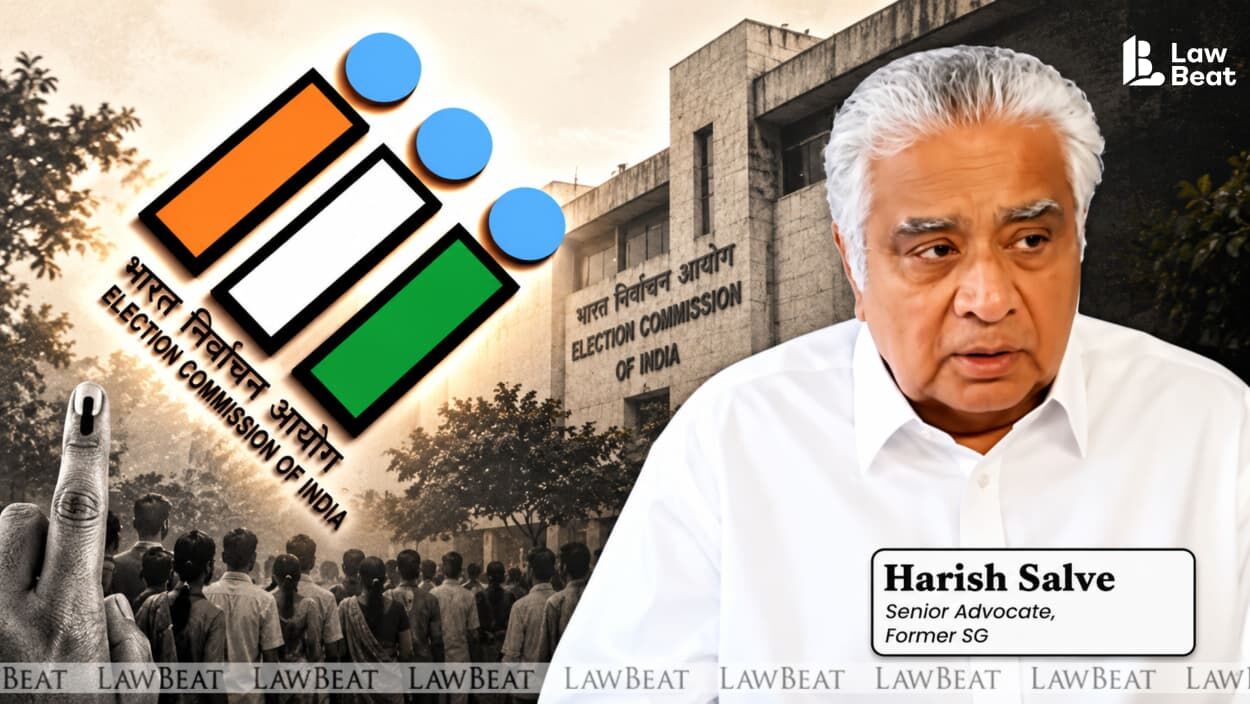
Harish Salve: Objects ECI Political Attacks, Defends Constitutional Body
Summary
- Senior Advocate Harish Salve has strongly criticized recent political attacks targeting the Election Commission of India.
- The Opposition's INDIA bloc staged a protest demanding the removal of Chief Election Commissioner Gyanesh Kumar over alleged vote theft and the SIR row.
- The ECI clarified that all its decisions, including those on the SIR, are unanimous and follow established constitutional procedures under Article 324.
- A Supreme Court bench led by CJI Surya Kant refused to issue interim orders or directions to the ECI regarding its internal decision-making.
- Salve highlighted the Chief Justice's view that the court could address any wrongdoing later, underscoring the ECI's constitutional autonomy.
Political Scrutiny and Legal Objections
Senior Advocate Harish Salve has strongly criticized recent political attacks targeting the Election Commission of India, asserting that constitutional bodies should not become targets of partisan political campaigns.
Senior Advocate Harish Salve has strongly criticized recent political attacks targeting the Election Commission of India (ECI), asserting that constitutional bodies should not become targets of partisan political campaigns. His remarks come in the wake of a protest march organized by the Opposition's INDIA bloc, which proceeded from Parliament House to the ECI headquarters in New Delhi. The demonstration was prompted by allegations of vote theft and a demand for the removal of Chief Election Commissioner (CEC) Gyanesh Kumar, specifically concerning the Special Summary Revision (SIR) row. Prominent figures such as Congress president Mallikarjun Kharge, Leader of Opposition in the Lok Sabha Rahul Gandhi, Samajwadi Party chief Akhilesh Yadav, and Trinamool Congress's Abhishek Banerjee were among those who participated in the protest.
Salve articulated his view that contemporary politics is overstepping its legitimate boundaries, distinguishing between criticism of political parties and the unwarranted targeting of foundational state institutions. He specifically highlighted the ECI's clarification regarding the unanimity of its decisions concerning the SIR, arguing that once this was established, there was no legitimate basis for continued protests by political opponents. The ECI had previously reissued a press note confirming that all its decisions were unanimous, a move Salve believed should have brought an end to the controversy. He lamented the situation as "dragging a constitutional institution into the mud," underscoring his concern for the integrity of such bodies.
Upholding ECI's Operational Integrity
The Election Commission of India recently refuted a report by The India Express that suggested significant internal discord within the poll panel. The ECI clarified that internal objections, technical suggestions, and rigorous checks are standard components of deliberations within any multi-member constitutional body. It firmly stated that all its decisions over the past year have been taken unanimously, dispelling notions of internal dissent impacting its official pronouncements. This clarification specifically addressed concerns related to the SIR row, affirming that the ECI's stance was unified.
Operating under the mandate of Article 324 of the Constitution, along with statutory rules and established institutional conventions, the ECI maintains that its processes are designed for transparency and legal compliance. The commission emphasized that written notes, observations, technical suggestions, and internal checks and balances are integral to its regular functioning. These mechanisms are crucial for ensuring operational rigour and maintaining the integrity of its electoral decisions. For instance, the ECI confirmed that its order for the Special Summary Revision in Bihar, issued on June 24, 2025, received the unanimous approval of all commissioners.
Judicial Deference to Electoral Autonomy
Further underscoring the ECI's constitutional autonomy, the Supreme Court recently declined to issue any interim orders against the commission during proceedings related to CEC Gyanesh Kumar. A petition had been filed alleging that Kumar made unilateral decisions without the consent of the other two Election Commissioners, Sukhbir Singh Sandhu and Vivek Joshi. However, a bench led by Chief Justice of India Surya Kant notably refused to direct the ECI to make decisions solely by majority vote, indicating a reluctance to interfere with its internal operational methods.
Harish Salve referenced the Chief Justice's observations during this hearing, where the CJI questioned the necessity of a stay, stating that if any wrongdoing were later discovered, the court possessed the power to rectify it. This judicial stance highlights the Supreme Court's deference to the ECI's independence, particularly concerning its internal decision-making processes. Objections regarding the use of Form 6 in the SIR process were also raised before the court. Ultimately, the ECI's order for the Special Summary Revision in Bihar was subsequently upheld by the Supreme Court, reinforcing the legal validity of its actions and its constitutional mandate. Lawyers advising on electoral law or constitutional challenges should note the Supreme Court's reluctance to intervene in ECI's internal decision-making processes and the emphasis on the ECI's constitutional independence, which may impact future litigation strategies concerning electoral disputes.
Practical Implications
Lawyers advising on electoral law or constitutional challenges should note the Supreme Court's reluctance to intervene in ECI's internal decision-making processes and the emphasis on the ECI's constitutional independence, which may impact future litigation strategies concerning electoral disputes.
Source
How does this affect you?
Get an AI analysis of this article grounded in your jurisdictions, practice areas, and any policy documents you've uploaded to Wansom.
Finish Reading the Full Story and the Expert Analysis.
Get the latest legal & regulatory intelligence in India
Wansom is AI and can make mistakes.