
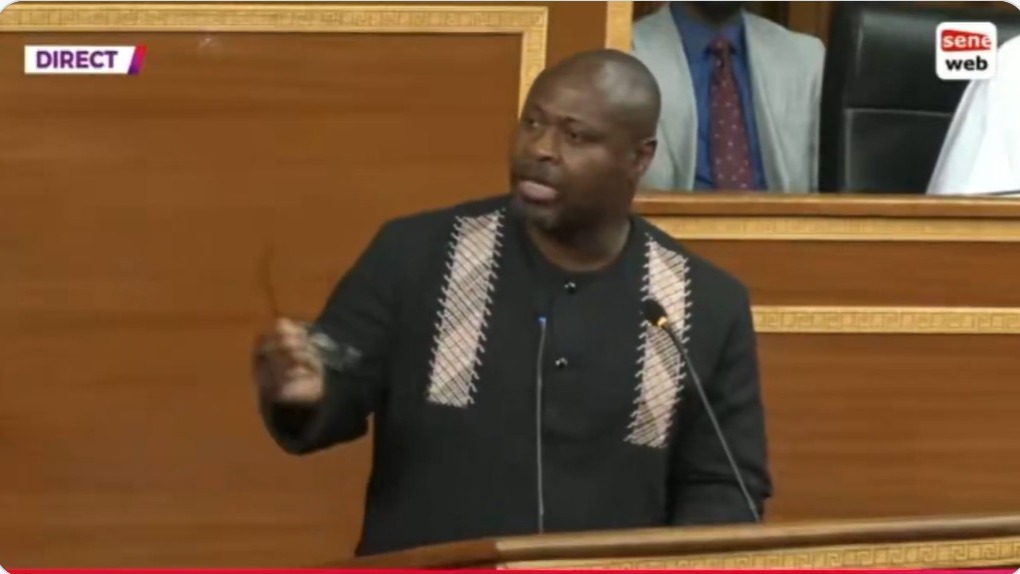
Guy Marius Sagna: Plans Macky Sall Accusation Over '$7B Hidden Debt'
Summary
- Deputy Guy Marius Sagna criticized the creation of the Fondation Diomaye and its funding by President Bassirou Diomaye Faye.
- Sagna announced a potential "mise en accusation" of former President Macky Sall, blaming him for a $7 billion "hidden debt" accumulated between 2019 and 2024, with alleged IMF complicity.
- He challenged the IMF agreement's legality, citing Article 96 of the Constitution, which requires National Assembly consultation for state financial commitments.
- Sagna also criticized President Faye's debt restructuring as a new form of tutelage, contrasting it with the "Sonko-formula" for economic sovereignty.
- The debate highlights the tension between Senegal's Vision 2050, IMF conditionalities, and the pursuit of national economic independence.
Allegations Against Former and Current Administrations
Sagna further alleges that the IMF was complicit in the accumulation of this undisclosed debt, suggesting a lack of transparency in the nation's financial dealings during that period.
Senegalese Deputy Guy Marius Sagna has voiced significant concerns regarding the current government's policy choices and financial management, particularly highlighting the creation of the Fondation Diomaye. His critique centers on substantial funding reportedly allocated to this entity by President Bassirou Diomaye Faye, raising questions about resource allocation amidst broader economic challenges. These criticisms emerge as Senegal navigates a complex period, balancing its long-term Vision 2050 development goals with the conditionalities imposed by the International Monetary Fund (IMF), with which the nation has initiated discussions for a new financial program.
Beyond current government actions, Sagna has also indicated a potential move to formally accuse former President Macky Sall. He attributes a significant portion of Senegal's current financial woes to Sall's previous administration. A key accusation involves what Sagna terms a "hidden debt" of approximately $7 billion, which he claims accumulated between 2019 and 2024. Sagna further alleges that the IMF was complicit in the accumulation of this undisclosed debt, suggesting a lack of transparency in the nation's financial dealings during that period.
Sagna's scrutiny extends to the methodology employed in securing the recent agreement with the IMF. He contends that the National Assembly was bypassed and should have been consulted before the accord's finalization. Furthermore, the deputy has criticized the debt restructuring measures accepted by President Bassirou Diomaye Faye, characterizing them as a new form of external oversight. This stance contrasts sharply with what Sagna refers to as the "Sonko-formula" or "Pastef-formula," which he associates with policies aimed at reducing prices, rejecting structural adjustment, and fostering economic sovereignty.
Legal and Constitutional Challenges
The proposed "mise en accusation" of former President Macky Sall by Guy Marius Sagna introduces a significant legal and political challenge in Senegal. This move seeks to hold the former head of state accountable for alleged financial mismanagement, specifically concerning the $7 billion "dette cachée Macky Sall FMI" that Sagna claims accrued under his leadership. The accusation implies a need for parliamentary scrutiny into the financial decisions made during Sall's tenure, potentially leading to a formal indictment process.
Central to Sagna's legal argument against the current IMF agreement is Article 96 of the Senegalese Constitution. This article specifically addresses agreements that commit the state's finances, mandating parliamentary oversight. Sagna asserts that the National Assembly's non-consultation before the conclusion of the new IMF program constitutes a constitutional breach. This highlights a critical debate over the executive's authority in international financial negotiations versus the legislative body's constitutional role in safeguarding national financial commitments. The invocation of Article 96 underscores the legal basis for challenging the legitimacy of the current financial arrangements and the process by which they were established.
Economic Policy and Sovereignty Debate
The ongoing debate, fueled by Deputy Sagna's statements, underscores a fundamental tension between Senegal's aspirations for economic sovereignty and the realities of international financial obligations. Sagna's advocacy for the "Sonko-formula" or "Pastef-formula" represents a call for an economic model prioritizing lower prices for citizens, a rejection of traditional structural adjustment programs, and a strong emphasis on national economic independence. This vision stands in direct opposition to the perceived alignment with IMF requirements, which Sagna argues is evident in the current government's approach, including the Bassirou Diomaye Faye dette restructuration.
Senegal's government faces a delicate balancing act: securing essential new financial support while simultaneously implementing its ambitious Vision 2050 development agenda. Sagna's critique suggests that the nation is increasingly conforming to IMF demands, potentially compromising the principles of the "Pastef-formula." However, he clarifies that Pastef's economic philosophy advocates for an open economy that remains compatible with national sovereignty, rather than pursuing autarky. This nuanced position highlights the complexity of navigating global financial structures while striving to maintain national control over economic destiny, making the Guy Marius Sagna Macky Sall accusation a focal point in this broader policy discussion.
Practical Implications
This development signals potential legal challenges and parliamentary scrutiny regarding the former president's financial management and the constitutionality of current international financial agreements. Lawyers should monitor the proposed 'mise en accusation' of Macky Sall and the debate around Article 96 of the Constitution concerning state financial commitments, as these could set important precedents for executive accountability and legislative oversight in Senegal.
Source
Source: Original reporting via Malijet
How does this affect you?
Get an AI analysis of this article grounded in your jurisdictions, practice areas, and any policy documents you've uploaded to Wansom.
Finish Reading the Full Story and the Expert Analysis.
Wansom is AI and can make mistakes.