
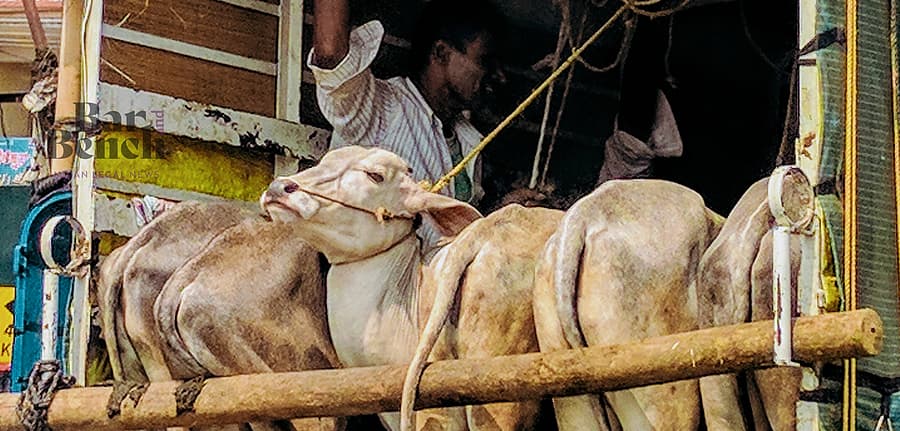
Gujarat Court: Cow Slaughter Life Sentence With Scripture Citation
Summary
- A Gujarat court sentenced three men to life imprisonment for cow slaughter on October 26.
- Justice Brijeshkumari Rameshwarsinh Rajput presided over the Third Additional Sessions Court in Gandhinagar's Kalol.
- The court cited Hindu scriptures, including the Manusmriti and Rigveda, in its judgment.
- The ruling stated that cows could face extinction if those who slaughter them are not punished.
- The judgment emphasized cow protection as a religious duty and cows as "mothers of the world."
Judicial Ruling and Sentencing
This approach suggests a judicial willingness to integrate cultural and spiritual values into the application of secular law, particularly in cases with strong religious or societal sensitivities.
A recent decision by the Third Additional Sessions Court in Gandhinagar's Kalol resulted in life imprisonment for three individuals convicted of cow slaughter. Justice Brijeshkumari Rameshwarsinh Rajput presided over the proceedings, delivering the judgment on October 26. The court's ruling underscored a stern stance against such offenses, emphasizing the potential for the extinction of cows if perpetrators are not adequately penalized. This significant Gujarat cow slaughter life sentence was handed down following a detailed consideration of the crime's impact.
The court explicitly stated that without stringent legal consequences for those who cruelly dismember cows, "Gau Mata" (mother cow) would eventually vanish from the earth. This declaration formed a critical part of the rationale for imposing the maximum permissible sentence, highlighting the judiciary's view on the severity of the crime and its long-term implications for the bovine population. The judgment reflects a significant judicial perspective on animal welfare and religious sentiment, asserting that punishment is necessary to prevent the disappearance of cows.
Scriptural Basis for the Verdict
Unusually, the court's judgment extensively referenced Hindu scriptures, including the ancient texts of the Manusmriti and the Rigveda, to support its sentencing decision. This incorporation of religious doctrine into a legal pronouncement marks a notable aspect of the case, providing a unique foundation for the verdict. The court cited various Sanskrit verses that articulate the sacred status of cows within Hindu tradition, thereby grounding its legal reasoning in cultural and spiritual tenets.
Among the citations, the judgment included verses proclaiming cows as "the mothers of the world" and sources of all happiness, emphasizing their benevolent role. It further asserted that the protection of cows constitutes a religious duty, directly linking this act to the preservation of dharma. The court also quoted passages indicating that cow slaughter leads to the degradation of dharma and that punishment for such acts is necessary to uphold truth and establish righteousness, stating, "Upon conviction, punishment should be carried out according to law" and "Through the path of justice, O King, dharma is established." This Manusmriti Rigveda court judgment provides a clear example of the judiciary drawing upon religious texts to inform its legal reasoning.
Implications of the Judgment
The Gandhinagar Kalol Sessions Court's decision to invoke religious texts like the Manusmriti and Rigveda in a criminal sentencing for cow slaughter carries significant implications for legal interpretation in India. This approach suggests a judicial willingness to integrate cultural and spiritual values into the application of secular law, particularly in cases with strong religious or societal sensitivities. The judgment, delivered by Justice Brijeshkumari Rameshwarsinh Rajput, sets a precedent for how religious duty concerning cow protection might be considered in future legal proceedings, potentially broadening the scope of judicial rationale.
This specific Gujarat court cow slaughter scripture citation highlights a broader trend where traditional beliefs intersect with modern legal frameworks. The court's emphasis on cow protection as a religious duty, supported by ancient texts, could influence how similar cases are argued and decided across India, where the reverence for cows is deeply ingrained in many communities. It underscores the complex interplay between law, religion, and cultural identity within the Indian judicial system, demonstrating a unique judicial interpretation of legal obligations.
Practical Implications
This judgment indicates a judicial willingness to incorporate religious and cultural texts (Manusmriti, Rigveda) into sentencing rationale for offenses like cow slaughter in India. Lawyers should note this potential for broader interpretive frameworks in cases involving religious or cultural sensitivities, which could influence arguments for both prosecution and defense in similar matters.
Source
How does this affect you?
Get an AI analysis of this article grounded in your jurisdictions, practice areas, and any policy documents you've uploaded to Wansom.
Finish Reading the Full Story and the Expert Analysis.
Wansom is AI and can make mistakes.