
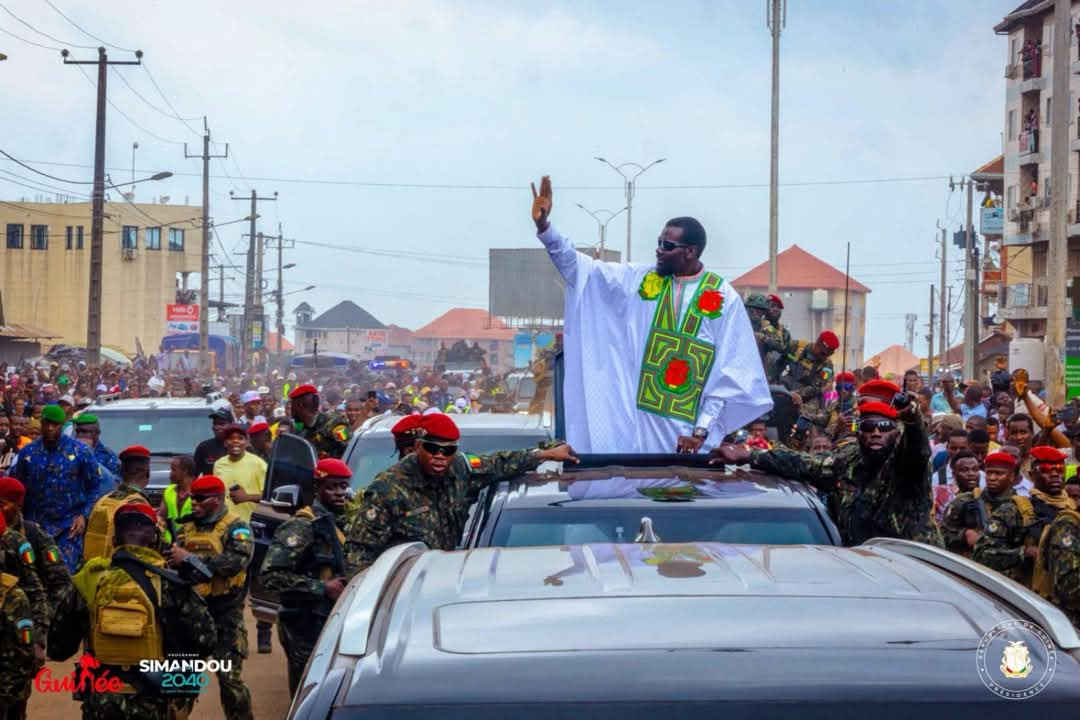
Guinea: President Doumbouya Issues Simbaya Kassa Land Reclassification Decree
Summary
- President Mamadi Doumbouya announced the reclassification of land reserves in Simbaya and Kassa Island.
- This decision was formalized by a presidential decree issued on October 16, 2026.
- The announcement, made via the President's Facebook page, also promised a restructuring of the reclassified areas.
- The affected land reserves are located in Simbaya's Wanindara area and on Kassa Island.
What Happened
For legal professionals and compliance officers, this reclassification necessitates a thorough review of existing property rights, potential development projects, and compliance requirements for clients operating or investing in these specific areas of Guinea.
Guinea's President, Mamadi Doumbouya, recently made a significant public announcement regarding the status of specific land reserves within the nation. The head of state communicated through his official Facebook page, informing the public about a crucial decision impacting key areas. This declaration signals a shift in the designated use or ownership of these territories, potentially paving the way for new developments or administrative changes.
The presidential directive specifically targets land reserves situated in Simbaya, particularly within the Wanindara zone, as well as the entirety of Kassa Island. These locations, known for their strategic or environmental importance, are now subject to a reclassification process initiated by the highest authority in the country. The precise nature of this reclassification, referred to as "déclassement," implies a change from their previous status as reserves.
This pivotal decision was formally enacted through a presidential decree, which bears the date of October 16, 2026. The issuance of such a decree underscores the official and legally binding nature of the reclassification. President Doumbouya's public statement also included a forward-looking commitment, indicating that the reclassified areas are slated for a process of restructuring, though further details on this aspect were not immediately provided in the initial announcement.
Legal Context
The reclassification of land reserves, or "déclassement des réserves foncières," represents a formal legal action to alter the designated purpose or protective status of state-owned land. In Guinea, such a process typically involves a high-level administrative decision, often culminating in a presidential decree, as observed in the case of Simbaya and Kassa Island. This legal instrument provides the framework for changing how these specific territories can be utilized, managed, or potentially developed in the future.
A presidential decree carries the full weight of executive authority, making the decision to reclassify these lands an official government policy. The decree dated October 16, 2026, for Simbaya and Kassa Island, establishes the legal basis for any subsequent actions concerning these areas. This formal legal step is essential for ensuring that any changes to land use or ownership are conducted in accordance with national laws and administrative procedures, providing clarity and legitimacy to the process.
The act of reclassifying land reserves can have profound implications for land tenure, environmental protection, and urban planning. Historically, land designated as a "reserve" might be set aside for specific public purposes, conservation, or future state projects. Its "déclassement" therefore removes these prior restrictions, opening up new possibilities for its use, which could range from residential or commercial development to infrastructure projects, subject to further planning and regulatory approvals.
Why It Matters
The presidential decree reclassifying land reserves in Simbaya's Wanindara area and Kassa Island holds significant implications for local communities, potential investors, and the broader land management landscape in Guinea. By altering the official status of these territories, the government is signaling a strategic intent to redefine their role within the national development agenda. This move could unlock new economic opportunities or address pressing societal needs, depending on the ultimate plans for restructuring. Mamadi Doumbouya was sworn in as president of Guinea on January 17, 2026, after winning the 2025 presidential election.
President Doumbouya's promise of "restructuring" for these reclassified areas suggests that the decree is merely the initial step in a larger governmental initiative. Such restructuring could encompass a range of activities, including urban renewal, infrastructure development, or even the reallocation of land for specific public or private projects. The precise nature and scope of this restructuring will be critical in determining the long-term impact on the affected regions and their inhabitants.
For legal professionals and compliance officers, this reclassification necessitates a thorough review of existing property rights, potential development projects, and compliance requirements for clients operating or investing in these specific areas of Guinea. The change in land status could affect land valuations, environmental assessments, and the legal feasibility of future ventures. Understanding the nuances of this decree and the subsequent restructuring plans will be paramount for navigating the evolving regulatory environment.
Practical Implications
Lawyers and compliance officers should assess how the reclassification of land reserves in Simbaya and Kassa impacts existing property rights, potential development projects, and compliance requirements for clients operating or investing in these specific areas of Guinea.
Source
How does this affect you?
Get an AI analysis of this article grounded in your jurisdictions, practice areas, and any policy documents you've uploaded to Wansom.
Finish Reading the Full Story and the Expert Analysis.
Get the latest legal & regulatory intelligence in Guinea
Wansom is AI and can make mistakes.