
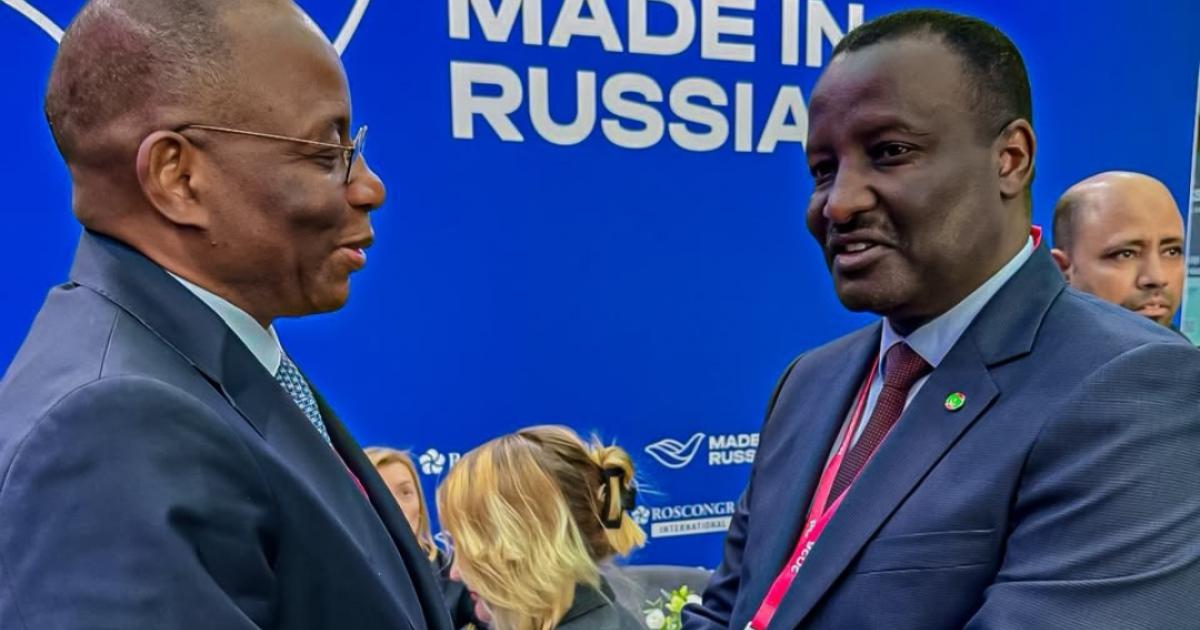
Guillaume Ngefa RDC: Advances Judicial Coopération with Mauritania, CAR
Summary
- Guillaume Ngefa, the Minister of State, Minister of Justice and Keeper of the Seals of the Democratic Republic of Congo, led discussions in Moscow on October 31, 2026, to enhance judicial cooperation.
- The Democratic Republic of Congo (DRC) aims to consolidate judicial ties with Mauritania and the Central African Republic (CAR).
- This initiative seeks to improve mechanisms like extradition, mutual legal assistance, and the enforcement of judgments among the three nations.
- The cooperation is crucial for addressing transnational challenges and strengthening regional legal frameworks.
- Legal professionals in these regions should monitor these developments due to potential impacts on cross-border legal strategies.
What Happened
Legal professionals and compliance officers operating within the DRC, Mauritania, or the Central African Republic should closely monitor these developments.
Guillaume Ngefa, the Minister of State, Minister of Justice and Keeper of the Seals of the Democratic Republic of Congo, has been instrumental in advancing discussions aimed at strengthening judicial cooperation between the Democratic Republic of Congo (DRC), Mauritania, and the Central African Republic (CAR). These significant diplomatic efforts unfolded in Moscow on October 31, 2026, where the groundwork was laid for enhanced legal collaboration among the three nations. The primary objective behind these talks is the consolidation of existing judicial ties and the exploration of new avenues for mutual legal assistance.
The initiative underscores the DRC's commitment to fostering robust international legal frameworks, particularly with its African counterparts. Guillaume Ngefa's engagement in these high-level discussions highlights a strategic push to ensure that legal processes, such as extradition and the enforcement of judgments, can operate more seamlessly across these borders. This proactive stance by the DRC, alongside Mauritania and the CAR, signals a collective desire to bolster regional stability through legal means.
The Framework of Judicial Cooperation
Judicial cooperation, a cornerstone of international law, encompasses a range of mechanisms designed to facilitate the administration of justice across national boundaries. These mechanisms typically include agreements on extradition, which allow for the transfer of individuals accused or convicted of crimes, and mutual legal assistance treaties, which enable countries to request and provide evidence, witness statements, or other forms of legal aid in criminal and civil matters. The enforcement of foreign judgments is another critical aspect, ensuring that court decisions rendered in one jurisdiction can be recognized and executed in another.
For the Democratic Republic of Congo, Mauritania, and the Central African Republic, strengthening this type of coopération judiciaire is vital for addressing transnational challenges, including organized crime, corruption, and terrorism. Such agreements provide the necessary legal infrastructure to pursue justice effectively, preventing individuals from evading legal accountability by crossing borders. The discussions led by Guillaume Ngefa in Moscow are therefore foundational to building a more integrated and responsive legal environment among these states.
Regional Significance and Legal Implications
The convergence of the Democratic Republic of Congo, Mauritania, and the Central African Republic in pursuing enhanced judicial cooperation carries considerable regional significance. These nations, spanning diverse geographical and legal landscapes within Africa, are collectively seeking to establish more coherent and effective legal pathways. This RDC Mauritanie RCA coopération could serve as a model for broader regional integration, demonstrating a shared commitment to upholding the rule of law and ensuring legal certainty for their citizens and international actors.
Legal professionals and compliance officers operating within the DRC, Mauritania, or the Central African Republic should closely monitor these developments. The potential for new or strengthened agreements could significantly impact cross-border litigation, alter the landscape for extradition requests, streamline mutual legal assistance in criminal matters, and influence the enforcement of judgments between these jurisdictions. Such changes would necessitate a re-evaluation of legal strategies for clients with interests or operations spanning these nations, emphasizing the importance of staying abreast of evolving international legal frameworks.
Practical Implications
Lawyers and compliance officers operating in the DRC, Mauritania, or the Central African Republic should monitor developments in judicial cooperation agreements. This could impact cross-border litigation, extradition requests, mutual legal assistance in criminal matters, and the enforcement of judgments between these jurisdictions, potentially altering legal strategies for clients with interests across these nations.
Source
How does this affect you?
Get an AI analysis of this article grounded in your jurisdictions, practice areas, and any policy documents you've uploaded to Wansom.
Finish Reading the Full Story and the Expert Analysis.
Wansom is AI and can make mistakes.