
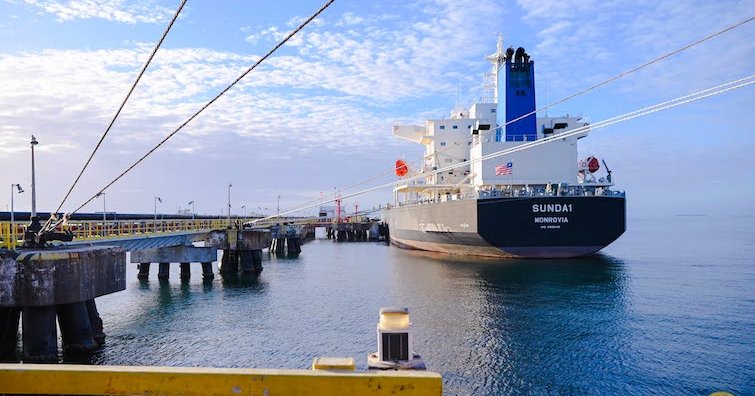
GPM Madagascar: Fuel Supply Disruption at Toamasina Port Raises Concerns
Summary
- The Groupement Pétrolier de Madagascar (GPM) has expressed concerns over the disruption of fuel supply arrangements at Toamasina port.
- Two oil tankers have arrived within a short period, and the state has requisitioned storage capacity at the terminal.
- The situation raises questions about cargo reception and distribution continuity, with significant implications for businesses operating in Madagascar.
- Madagascar's petroleum regulations may be relevant to the current situation, providing for government intervention in exceptional circumstances.
Fuel Supply Disruption Looms in Madagascar
The arrival of two oil tankers within a short period, coupled with the requisitioning of terminal storage capacity by the state, raises questions about cargo reception and distribution continuity.
The Groupement Pétrolier de Madagascar (GPM) has expressed concerns over the disruption of fuel supply arrangements at Toamasina port. The arrival of two oil tankers within a short period, coupled with the requisitioning of terminal storage capacity by the state, raises questions about cargo reception and distribution continuity. This development has significant implications for businesses operating in Madagascar, particularly those reliant on transportation or logistics services.
The GPM's concerns stem from the complex interplay between the arrival of new tankers and the state's decision to requisition storage capacity at the terminal. While the exact reasons behind this move are unclear, it is evident that the situation has created uncertainty among stakeholders involved in fuel supply chains.
Legal Context
The requisitioning of storage capacity by the state is subject to regulatory scrutiny under Madagascar's petroleum regulations. The country's laws governing oil and gas operations are designed to ensure a stable and secure environment for investment, but they also provide for government intervention in exceptional circumstances. The state has recently declared and renewed an energy emergency, and new legislation (Law No. 021/2026) has been adopted to empower a state-authorized entity to control and coordinate fuel importation, thus providing a legal framework for such intervention.
The GPM has likely taken note of these regulatory frameworks and may be exploring options to address any potential breaches or irregularities. As the situation unfolds, lawyers and compliance officers should monitor developments closely, as disruptions to fuel supply chains can have far-reaching consequences for businesses operating in Madagascar.
Why It Matters
The disruption of fuel supply arrangements at Toamasina port has broader implications beyond the immediate concerns of the GPM and other stakeholders. The stability of fuel supplies is critical to the functioning of various industries, including transportation, logistics, and manufacturing. Disruptions can lead to increased costs, reduced productivity, and even business closures.
As Madagascar continues to develop its economy, it is essential for policymakers and regulators to prioritize measures that ensure a stable and secure environment for investment. This includes maintaining clear regulatory frameworks, promoting transparency in government decision-making, and fostering cooperation among stakeholders involved in fuel supply chains.
Practical Implications
Lawyers and compliance officers should monitor the situation closely, as disruptions to fuel supply chains can have significant implications for businesses operating in Madagascar, particularly those relying on transportation or logistics services.
Source
How does this affect you?
Get an AI analysis of this article grounded in your jurisdictions, practice areas, and any policy documents you've uploaded to Wansom.
Wansom is AI and can make mistakes.