
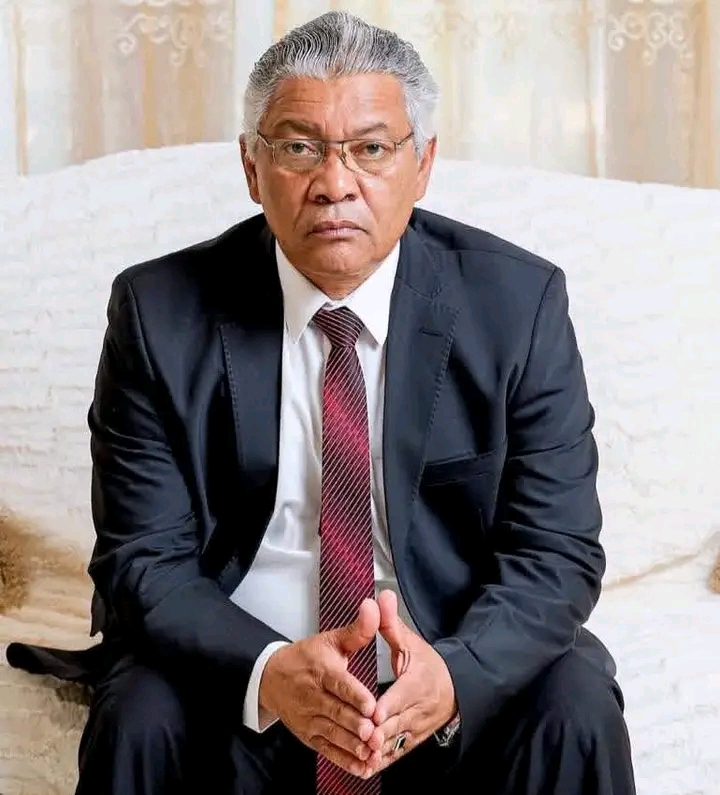
Given Lubinda: Challenges Leader of Opposition Appointment Process
Summary
- Former Patriotic Front Vice President Given Lubinda, now a member of the ruling UPND, has questioned the process for appointing the Leader of the Opposition in the Zambian National Assembly.
- Lubinda specifically called on the National Reconciliation Party for Unity and Prosperity (NRPUP) to clarify the appointment procedure.
- The challenge arises amid growing concerns regarding the legitimacy of Ezra Tembo's position as the current Leader of Opposition.
- The issue highlights the importance of transparent parliamentary procedures for key appointments.
What Happened
The legitimacy of appointments to high-profile parliamentary positions, such as the Zambia National Assembly Leader of Opposition, is absolutely critical for maintaining the integrity and effective functioning of a democratic legislature.
Given Lubinda, a prominent political figure and member of the ruling United Party for National Development (UPND), has publicly challenged the method by which the Leader of the Opposition was appointed in the Zambian National Assembly. This significant parliamentary challenge centers on the procedural steps taken to install Ezra Tembo, the current Leader of the Opposition, in this crucial role. Lubinda has specifically directed his appeal to the National Reconciliation Party for Unity and Prosperity (NRPUP), urging them to provide a detailed and transparent account of the entire appointment process.
This demand for elucidation from the former Patriotic Front official stems from an escalating level of public and political inquiry regarding the validity of the current Leader of Opposition's position. The core concern, as articulated by Lubinda, revolves around a perceived lack of clarity or adherence to established parliamentary norms during the selection, which has consequently led to considerable doubts concerning its overall legitimacy. The call for the NRPUP to clarify the Leader of Opposition appointment process underscores a broader expectation for accountability and procedural correctness within Zambian parliamentary operations.
Legal Context
The legitimacy of appointments to high-profile parliamentary positions, such as the Zambia National Assembly Leader of Opposition, is absolutely critical for maintaining the integrity and effective functioning of a democratic legislature. When questions arise regarding the specific process through which such a pivotal figure is selected, it inevitably casts a shadow over the institution itself and its capacity to fairly represent the diverse political spectrum. Given Lubinda's parliamentary challenge, by focusing intently on the procedural aspects, inherently raises fundamental questions about the strict adherence to established Zambian parliamentary procedure and, by extension, the Leader of Opposition constitutional process Zambia.
The request for the National Reconciliation Party for Unity and Prosperity to publicly clarify the process used to appoint the Leader of the Opposition in the National Assembly transcends mere political dispute; it delves into the foundational principles of procedural fairness, transparency, and legal compliance within the nation's legislative framework. Any ambiguity or perceived irregularity in the selection of such a vital role could be interpreted as a significant deviation from expected standards of good governance, thereby necessitating a comprehensive public explanation to uphold the credibility and integrity of the National Assembly's operations. This ongoing scrutiny highlights the paramount importance of having clear, defensible, and transparent processes for all high-level parliamentary appointments.
Why It Matters
The integrity and perceived fairness of the Given Lubinda Leader of Opposition appointment process hold profound implications for the overall health and public confidence in Zambia's democratic institutions. A transparent and indisputably legitimate selection process for this particular role is essential to ensure that the voice of the opposition is recognized as authoritative and that the vital system of checks and balances, which is inherent in any robust parliamentary system, is maintained without question. When doubts emerge, as they have concerning the NRPUP Leader of Opposition appointment, it possesses the potential to significantly erode public trust in the legislative body, its leadership, and the broader democratic framework.
Given Lubinda's questioning of the process used to appoint the Leader of the Opposition in Parliament is therefore far more than a specific query about a single appointment; it represents a crucial call for the reinforcement of fundamental principles of good governance, procedural rectitude, and accountability within the Zambian political landscape. The eventual resolution of these growing questions over the legitimacy of the appointment will be pivotal for affirming the stability and credibility of the National Assembly, ensuring that all key roles are perceived to be filled through unimpeachable and transparent means. This particular challenge could establish an important precedent for future interpretations and applications of Zambian parliamentary procedural legitimacy.
Practical Implications
Lawyers advising on constitutional law or parliamentary procedure in Zambia should monitor the outcome of this challenge, as it could clarify the legal requirements and legitimacy of key parliamentary appointments, potentially setting a precedent for future procedural disputes.
Source
How does this affect you?
Get an AI analysis of this article grounded in your jurisdictions, practice areas, and any policy documents you've uploaded to Wansom.
Finish Reading the Full Story and the Expert Analysis.
Wansom is AI and can make mistakes.