
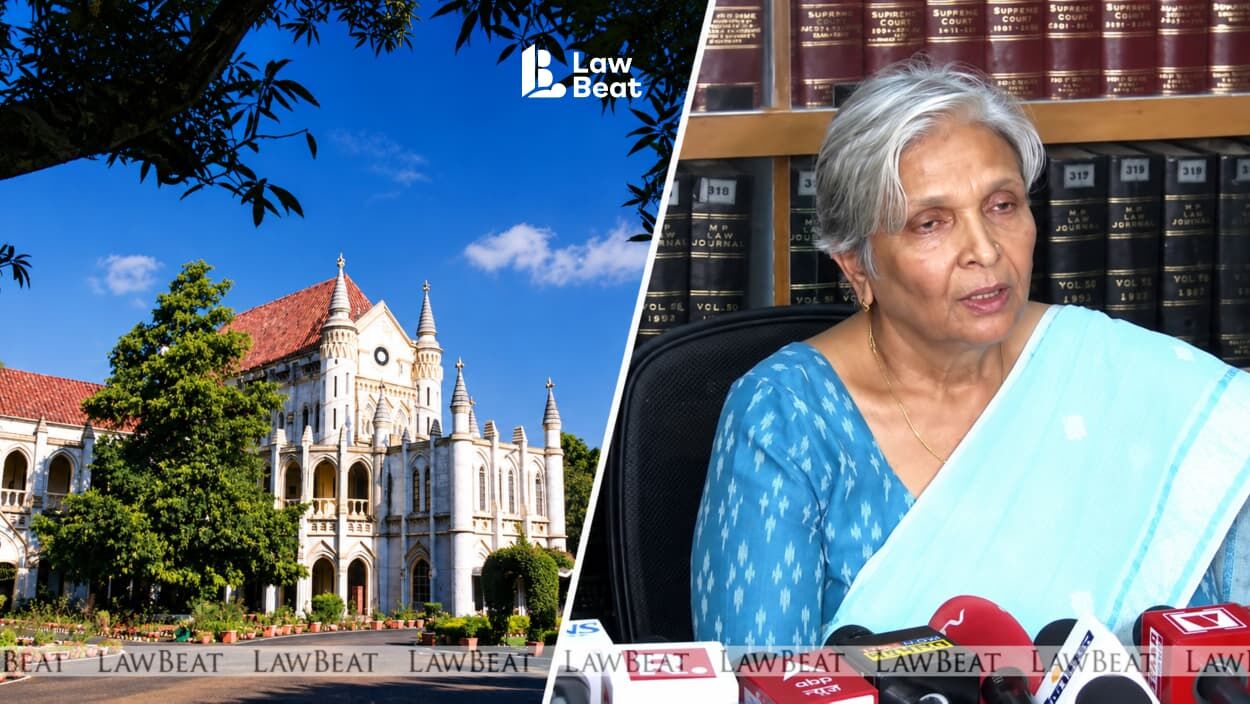
Giribala Singh: MP High Court Hears Twisha Sharma Bail Plea
Summary
- Giribala Singh, mother-in-law of the deceased Twisha Sharma, has applied for bail in the Madhya Pradesh High Court, denying abetment of suicide.
- Her counsel argues that the CBI found no evidence of dowry death and that charges of abetment and cruelty stem from ordinary family disputes.
- The CBI's charge sheet, citing 90 witnesses, focused only on abetment of suicide and cruelty under Sections 108 and 85 BNS, not dowry death.
- Defense highlighted that post-mortem reports confirmed suicidal death and that Twisha's complaints were directed at her husband, not Giribala.
- The bail application emphasizes that abetment of suicide requires clear *mens rea* and direct instigation, citing Supreme Court precedents like *Mahendra Awase v. State of Madhya Pradesh*.
Background to the Bail Application
A crucial part of the bail application centered on the high evidentiary standard required for abetment of suicide.
Giribala Singh, the mother-in-law of the deceased Twisha Sharma, has sought bail from the Madhya Pradesh High Court, asserting that there is no substantive evidence to support charges of abetment in her daughter-in-law's death. Senior Advocate Surendra Singh, representing Giribala Singh before Justice Ajay Kumar Nirankari, contended that the allegations against his client stem from typical family disagreements rather than any direct instigation or assistance in Twisha's demise.
The court was informed that the marriage between Twisha and Giribala's son, Samarth Singh, lasted only five months. Initially, local police had registered offenses under Sections 80 and 85 of the Bharatiya Nyaya Sanhita (BNS), which correspond to Sections 304B (dowry death) and 498A (cruelty) of the Indian Penal Code, along with provisions of the Dowry Prohibition Act. However, the Central Bureau of Investigation (CBI) subsequently took over the investigation, registering its own FIR on May 25. Despite interviewing 90 witnesses and filing a charge sheet, the CBI's findings did not establish any evidence of a dowry death.
CBI Findings and Legal Arguments
The CBI's charge sheet ultimately focused on Sections 108 and 85 of the BNS, which align with Sections 306 (abetment of suicide) and 498A (cruelty by husband or relatives) of the erstwhile IPC. The magistrate, in turn, took cognizance solely of these specific offenses, with no protest petition filed by the objector's side. Giribala Singh's counsel highlighted that the CBI's own report detailed the events of the brief five-month marriage, yet found no direct link to abetment by his client.
Furthermore, the defense challenged claims made by Twisha's relatives, suggesting a concerted effort to portray the case as murder after her death. Statements from the investigating officer and the AIIMS Bhopal doctor who led the post-mortem team were presented, indicating that the family had pressured police to register an FIR and attempted to influence the medical examination. Both post-mortem reports, however, consistently pointed to a suicidal death, with no signs of physical assault. The defense also emphasized that any disputes, including Twisha's final communications, were directed at her husband, Samarth, rather than Giribala, underscoring that the legal team's focus was solely on establishing the prima facie case against Giribala Singh.
Evidentiary Standards for Abetment
A crucial part of the bail application centered on the high evidentiary standard required for abetment of suicide. Senior Advocate Singh referenced recent Supreme Court judgments, including the precedent set in *Mahendra Awase v. State of Madhya Pradesh*, to argue that a conviction for abetment necessitates clear *mens rea*, or a guilty intention. He stressed that 'mere harassment' is insufficient for such a charge, and the prosecution must demonstrate a direct act that left the deceased with no alternative but to end their life.
In this context, the defense pointed out that Twisha Sharma, a former Miss Pune title winner with an MBA, acting experience, and a job offer in Delhi, possessed numerous options. It was also noted that she had previously left her matrimonial home independently and had booked a ticket to Nasirabad, Rajasthan, after receiving funds from her father, indicating she was never confined. The defense also addressed allegations regarding Twisha's unplanned pregnancy, citing doctors' statements from early May that she was uncertain about continuing it, while both Samarth and Giribala desired the child. Giribala's alleged outburst on May 7, five days before Twisha's death, where she reportedly called Twisha a 'murderer' after she took medication to terminate the pregnancy, was characterized as a remote expression of anger. Relying on Supreme Court rulings, the defense argued that words uttered in anger, without the intent to instigate, cannot constitute abetment, and that a mother-in-law's anger or silence in such circumstances is a natural human reaction.
Practical Implications
Lawyers defending clients accused of abetment of suicide or dowry death should note the high evidentiary standard for mens rea and direct instigation, as argued in this bail application and supported by Supreme Court precedents, particularly regarding the distinction between general family disputes and actionable instigation.
Source
How does this affect you?
Get an AI analysis of this article grounded in your jurisdictions, practice areas, and any policy documents you've uploaded to Wansom.
Finish Reading the Full Story and the Expert Analysis.
Wansom is AI and can make mistakes.