
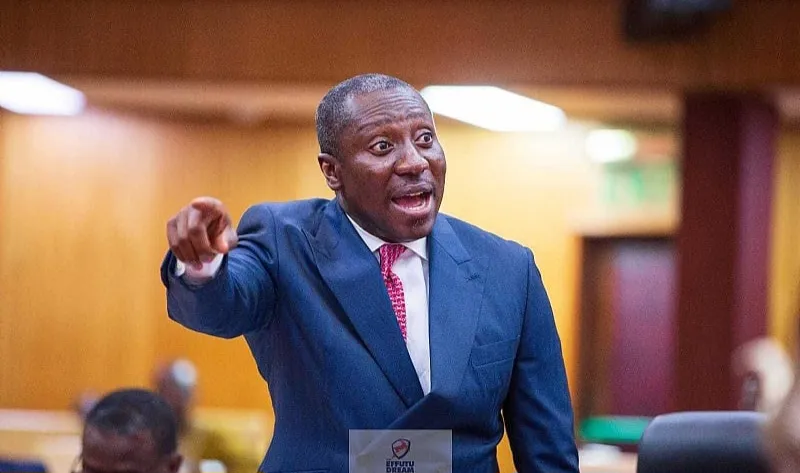
Ghana Speaker: Blocks Cocaine Inquiry Motion Over Court Prejudice
Summary
- Ghana's Speaker, Alban Bagbin, blocked a parliamentary motion seeking an inquiry into major narcotics seizures linked to the country.
- The Speaker ruled the motion inadmissible, citing potential prejudice to ongoing criminal proceedings related to the drug cases.
- Minority Leader Alexander Afenyo-Markin argued that Parliament should still investigate broader institutional and systemic issues, despite court cases.
- The proposed inquiry aimed to examine how 3.9 metric tonnes of cocaine and 320 kilogrammes of methamphetamine were processed and exported from Ghana.
- Afenyo-Markin warned that limiting parliamentary oversight could weaken accountability across state institutions.
What Happened
The Speaker's decision to block the parliamentary motion for a narcotics probe carries significant implications for legislative oversight and accountability within Ghana.
Ghana's parliamentary Speaker, Alban Bagbin, recently rejected a motion put forth by the Minority caucus, which sought to initiate a legislative inquiry into significant drug trafficking incidents linked to the nation. The motion, filed by First Deputy Minority Whip and Tolon MP Habib Iddrisu on September 28, aimed to establish an Ad Hoc Committee. This committee's mandate would have been to investigate the processes by which substantial narcotics consignments were handled, inspected, cleared, and ultimately exported from Ghana.
Speaker Bagbin's decision, delivered during an emergency sitting on a Tuesday, declared the parliamentary motion inadmissible. His ruling cited a significant overlap between the proposed inquiry's scope and matters already undergoing judicial proceedings, raising concerns about potential prejudice to these ongoing court cases. The Speaker specifically referenced Standing Orders 5, 6, and 103, Sub-Rule F, as the basis for his determination that the inquiry could delve into evidence, witnesses, conduct, and questions of responsibility directly pertinent to the legal cases.
The Minority Leader, Alexander Afenyo-Markin, strongly disagreed with Speaker Bagbin's stance, asserting that the Speaker had erred in his judgment. Afenyo-Markin argued that relying on existing criminal proceedings to define the parameters of a parliamentary investigation was a misstep. The core of the disagreement centers on the extent to which legislative oversight can operate concurrently with active judicial processes, particularly in high-profile cases involving national image and accountability.
Legal Context and Disagreement
The Speaker's ruling established a precedent regarding the admissibility of parliamentary motions when criminal proceedings are ongoing, potentially limiting legislative oversight of high-profile narcotics investigations in Ghana. The motion itself was prompted by two major international drug seizures: 3.9 metric tonnes of cocaine intercepted at France’s Port of Dunkirk on September 10, 2026, and 320 kilogrammes of methamphetamine seized by the Australian Border Force in June 2026. These incidents underscored the urgency for the Minority to seek a comprehensive parliamentary review.
However, Alexander Afenyo-Markin contended that the existence of court cases should not preclude Parliament from scrutinizing broader institutional and systemic failures. He clarified that the proposed inquiry was not designed to interfere with judicial work but rather to examine the conduct, administration, and overall effectiveness of public institutions implicated in the drug trafficking incidents. The Minority Leader emphasized that the nation's reputation was at stake, stating, "The image of our country is on trial," highlighting the perceived need for a thorough, independent review beyond the scope of criminal prosecutions.
This dispute highlights a fundamental tension between the judiciary's role in prosecuting crimes and the legislature's constitutional duty to provide oversight. Speaker Bagbin's interpretation of parliamentary rules prioritizes the integrity of ongoing legal proceedings, suggesting that a legislative probe could compromise due process. Conversely, the Minority argued for Parliament's distinct role in addressing systemic issues and ensuring accountability within state apparatus, irrespective of individual criminal cases.
Implications for Oversight and Accountability
The Speaker's decision to block the parliamentary motion for a narcotics probe carries significant implications for legislative oversight and accountability within Ghana. Alexander Afenyo-Markin warned that weakening Parliament's capacity for scrutiny could lead to a reduction in accountability across various state institutions. He stressed the importance of a robust Parliament, particularly an effective Minority, to prevent a super-majority from undermining legislative checks and balances.
Afenyo-Markin articulated that when Parliament's oversight function is diminished, the accountability framework for state institutions weakens, leaving fewer mechanisms to scrutinize the exercise of power. This ruling, therefore, sets a critical precedent concerning the limits of parliamentary inquiry in Ghana, particularly when sensitive matters like drug trafficking investigations are simultaneously before the courts. It suggests a potential constraint on the legislature's ability to conduct independent probes into systemic issues if they touch upon ongoing criminal cases.
The Minority Leader affirmed that despite the Speaker's ruling, the Minority would continue its pursuit of parliamentary oversight. This stance underscores the ongoing debate about the balance of power between different branches of government and the scope of their respective responsibilities in ensuring transparency and good governance. The outcome of this particular "Ghana Speaker blocks cocaine inquiry" decision will likely influence future attempts by Parliament to investigate high-profile matters that intersect with judicial processes.
Practical Implications
This ruling establishes a precedent regarding the admissibility of parliamentary motions when criminal proceedings are ongoing, potentially limiting legislative oversight of high-profile narcotics investigations in Ghana. Lawyers should consider this precedent when assessing the potential for parliamentary scrutiny of state institutions involved in sensitive matters.
Source
How does this affect you?
Get an AI analysis of this article grounded in your jurisdictions, practice areas, and any policy documents you've uploaded to Wansom.
Finish Reading the Full Story and the Expert Analysis.
Get the latest legal & regulatory intelligence in Ghana
Wansom is AI and can make mistakes.