
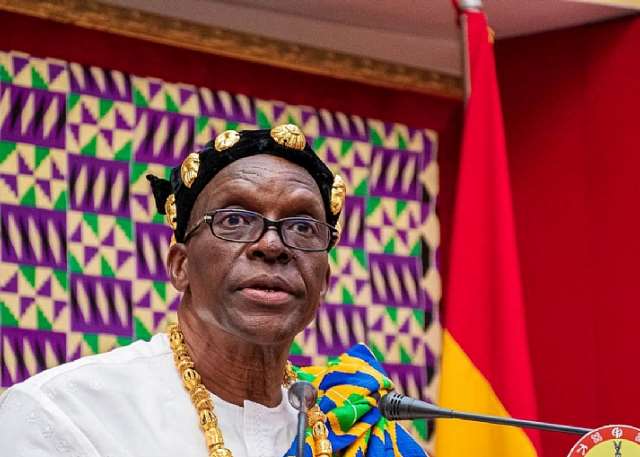
Ghana Speaker: Admits Gold Purchase Motion for GH¢22 Billion DGPP Scrutiny
Summary
- Speaker Alban Bagbin intends to admit the Minority’s motion seeking scrutiny of reported losses under the Domestic Gold Purchase Programme (DGPP).
- The motion, received on August 21, 2026, cannot be debated during the current emergency parliamentary sitting, which is focused on three specific items outlined by President John Dramani Mahama.
- Minority Leader Alexander Afenyo-Markin raised concerns over reported GH¢22 billion (US$1.7 billion) in DGPP losses, linking them to illegal mining.
- Parliament will have the opportunity to determine if the reported figure represents a loss or a cost.
- Speaker Bagbin emphasized transparency, noting Ghana's Parliament is part of the Open Governance Partnership and should not cover up issues.
Ghana Speaker Admits Gold Purchase Motion
The Speaker's decision to admit the Ghana Speaker admits Gold Purchase motion sets the stage for significant parliamentary scrutiny gold, which carries substantial implications for public accountability and financial governance.
Speaker of Parliament Alban Sumana Kingsford Bagbin has confirmed his intention to admit a motion filed by the Minority caucus, seeking parliamentary scrutiny of reported financial losses associated with the Domestic Gold Purchase Programme (DGPP). The Speaker personally reviewed the motion, which arrived at his office on August 21, 2026, and deemed it suitable for consideration by the legislative body. This decision signals an upcoming parliamentary debate on the controversial programme, which has drawn significant public attention.
However, Speaker Bagbin clarified that while the motion will be admitted, its debate cannot proceed during the current emergency parliamentary sitting. He emphasized that the House was recalled specifically to address three distinct items of business outlined by President John Dramani Mahama. The Speaker directed the Table Office to focus exclusively on these pre-determined matters, precluding any new business, question time, or statements during this one-week session. The motion, therefore, must await a future parliamentary session for full deliberation.
Scrutiny of Reported Losses and Procedural Delays
The Minority's motion aims to investigate reported losses under the Domestic Gold Purchase Programme Ghana, a matter highlighted by Minority Leader Alexander Afenyo-Markin. Mr. Afenyo-Markin raised concerns over a reported GH¢22 billion, equivalent to US$1.7 billion, linked to the DGPP, further connecting these financial issues to the broader consequences of illegal mining in the country. Parliament's role, according to Speaker Bagbin, will be to determine whether the reported figure constitutes an actual loss or merely a cost, allowing for a thorough examination of the claims.
Despite the urgency expressed by the Minority, Speaker Bagbin reiterated that the motion could not be considered during the current sitting because Parliament was not on recess when the motion was filed. His decision to admit the motion, despite the procedural delay for debate, underscores a commitment to transparency. The Speaker stated that it would be improper for Parliament to appear to cover up any issues, asserting that Ghana's Parliament is now part of the Open Governance Partnership and has taken steps to enhance its openness, positioning it as a leader among African parliaments in this regard.
Implications for Public Accountability
The Speaker's decision to admit the Ghana Speaker admits Gold Purchase motion sets the stage for significant parliamentary scrutiny gold, which carries substantial implications for public accountability and financial governance. By allowing the motion, Parliament will have the opportunity to delve into the reported DGPP Ghana losses GH¢22 billion, a figure that has sparked considerable public concern. This process is crucial for ensuring that public funds are managed responsibly and that any irregularities are thoroughly investigated.
This impending debate is particularly relevant given the Minority Leader's explicit link between the DGPP's financial challenges and the widespread issue of Ghana illegal mining. The parliamentary examination will not only focus on the financial aspects but could also shed light on the broader economic and environmental impacts of gold purchasing policies. Speaker Bagbin expressed confidence in the Ghanaian public, noting that citizens are intelligent and will assess the arguments presented by both sides, ultimately forming their own conclusions on the matter.
Practical Implications
This development signals impending parliamentary scrutiny of the Domestic Gold Purchase Programme (DGPP) and its reported losses. Lawyers and compliance officers advising clients in Ghana's mining sector or those involved in public finance should closely monitor the upcoming debate for potential regulatory changes, investigations, or legal implications arising from the findings.
Source
How does this affect you?
Get an AI analysis of this article grounded in your jurisdictions, practice areas, and any policy documents you've uploaded to Wansom.
Wansom is AI and can make mistakes.