
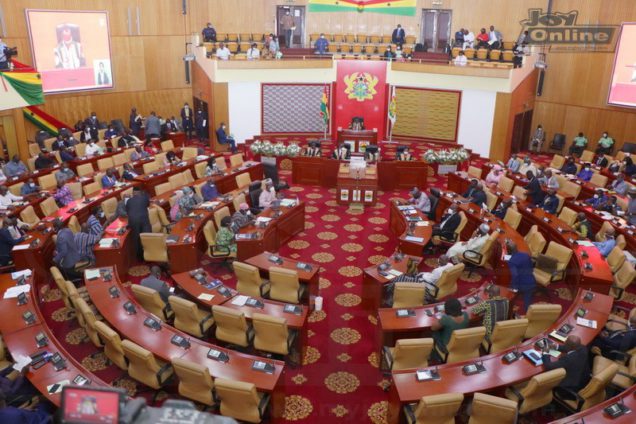
Ghana Parliament: Ministerial Nominations Consideration Begins
Summary
- Ghana's Parliament has been recalled for a five-day sitting starting today, August 24, to address urgent parliamentary business.
- A key item on the agenda is the consideration of ministerial nominations from President John Dramani Mahama.
- Nominees include Dr. Zanetor Agyeman-Rawlings for Environment, Science and Technology, and Mahama Ayariga for Local Government, Chieftaincy and Religious Affairs.
- These nominations, submitted on August 7, require parliamentary approval under Article 78(1) of the 1992 Constitution.
- The parliamentary vetting process will determine the approval or rejection of these ministerial appointments.
Parliamentary Agenda Takes Center Stage
Lawyers and compliance officers are advised to closely monitor the approval of these ministerial nominations.
Ghana's Parliament is set to reconvene today, Monday, August 24, for a specialized five-day sitting, concluding on Friday, August 28. The legislative body will gather at Parliament House in Accra, with proceedings scheduled to commence at noon. This urgent recall was initiated by Speaker Alban Sumana Kingsford Bagbin on Wednesday, August 12, acting under the authority granted by Order 58(4) of the Standing Orders of Parliament.
While the Speaker's official communication did not explicitly detail the specific matters for deliberation, the primary focus of this extraordinary session is widely understood to be the Ghana Parliament ministerial nominations consideration. Several key appointments proposed by President John Dramani Mahama are awaiting legislative review, forming a critical component of the urgent parliamentary business that necessitated the recall.
Key Ministerial Nominations Unveiled
President John Dramani Mahama formally submitted his list of ministerial nominees to Parliament on Friday, August 7. Among the prominent figures put forward is Dr. Zanetor Agyeman-Rawlings, the Member of Parliament for Klottey Korle, who has been nominated to serve as the Minister for Environment, Science and Technology. This nomination follows the unfortunate passing of the substantive minister, Murtala Mohammed.
Additionally, the President has proposed Mahama Ayariga, the Member of Parliament for Bawku Central, as the new Minister for Local Government, Chieftaincy and Religious Affairs. The nominations also include the reassignment of two other existing ministers to new portfolios, indicating a broader reshuffle within the executive branch. These proposed Ghana ministerial appointments approval processes are now at the forefront of the parliamentary agenda.
Constitutional Mandate and Vetting Process
The process for these appointments is firmly rooted in the nation's legal framework. In accordance with Article 78(1) of the 1992 Constitution, all ministerial nominees must secure parliamentary approval before they can officially assume their respective offices. This constitutional provision underscores the legislative branch's crucial oversight role in the formation of the executive.
Consequently, a significant portion of the five-day sitting will be dedicated to the Ghana Parliament vetting process. This involves a thorough examination of the nominees' qualifications, experience, and suitability for their proposed roles. Following the vetting, Parliament will proceed to either approve or reject the nominations, thereby completing the essential constitutional requirement for these high-level government positions.
Implications for Policy and Compliance
The outcome of the Ghana ministerial appointments approval process carries substantial weight, particularly for the Environment, Science and Technology, and Local Government sectors. New leadership in these ministries could signal shifts in governmental priorities, policy directions, and regulatory frameworks. For instance, the Dr Zanetor Agyeman-Rawlings minister nomination could herald new approaches to environmental protection or scientific research, while the Mahama Ayariga minister nomination might lead to changes in local governance structures or chieftaincy affairs.
Lawyers and compliance officers are advised to closely monitor the approval of these ministerial nominations. Potential changes in leadership within these critical sectors may directly impact client operations, necessitate adjustments to compliance strategies, or introduce new regulatory requirements. Understanding the nuances of these appointments and their subsequent policy implications is crucial for navigating the evolving legal and regulatory landscape in Ghana.
Practical Implications
Lawyers and compliance officers should track the approval of these ministerial nominations as they may signal shifts in policy and regulatory priorities within the Environment, Science and Technology, and Local Government sectors in Ghana, potentially impacting client operations or compliance strategies.
Source
How does this affect you?
Get an AI analysis of this article grounded in your jurisdictions, practice areas, and any policy documents you've uploaded to Wansom.
Wansom is AI and can make mistakes.