
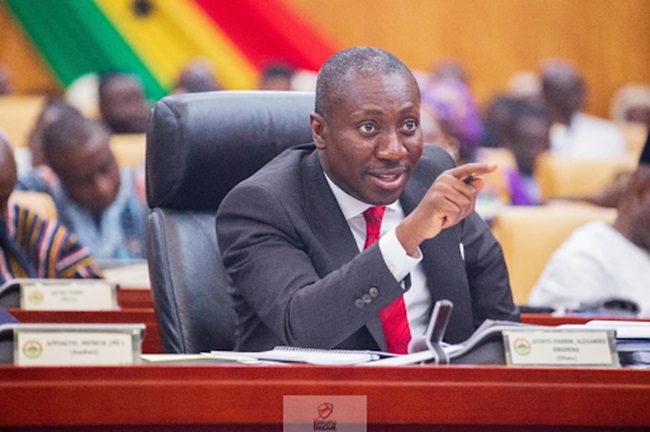
Afenyo-Markin: BNI Intimidation of NPP MPs Curbs Free Speech
Summary
- Minority Leader Alexander Afenyo-Markin alleges the government uses state agencies, including the BNI, to intimidate and silence opposition Members of Parliament.
- He claims some colleagues are afraid to speak forcefully in Parliament due to fear of BNI invitations, citing specific instances of hesitation.
- Afenyo-Markin asserts that some investigations against MPs are based on insufficient allegations, indicating an excessive use of investigative powers against political opponents.
- He clarified his criticism is not against accountability but against the unnecessary intimidation and politicization of state processes.
- The Minority Leader urged the government to focus on its mandate and economic challenges rather than targeting opponents, warning against setting negative precedents for future administrations.
Allegations of State-Sponsored Intimidation
His primary concern revolves around what he perceives as the excessive use of investigative processes, particularly when directed against political opponents.
Ghana's Minority Leader, Alexander Afenyo-Markin, has publicly accused the government of employing state investigative bodies, specifically the Bureau of National Intelligence (BNI), to intimidate and silence Members of Parliament from the opposition. Speaking on Joy News’ The Probe on a Sunday, the Effutu MP articulated a growing concern among his colleagues, suggesting that the fear of BNI invitations is now hindering their ability to speak freely and forcefully within parliamentary proceedings. This alleged tactic, according to Afenyo-Markin, has become a significant challenge for the Minority, forming part of what he described as the government's strategy to suppress dissenting voices.
While declining to name specific individuals, Afenyo-Markin confirmed that numerous Minority MPs have conveyed their apprehensions to the leadership. He highlighted instances where parliamentary contributions were withheld due to fears of reprisal from state agencies. He recounted a direct quote from a colleague who expressed, "Leader, if I make any submission today, the BNI guys will call me," illustrating the palpable anxiety within the legislative body. This sentiment was echoed in another incident where an MP, slated to make a statement in Parliament, became hesitant over concerns of a potential BNI summons, reportedly telling Afenyo-Markin, "Leader, meka sa seisei ara na woahu sɛ BNI yafrɛ me sɛ I should report tomorrow." These are not isolated incidents, he stressed, but rather recurring patterns.
These claims by Afenyo-Markin underscore a broader concern regarding the potential for Ghana BNI political intimidation to stifle parliamentary freedom of speech. He indicated that some of the investigations targeting his colleagues are based on allegations he deems insufficient to warrant the attention of investigative agencies, suggesting an overreach or politicization of the Bureau of National Intelligence Ghana powers. The Minority Leader's statements, based on information from his leadership team, paint a picture of a legislative environment where the threat of state scrutiny is impacting the core functions of elected representatives.
Concerns Over Investigative Powers
Afenyo-Markin clarified that his critique is not an opposition to accountability; he affirmed that former public officials should indeed face investigation when circumstances demand it. However, his primary concern revolves around what he perceives as the excessive use of investigative processes, particularly when directed against political opponents. He emphasized the importance of enforcing the law with a "human face," advocating for a balanced approach that avoids unnecessary intimidation.
He explicitly rejected any interpretation of his remarks as a threat against the current administration. Instead, Afenyo-Markin positioned his statements as a cautionary warning about the dangerous precedent such conduct could establish for future political transitions. His stance reflects a desire to move beyond a retaliatory political culture, stating, "I am not the person who supports this you do me, I do you politics." This perspective highlights a fundamental concern about the Ghana government abuse investigative powers and its long-term implications for democratic governance.
The Minority Leader's intervention brings to the forefront critical questions about the independence and impartiality of state agencies. The allegations of NPP MPs intimidation by state agencies, if substantiated, could erode public trust in institutions meant to uphold justice and accountability. His call for a more measured application of investigative authority underscores the delicate balance required to maintain the rule of law without resorting to political targeting.
Warning Against Political Precedent
Beyond the immediate concerns of intimidation, Afenyo-Markin issued a broader appeal to the government to re-evaluate its priorities. He urged the administration to concentrate its efforts on fulfilling its mandate, delivering on promises made to the populace, and tackling the pressing economic challenges facing the nation. His advice was clear: governments should focus on their core responsibilities rather than making political opponents a target of state machinery.
This call for a shift in focus underscores the potential for political distractions to detract from governance. The alleged Afenyo-Markin BNI intimidation NPP MPs scenario, if left unaddressed, could set a troubling precedent where state resources and powers are perceived as tools for political leverage rather than instruments of justice. Such a climate could undermine the very foundations of a robust democracy, where parliamentary freedom of speech and the independence of elected officials are paramount.
By highlighting the potential for future political power changes to mirror current practices, Afenyo-Markin's parliamentary freedom speech serves as a critical reminder of the cyclical nature of political conduct. His plea for the government to avoid targeting opponents is not merely a defense of his colleagues but a strategic warning against entrenching practices that could ultimately harm the nation's democratic institutions, regardless of which party holds power.
Practical Implications
This development highlights concerns about the potential politicization of state investigative agencies in Ghana, which could impact the rule of law and parliamentary independence. Legal professionals should monitor such allegations for precedents regarding the scope of state power and advise clients on potential risks related to public statements or investigations, particularly those with political implications.
Source
How does this affect you?
Get an AI analysis of this article grounded in your jurisdictions, practice areas, and any policy documents you've uploaded to Wansom.
Wansom is AI and can make mistakes.