
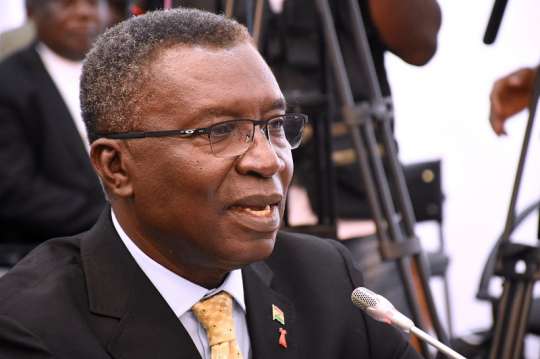
Frimpong-Boateng: Ghana Galamsey Political Cost Undermines Enforcement
Summary
- Former Minister Professor Kwabena Frimpong-Boateng asserts that enforcing environmental laws in Ghana carries a high political cost for officials, while inaction incurs little consequence.
- This imbalance has weakened efforts against illegal mining (galamsey), despite initial successes from measures like a 2017 ban and Operation Vanguard.
- Many safeguards were abandoned after the mining ban was lifted in December 2018, leading to a reversal of environmental gains.
- A report he submitted on illegal mining and obstruction became public in 2022, but public debate focused on his motives rather than the report's substance.
- He proposes a National Environmental Compact, negotiated across political parties and approved by Parliament, to ensure continuity of environmental commitments and accountability for policy reversals.
Ghana's Environmental Enforcement Dilemma
The political cost of upholding environmental regulations falls squarely on the shoulders of those who implement them, whereas the political cost of failing to enforce these laws is virtually nonexistent.
Former Environment, Science, Technology and Innovation Minister, Professor Kwabena Frimpong-Boateng, has highlighted a critical flaw in Ghana's political system, asserting that it actively undermines efforts to combat the nation's persistent environmental crisis. Speaking at the Fourth Annual Colloquium of the Department of Political Science Education at the University of Education, Winneba, on Wednesday, September 2, 2026, Professor Frimpong-Boateng articulated a scenario where officials who enforce environmental laws face significant political repercussions, while those who neglect their duties incur little to no cost. This imbalance, he argued, is a primary reason for the weakening of successive initiatives aimed at curbing illegal mining, commonly known as galamsey, despite its devastating impact on Ghana's rivers, forests, and farmlands. The colloquium's theme, "Politics, the Environment, and Our Future: Ghana at Crossroads?", provided a fitting backdrop for his observations on the Frimpong-Boateng Ghana galamsey political cost.
Professor Frimpong-Boateng's central contention is that the political calculus in Ghana disproportionately burdens environmental enforcers. He explicitly stated that the political cost of upholding environmental regulations falls squarely on the shoulders of those who implement them, whereas the political cost of failing to enforce these laws is virtually nonexistent. This structural disincentive, he explained, has rendered many well-intentioned policies ineffective, allowing environmental degradation to continue largely unchecked.
A History of Unsustained Action
Drawing from his experience as chairman of the Inter-Ministerial Committee on Illegal Mining between 2017 and 2021, Professor Frimpong-Boateng detailed how various governments have struggled to maintain anti-galamsey measures. He recounted a series of initiatives, including a 2017 ban on artisanal and small-scale mining, the launch of Operation Vanguard, the establishment of 72 district committees, the training of 3,000 miners, and the implementation of systems designed to track mining concessions and excavators. These Ghana illegal mining policy efforts initially yielded positive outcomes, with parts of the Pra River showing signs of clearing and water treatment expenses decreasing at several affected intake points.
However, the former minister lamented that many of these crucial safeguards were subsequently abandoned. He noted that after the mining ban was lifted on December 21, 2018, the underlying framework that made the initial restrictions effective did not endure. This pattern of introducing robust measures only to see them dismantled or neglected underscores the broader Ghana environmental law enforcement challenges stemming from political expediency.
Political Obstacles and Public Scrutiny
Professor Frimpong-Boateng also reflected on the aftermath of a report he submitted to the Presidency at the conclusion of his tenure, which comprehensively detailed the state of illegal mining and alleged attempts to obstruct anti-galamsey efforts. When this report became public in 2022, the national discourse, he observed, regrettably shifted away from the substantive allegations. Instead, the focus became his motivations for writing the report, rather than an examination of its contents. He remarked that the country questioned his reasons and potential beneficiaries, effectively sidelining the critical information presented.
He further argued that Ghana's approach to environmental protection is consistently hampered by short-term political considerations. The immediate political ramifications of strict enforcement, such as potential impacts on electoral prospects, often overshadow the long-term benefits of environmental restoration, which may only become apparent after many years or even generations. This short-sightedness, he contended, prevents the sustained commitment necessary for effective environmental governance.
Advocating for Policy Continuity
To address these systemic issues, Professor Frimpong-Boateng proposed the creation of a National Environmental Compact Ghana. This innovative framework would be negotiated across political parties and subsequently approved by Parliament, aiming to ensure the continuity of vital environmental commitments regardless of changes in government. His vision is to insulate key environmental policies from the political volatility that has historically undermined them.
Under this proposed compact, any future administration seeking to discontinue an established environmental commitment would be mandated to present a detailed report to Parliament. This report would be required to specify the individuals responsible for the decision, the rationale behind it, and an account of the public resources already invested in the policy. By instituting clear consequences for abandoning environmental commitments, Professor Frimpong-Boateng believes that governments would be deterred from easily reversing crucial policies, thereby fostering greater stability and accountability in environmental protection.
Practical Implications
Lawyers advising clients on environmental compliance or mining operations in Ghana should note the ongoing political challenges hindering consistent enforcement of environmental laws, particularly concerning illegal mining. The proposed National Environmental Compact signals a potential future shift towards a more stable and politically insulated environmental policy framework, which could impact long-term compliance strategies and investment risks.
Source
How does this affect you?
Get an AI analysis of this article grounded in your jurisdictions, practice areas, and any policy documents you've uploaded to Wansom.
Finish Reading the Full Story and the Expert Analysis.
Wansom is AI and can make mistakes.