
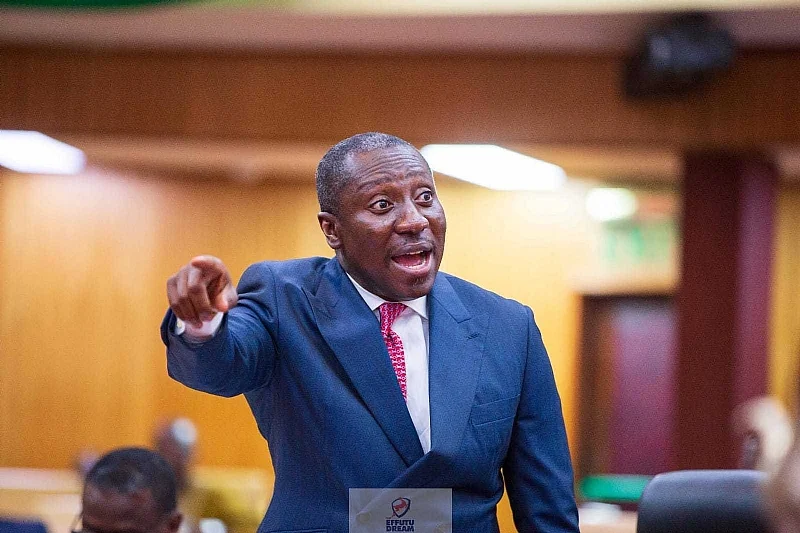
Alexander Afenyo-Markin Criticises NDC Government Over Tribunal Law
Summary
- Minority Leader Alexander Afenyo-Markin criticizes NDC government over tribunal law, executive incompetence, and majority tyranny.
- Afenyo-Markin argues that the tribunal law undermines public confidence in the justice system and may lead to biases and unequal treatment.
- The Minority Leader has criticized the Government's response to recent disasters, including the June 29 floods and fire outbreak.
- Economic concerns have been raised about discrepancies in budget figures and potential executive incompetence.
Tribunal Law Sparks Controversy
Afenyo-Markin argued that the legislation was inconsistent with recommendations by the Constitutional Review Committee chaired by Professor H. Kwasi Prempeh, which proposed the abolition of tribunals.
The passage of the Bill establishing district and regional tribunals has been met with criticism from Minority Leader Alexander Afenyo-Markin, who argues that it undermines public confidence in the justice system. The legislation was passed on July 16, despite a walkout by the Minority, which had expressed concerns about the law's consistency with recommendations by the Constitutional Review Committee. The committee, chaired by Professor H. Kwasi Prempeh, proposed the abolition of tribunals, and Afenyo-Markin has appealed to President John Dramani Mahama not to assent to the Bill. This development may prompt lawyers to advise their clients on the implications of the tribunal law, particularly with regards to potential biases and unequal treatment in the administration of justice.
Government's Response to Disaster Criticized
The Minority Leader has also criticized the Government's response to recent disasters, including the June 29 floods and fire outbreak that resulted in the deaths of 34 people. Afenyo-Markin questioned the Government's preparedness efforts and called for officials involved in those efforts to account for their actions before the appropriate parliamentary committee. The Minority Leader has vowed to continue scrutinizing the Government's actions and holding them accountable, as part of its role in ensuring good governance.
Economic Concerns and Executive Incompetence
Afenyo-Markin has also expressed concerns about the Mid-Year Review of the 2026 Budget Statement and Economic Policy presented by Finance Minister Dr Cassiel Ato Baah Forson. The Minority Leader alleged discrepancies in figures relating to inflation and expenditure, as well as concerns raised by civil society analyst Dr Adu Owusu Sarkodie regarding differing totals contained in the budget document. Afenyo-Markin has urged the Finance Minister to provide clarification and ensure consistency in the presentation of fiscal data.
Practical Implications
This development may prompt lawyers to advise their clients on the implications of the tribunal law, particularly with regards to potential biases and unequal treatment in the administration of justice. They should also be aware of the ongoing parliamentary scrutiny of government actions and the potential for changes to laws and regulations.
Source
Source: Original reporting via GNA
How does this affect your business?
Get an AI analysis of this article grounded in your jurisdictions, practice areas, and any policy documents you've uploaded to Wansom.
Wansom is AI and can make mistakes.