
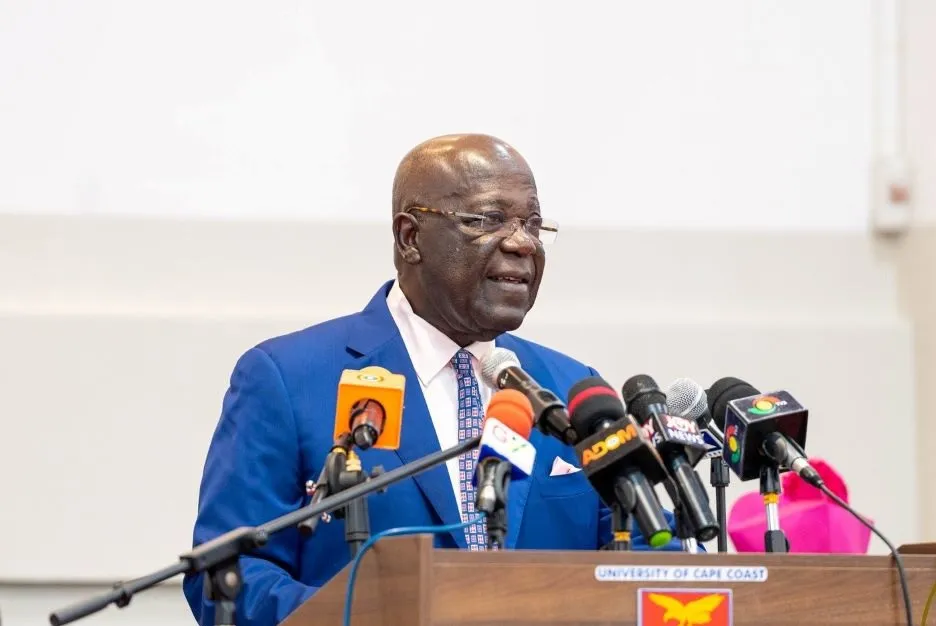
Ghana Universities: Sir Sam Jonah Warns of Collapse Without Self-Funding
Summary
- Ghana's universities risk collapse due to reliance on government funding.
- Sir Sam Jonah advocates for self-sustaining universities that create value and generate revenue.
- Universities must adapt to the changing landscape of higher education, focusing on producing graduates with practical skills.
Universities in Ghana Face Financial Crisis
A university waiting for subvention is a university planning its own funeral, with a very fine brochure.
Ghana's universities are on the brink of collapse due to their reliance on government funding. According to Sir Sam Jonah, a renowned businessman and education advocate, institutions that continue to depend on public funds risk becoming obsolete. In his keynote address at the University of Cape Coast (UCC) installation ceremony, Sir Sam warned that the era of relying on state subvention is over.
The public purse can no longer sustain higher education institutions, and no government will change this arithmetic soon. A university waiting for subvention is essentially planning its own funeral, with a fine brochure to boot.
Sir Sam Jonah's Vision for Self-Sustaining Universities
To avoid becoming obsolete, universities must reinvent themselves as institutions that create value, generate revenue, and produce graduates with practical skills. Sir Sam emphasized the need for universities to see themselves as centres capable of funding their own future, rather than beggars seeking state support.
He cited Professor Denis Aheto's record at UCC as a proof of concept. Under Professor Aheto's leadership, over $30 million has been mobilized into the university, with more than 400 scholarships funded and over 50 PhDs trained. This model is achievable, and Sir Sam pledged to support it personally.
He also proposed that universities establish vocational education programs, combining academic rigor with hands-on competence, as well as AI-driven student innovation clubs and stronger industry partnerships.
The Future of Higher Education in Ghana
Ghana's universities must adapt to the changing landscape of higher education. With artificial intelligence providing instant answers, the traditional model of transmitting knowledge is no longer viable. Sir Sam argued that universities should focus on producing graduates who can solve real-world problems.
He proposed that UCC establish Africa's first degree-awarding faculty dedicated to vocational education and called for stronger industry partnerships, diaspora mentorship, and project-based learning. The future of higher education in Ghana depends on the ability of universities to innovate and adapt to changing circumstances.
Practical Implications
Universities in Ghana may need to review their financial models and consider alternative sources of funding, such as industry partnerships or vocational training programs, to avoid becoming obsolete.
Source
How does this affect your business?
Get an AI analysis of this article grounded in your jurisdictions, practice areas, and any policy documents you've uploaded to Wansom.
Wansom is AI and can make mistakes.