
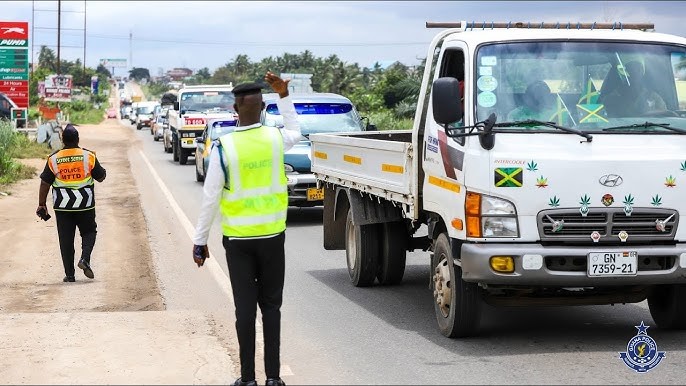
Ghana MTTD: Resolving Traffic System Complaints On New Automated Enforcement
Summary
- The Ghana MTTD is addressing complaints received within the first week of its new automated traffic enforcement system.
- Key issues include misuse of trade licence plates, untransferred vehicle ownership, and data discrepancies.
- ACP Alexander Obeng stated that dealers renting out trade plates remain responsible for any traffic violations incurred.
- Tickets for infractions are issued to the registered plate holders, not the individuals renting the plates.
- The automated enforcement equipment has undergone necessary technical checks and verification by a government engineer.
What Happened
While the law permits registered vehicle dealers to acquire these plates from the Driver and Vehicle Licensing Authority (DVLA) for legitimate trading purposes, including renting them out for a fee, a critical aspect of "Ghana traffic violation responsibility" dictates that the dealer remains fully accountable.
The Ghana Police Motor Traffic and Transport Department (MTTD) has initiated efforts to address numerous "Ghana MTTD traffic system complaints" that have surfaced during the initial seven days of its new automated traffic enforcement system's implementation. These concerns, which the department is actively working to resolve, primarily encompass issues related to trade licence plates, instances of untransferred vehicle ownership, and various discrepancies within the system's data. Assistant Commissioner of Police (ACP) Alexander Kwaku Obeng, who holds the position of Director of Education, Research and Training at the MTTD, confirmed that all grievances submitted by the public are currently being processed by the relevant authorities. Speaking on JoyNews’ Newsfile on Saturday, November 7, ACP Alexander Obeng traffic highlighted the specific challenges encountered since the system went live.
Legal and Regulatory Framework
A prominent issue identified by ACP Obeng involves the persistent misuse of "MTTD trade licence plates," a practice he noted has been abused for an extended period and now requires urgent attention under the new enforcement regime. While the law permits registered vehicle dealers to acquire these plates from the Driver and Vehicle Licensing Authority (DVLA) for legitimate trading purposes, including renting them out for a fee, a critical aspect of "Ghana traffic violation responsibility" dictates that the dealer remains fully accountable. This means that if a vehicle operating with a dealer's rented plate incurs a traffic violation, the ticket is issued to the registered plate holder—the dealer—rather than the individual who rented the plate. This legal framework places significant liability on dealers. Another substantial source of complaints stems from the widespread failure of vehicle owners to complete the necessary "DVLA vehicle ownership transfer" process after selling their vehicles, leading to confusion and enforcement challenges within the new system.
System Integrity and Accountability
Concerns have been raised by motorists regarding the reliability and accuracy of the "Ghana automated traffic enforcement" system. In response to these apprehensions, ACP Obeng provided assurances, stating that the equipment utilized in the new system has undergone all requisite technical checks and verification procedures. He further explained that the system itself has been officially homologated, and the specific devices employed have been rigorously verified by the government’s engineer, thereby confirming their operational integrity. The MTTD emphasized that the primary objective of this enforcement exercise is not to unfairly penalize or incriminate Ghanaian citizens. Instead, the authorities are steadfastly committed to ensuring the unwavering integrity of both the enforcement equipment and the overall process, aiming to establish a fair and accountable traffic management system for the nation.
Practical Implications
Lawyers should advise vehicle dealer clients and those involved in vehicle sales in Ghana to ensure strict compliance with DVLA regulations regarding trade plate usage and prompt vehicle ownership transfers, as the new automated traffic enforcement system increases liability for non-compliance and potential fines.
Source
How does this affect you?
Get an AI analysis of this article grounded in your jurisdictions, practice areas, and any policy documents you've uploaded to Wansom.
Wansom is AI and can make mistakes.