
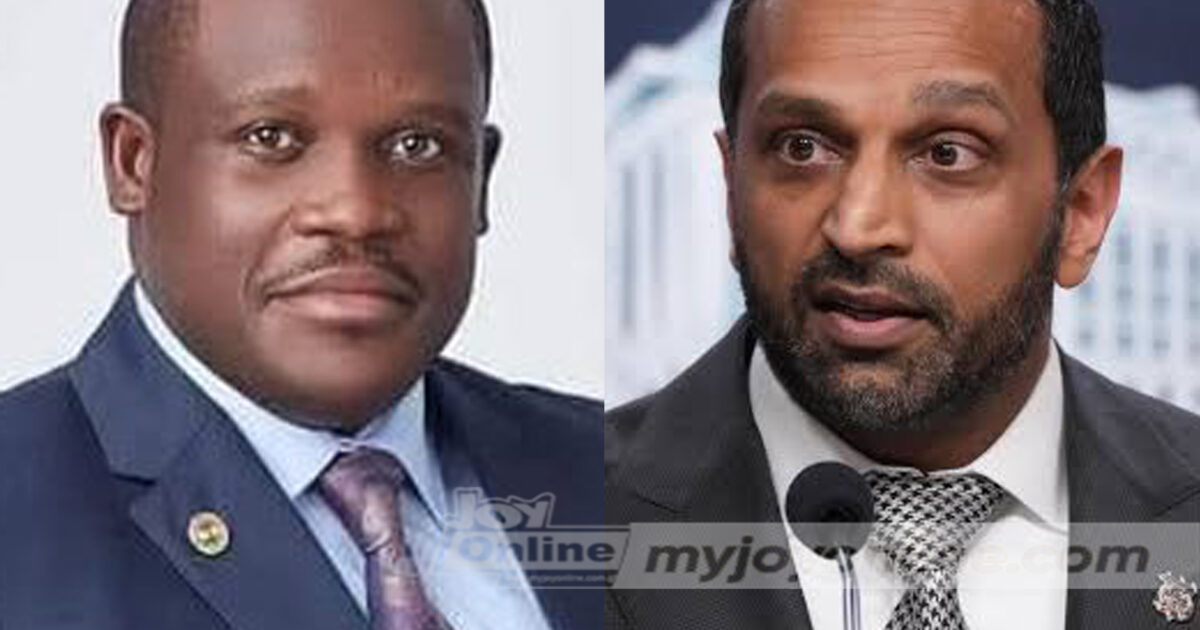
Sam George Challenges FBI Director: Ghana Cybercrime Credit Dispute
Summary
- Ghana's Minister for Cybersecurity, Samuel Nartey George, warned FBI Director Kash Patel against taking sole credit for a recent cybercrime operation in Ghana on October 8, 2026.
- Mr. George asserted that Ghanaian law enforcement and intelligence agencies led the "Cyberhunt operations," with support from the UK's National Crime Agency and the FBI.
- The Ghana-specific operation, conducted between September 25-28, 2026, identified nearly US$10 million in losses, 89 victims, and resulted in over 130 arrests and 300 device seizures.
- FBI Director Patel reported wider Operation Blackout figures, including roughly US$17 billion in seizures and the prevention of an estimated US$670 million in losses for over 10,000 Americans.
- Ghana reaffirmed its commitment to combating cybercrime and continuing international cooperation, despite the credit dispute, emphasizing the need for collaborative recognition.
A Diplomatic Spat Over Cybercrime Credit
This public disagreement between high-ranking officials from Ghana and the United States signals potential sensitivities inherent in international law enforcement collaborations, particularly concerning public acknowledgment and credit.
A public disagreement emerged on October 8, 2026, concerning the attribution of credit for a significant cybercrime operation in Ghana. Samuel Nartey George, Ghana's Minister responsible for Cybersecurity, issued a cautionary statement to FBI Director Kash Patel, advising against minimizing Ghana's pivotal role in the recent enforcement actions. This warning followed a social media post by Mr. Patel, which announced arrests and seizures as part of the FBI's global initiative, Operation Blackout. This operation specifically targets scam centers implicated in defrauding numerous victims, including American citizens.
The Ghanaian Minister's concerns stemmed from the framing of Mr. Patel's announcement, which he felt did not adequately acknowledge the leadership provided by Ghanaian law enforcement and intelligence agencies. The operation in question involved a series of targeted sting operations conducted between September 25 and 28, 2026. These actions were spearheaded by Ghana's Cyber Security Authority (CSA), operating under Mr. George's Ministry, in collaboration with the Criminal Investigations Department of the Ghana Police Service and operatives from the National Security Secretariat.
FBI Director Patel's report on the Ghana-specific segment of Operation Blackout indicated substantial results: nearly US$10 million in losses were identified, affecting 89 victims. The operation led to the arrest or detention of over 130 individuals, with more than 300 devices seized. Mr. Patel also noted that some of those detained were victims who would be repatriated to their home countries, and that investigations were still in progress.
Ghana's Asserted Leadership in 'Cyberhunt' Operations
Minister Samuel Nartey George explicitly challenged the notion that the FBI acted solely in executing the operation. He asserted that Ghanaian law enforcement and intelligence agencies took the lead in the "Cyberhunt operations," receiving primary support from the United Kingdom’s National Crime Agency (NCA) and the FBI. Mr. George emphasized that the fight against cybercrime is inherently transnational, necessitating robust collaboration among international partners.
He conveyed his belief that suggesting the FBI acted unilaterally could undermine the potential for future cooperative efforts. The Minister publicly called upon Director Patel to reflect on the mutual benefits derived from continued collaboration and to act in a manner that reinforces such partnerships. This stance underscores Ghana's commitment to aggressively prosecuting cybercriminals and its expectation of appropriate recognition for its contributions to global cybersecurity efforts.
Broader Impact of Operation Blackout and Ghana's Commitment
Beyond the specific actions in Ghana, FBI Director Kash Patel provided broader statistics for the global Operation Blackout. These figures included roughly US$17 billion in seizures, hundreds of alleged scammers arrested, and thousands of trafficked workers freed. Furthermore, the operation reportedly warned over 10,000 Americans before they incurred financial losses, preventing an estimated US$670 million in potential fraud.
Despite the dispute over credit, Minister George reaffirmed the John Dramani Mahama administration's unwavering commitment to eradicating cybercrime. He expressed gratitude to international partners, including the UK’s NCA and the FBI, for their support. The Cyber Security Authority, under his purview, pledged to continue its work with both local and international law enforcement agencies to sustain these critical operations, highlighting Ghana's dedication to ongoing international cybercrime cooperation.
Implications for International Cybercrime Cooperation
This public disagreement between high-ranking officials from Ghana and the United States signals potential sensitivities inherent in international law enforcement collaborations, particularly concerning public acknowledgment and credit. Such dynamics are crucial for legal counsel to consider when advising clients on cross-border investigations or navigating compliance with foreign law enforcement requests. The incident underscores that while operational collaboration may be strong, the public narrative surrounding such efforts can become a point of contention.
Ghana's firm stance, articulated by Minister George, also reinforces the nation's proactive and aggressive approach to cybercrime prosecution. This commitment increases compliance risk for entities operating within the digital space that might inadvertently become entangled in cybercriminal activities or fail to meet robust cybersecurity standards. The episode ultimately highlights the delicate balance required in international partnerships to ensure continued effectiveness against transnational cyber threats, where mutual respect and clear communication are paramount.
Practical Implications
This development signals potential political sensitivities in international cybercrime enforcement collaborations, which legal counsel should consider when advising clients on cross-border investigations or compliance with foreign law enforcement requests. It also reinforces Ghana's commitment to aggressive cybercrime prosecution, increasing compliance risk for entities operating in the digital space.
Source
How does this affect you?
Get an AI analysis of this article grounded in your jurisdictions, practice areas, and any policy documents you've uploaded to Wansom.
Finish Reading the Full Story and the Expert Analysis.
Get the latest legal & regulatory intelligence in Ghana
Wansom is AI and can make mistakes.