
Ghana Government: NIA Salary Suspension Looms for Public Sector by September 15
Summary
- Ghana's Controller and Accountant-General’s Department (CAGD) has mandated that public sector employees must have valid National Identification Authority (NIA) details on the government payroll.
- Salaries for non-compliant employees will be suspended starting September 15, 2026.
- The directive, issued on August 24, 2026, aims to correct discrepancies found after an E-Payslip system upgrade and validate records for a nationwide re-verification.
- Ministries, Departments and Agencies (MDAs) are responsible for identifying affected staff and facilitating corrections through specific application processes.
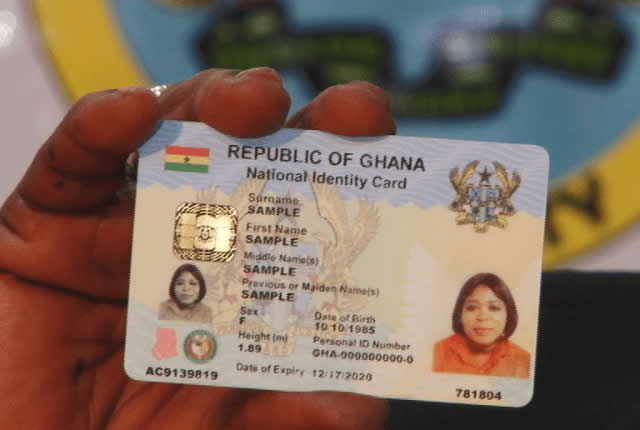
- Physical NIA cards are not required; compliance focuses on accurate digital record-keeping, as per Regulation 9 of L.I. 2523.
Immediate Payroll Threat for Public Servants
Public sector employees in Ghana face the imminent threat of salary suspension if their National Identification Authority (NIA) details are not accurately recorded on the government payroll system by September 15, 2026.
Public sector employees in Ghana face the imminent threat of salary suspension if their National Identification Authority (NIA) details are not accurately recorded on the government payroll system by September 15, 2026. This critical directive, issued by the Controller and Accountant-General’s Department (CAGD) on August 24, 2026, mandates that all government workers ensure their valid NIA information is correctly captured. The measure is a precursor to a planned nationwide employee re-verification exercise, underscoring the government's commitment to robust Ghana public sector payroll verification. Failure to comply with this instruction will result in the cessation of salary payments for affected individuals from the specified deadline.
Addressing Persistent Payroll Discrepancies
The CAGD NIA directive Ghana stems from significant discrepancies identified following the recent upgrade of the Employee Payslip (E-Payslip) system. This upgrade revealed that numerous employees were unable to access their payslips due to issues with their identification data. Specifically, the CAGD found instances where NIA numbers on the payroll system did not correspond with the official records held by the National Identification Authority Ghana, while other entries completely lacked any NIA details. Controller and Accountant-General Kwasi Agyei explicitly warned that “Employees who do not have valid NIA details on the payroll system will have their salaries suspended with effect from 15th September, 2026,” highlighting the severity of the situation. This proactive step is designed to ensure the proper validation of all employee records before the comprehensive re-verification process commences.
Mandated Compliance Procedures for MDAs
In response to these findings, the Controller and Accountant-General's Department has issued clear instructions to the Human Resource (HR) departments across all Ministries, Departments and Agencies (MDAs). These departments are tasked with ensuring that every employee's accurate NIA number is integrated into the government payroll system. For employees requiring corrections or the initial insertion of their NIA details, a specific protocol must be followed: the affected employee must submit an application, accompanied by a cover letter from the head of their institution authorizing the change. These documents are then to be forwarded to the CAGD for official validation. Furthermore, HR officers have been directed to regularly check their institutions’ corporate email accounts for lists of employees flagged as having "No NIA" details, requiring them to take immediate corrective action.
Regulatory Framework and Broader Implications
Crucially, the CAGD has clarified that the submission or inspection of physical NIA cards is no longer a requirement for this process. This updated approach aligns with Regulation 9 of the National Identity Register (Amended) Regulations, 2026 (L.I. 2523), which governs identity verification within Ghana's public sector. Instead, the emphasis is placed entirely on ensuring that employees' NIA numbers and other essential identity information are accurately and digitally captured within the government payroll system, facilitated through their respective Heads of Human Resources. The department has strongly urged both individual employees and their institutions to adhere strictly to this directive before the September 15, 2026, deadline to prevent any disruptions to salary payments and ensure full compliance with the evolving regulatory landscape for public sector employment.
Practical Implications
Lawyers advising government agencies or public sector employees in Ghana should ensure compliance with the CAGD directive on NIA details to prevent salary suspensions and potential employment disputes. Compliance officers in MDAs must urgently verify and correct employee NIA records by September 15, 2026, to avoid payroll disruptions and ensure adherence to Regulation 9 of L.I. 2523.
Source
How does this affect you?
Get an AI analysis of this article grounded in your jurisdictions, practice areas, and any policy documents you've uploaded to Wansom.
Wansom is AI and can make mistakes.