
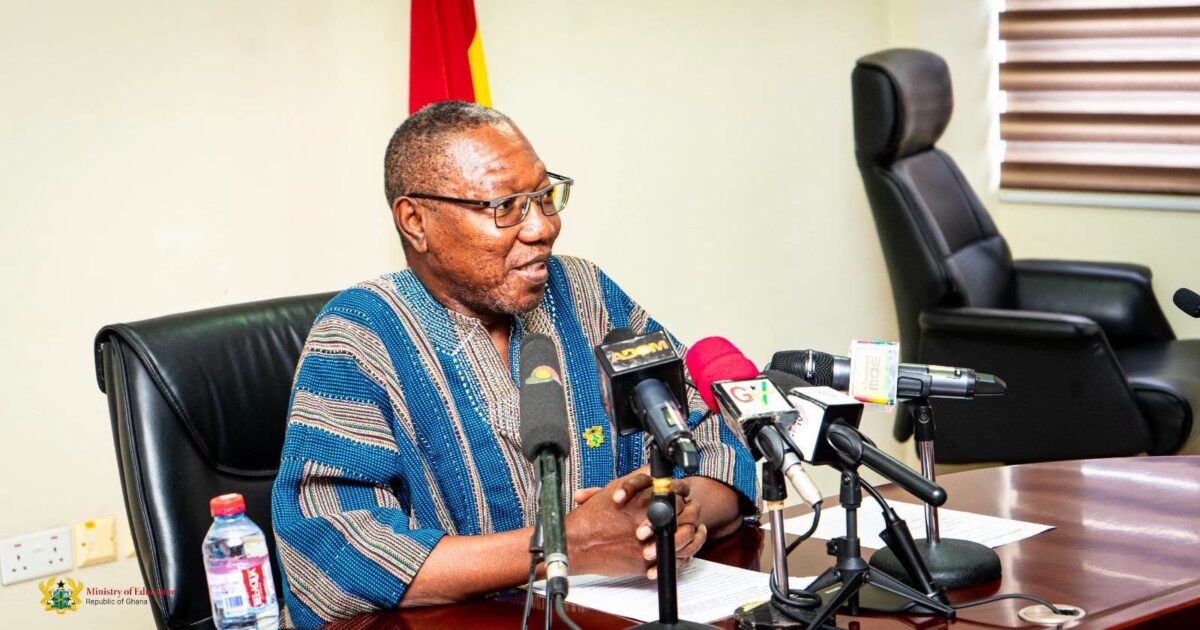
Ghana Government Appeals to Striking Teachers to Resume Work
In Ghana, on October 9, 2026, the government, through Deputy Minister of Education Dr. Clement Apaak, stated its continued commitment to appealing to pre-tertiary teachers to end their two-week strike and return to classrooms while negotiations to resolve their grievances proceed.
The strike, which has lasted for approximately two weeks, has been initiated by pre-tertiary teachers over several unresolved issues, including delayed promotion-related payments, a proposed allowance for teachers serving in deprived rural communities, and the renewal of their collective agreement. The government's stance, as articulated by Dr. Apaak, is one of conciliation, acknowledging the legitimacy of the teachers' demands and expressing a desire to resolve the issues through dialogue rather than confrontation. This industrial action has significantly disrupted teaching and learning across the country, affecting thousands of pupils.
This situation is legally significant as it highlights the delicate balance between the constitutional right to strike and the provision of essential public services, particularly education, under Ghana's labour laws. The Labour Act, 2003 (Act 651), provides the framework for industrial relations, collective bargaining, and dispute resolution, including mediation and arbitration. The government's decision to appeal rather than resort to more forceful legal measures, such as injunctions, indicates an adherence to the principles of good faith negotiation and a preference for amicable resolution, which is often encouraged under the Act. The key parties involved are the Government of Ghana, represented by the Ministry of Education, and the pre-tertiary teachers, presumably acting through their respective unions, whose collective agreements are central to the dispute.
For legal practitioners, this scenario underscores the complexities of public sector labour disputes and the importance of understanding the Labour Act, 2003, and specific collective bargaining agreements. Attorneys advising either government entities or public sector unions must be adept at navigating the legal procedures for dispute resolution, including conciliation, mediation, and arbitration, to ensure compliance and facilitate timely settlements. The ongoing nature of the appeals and negotiations means that the outcome of this matter is not yet reported, as the strike continues while discussions are underway.
Practitioners should advise clients on the legal implications of prolonged industrial action, the requirements for declaring a lawful strike, and the various avenues available for resolving grievances within the legal framework. Monitoring the progress of these negotiations and any potential shifts in the government's or unions' positions will be critical for anticipating future developments and advising stakeholders effectively.
How does this affect you?
Get an AI analysis of this article grounded in your jurisdictions, practice areas, and any policy documents you've uploaded to Wansom.
Finish Reading the Full Story and the Expert Analysis.
Get the latest legal & regulatory intelligence in Ghana
Wansom is AI and can make mistakes.