
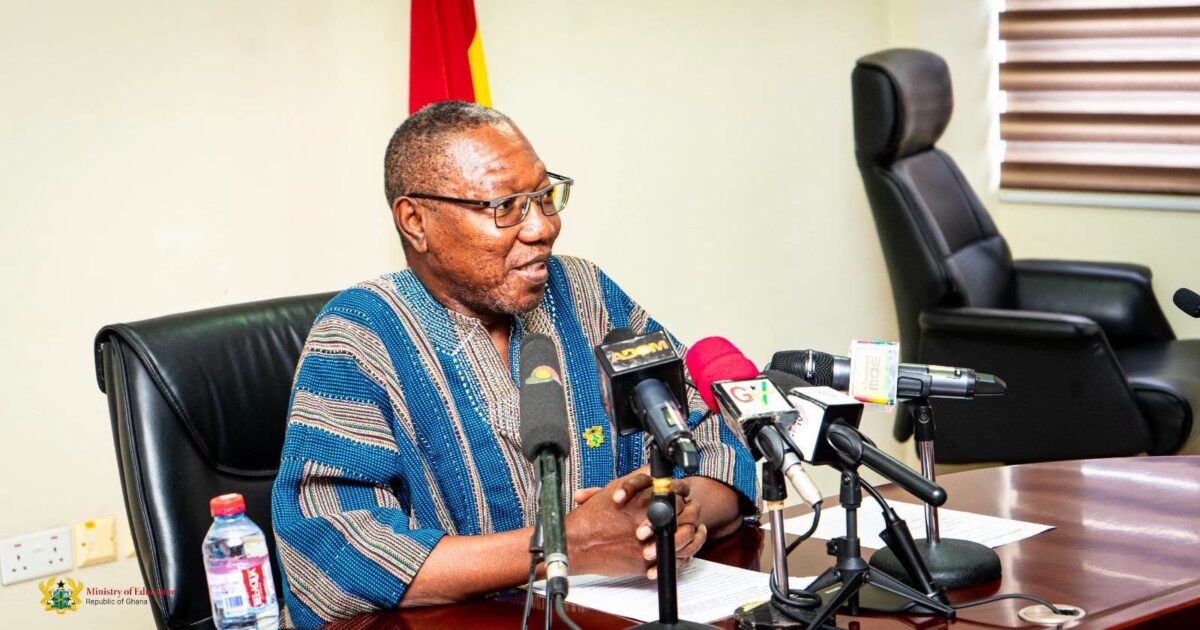
Ghana Government Appeals: Striking Teachers Resume as Talks Continue
Summary
- Pre-tertiary teachers in Ghana have been on strike for approximately two weeks, causing widespread educational disruption.
- The industrial action stems from delayed promotion-related payments, a proposed rural allowance, and stalled collective agreement renewal.
- Deputy Education Minister Dr. Clement Apaak confirmed the government is continuously appealing to teachers to return to work.
- The government emphasizes a non-antagonistic approach, viewing teachers as partners and committing to address their legitimate concerns.
- Negotiations are ongoing, with hope for progress on issues including outstanding promotion payments and the collective agreement.
The Ongoing Teacher Strike
He underscored that the persistent calls for teachers to return to the classroom are a deliberate effort to mitigate the adverse effects of the strike on students while Ghana teacher strike negotiations remain active.
Pre-tertiary educators across Ghana have engaged in industrial action for approximately two weeks, leading to significant disruptions in teaching and learning nationwide. This widespread Ghana education industrial action has left thousands of students without instruction, prompting urgent calls for a swift resolution. The teachers initiated the strike due to several unresolved grievances, including delays in promotion-related payments, the absence of a proposed allowance for educators serving in remote and underserved rural communities, and the stalled renewal of their collective agreement.
The government has responded by continuously appealing to the striking teachers to resume their duties, emphasizing the critical impact on the nation's educational system.
Government's De-escalation Strategy
In response to the ongoing industrial action, the Ghanaian government has adopted a strategy of continuous engagement and appeal, rather than confrontation. Dr. Clement Apaak, the Deputy Minister of Education, affirmed the government's commitment to addressing the teachers' concerns, explicitly stating that the administration does not view the educators as adversaries. He underscored that the persistent calls for teachers to return to the classroom are a deliberate effort to mitigate the adverse effects of the strike on students while Ghana teacher strike negotiations remain active.
Dr. Apaak articulated this approach on Thursday, October 8, 2026, during an interview with Citi FM, noting, “It’s not a crime to plead. So as long as they are not in the classroom, we will continue to plead with them.” He further clarified the government's stance, asserting, “We are not antagonistic. We are not challenging their demands. We have not said anywhere that they are not justified.” This highlights the government's preference for dialogue and de-escalation in resolving the dispute, as the Ghana government appeals striking teachers resume their duties.
Addressing Grievances and Future Outlook
The government's primary concern remains the interruption to pupils' education, and it has pledged to continue its appeals for teachers to return to their posts while their legitimate concerns are being addressed. Dr. Apaak conveyed the depth of this commitment, stating, “We will continue to supplicate. We are lying down prostrate. We are on our knees pleading with our teachers to come back to the classroom whilst we address their legitimate concerns.”
While declining to disclose specific details of the ongoing Ghana teacher strike negotiations, citing the inappropriateness of doing so during active discussions, the Deputy Minister expressed optimism for a positive outcome. He specifically mentioned the expectation of progress in processing outstanding Ghana teacher promotion payments dispute for affected personnel. The resolution of the Ghana public sector collective agreement also remains a key component of the ongoing dialogue, with the government signaling its intent to find common ground. The Ghana government appeals striking teachers resume strategy underscores a preference for collaborative problem-solving over adversarial tactics in managing public sector labor disputes.
Practical Implications
Lawyers advising public sector entities or unions in Ghana should note the government's current strategy of de-escalation and continuous appeal in resolving industrial disputes, indicating a preference for negotiation over confrontation. This approach could inform strategies for managing similar labor actions and understanding the government's likely stance.
Source
How does this affect you?
Get an AI analysis of this article grounded in your jurisdictions, practice areas, and any policy documents you've uploaded to Wansom.
Finish Reading the Full Story and the Expert Analysis.
Get the latest legal & regulatory intelligence in Ghana
Wansom is AI and can make mistakes.