
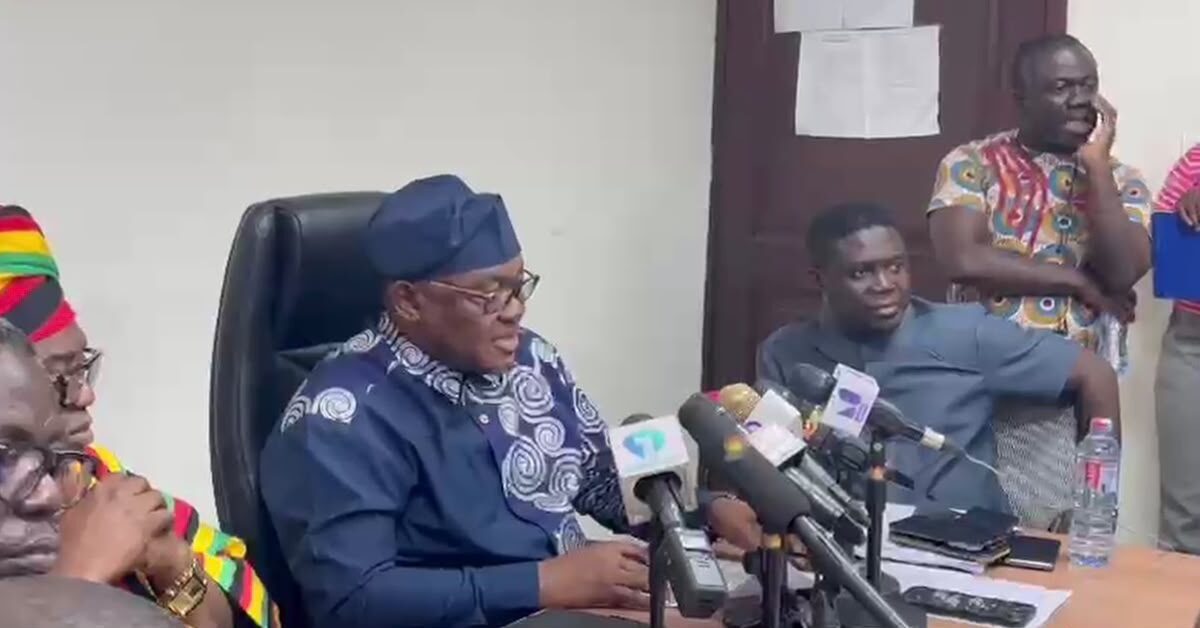
Ghana Teacher Strike Suspension Agreement: Unions End Action
Summary
- Ghanaian teacher unions have suspended their strike following an agreement with the government.
- The agreement addresses outstanding issues concerning promotions, salary adjustments, and allowances.
- Dr. George Smith-Graham, Chief Executive of the Fair Wages and Salaries Commission, confirmed that consensus was reached.
- Both the teacher unions and the government have formally signed the new agreement.
- The accord establishes new modalities for resolving long-standing grievances in the education sector.
Strike Suspension Reached Through Agreement
The formalization of this consensus through the signing of the agreement underscores a commitment from both sides to implement the newly established modalities for addressing these concerns, thereby bringing an end to the recent period of industrial unrest.
Teacher unions in Ghana have formally suspended their industrial action, marking a significant development in the ongoing Ghana public sector labour dispute. This decision follows the successful negotiation and signing of an agreement between the unions and the government, aimed at resolving long-standing grievances. The core of this Ghana teacher strike suspension agreement addresses critical areas including promotion protocols, adjustments to remuneration, and the framework for various allowances.
The resolution was confirmed by Dr. George Smith-Graham, the Chief Executive of the Fair Wages and Salaries Commission (FWSC), who highlighted that a mutual understanding had been achieved between the involved parties. The formalization of this consensus through the signing of the agreement underscores a commitment from both sides to implement the newly established modalities for addressing these concerns, thereby bringing an end to the recent period of industrial unrest.
Addressing Key Teacher Demands
The agreement specifically targets several contentious issues that have been central to the Ghana teacher union salary negotiations. These include the processes governing teacher promotions, which have often been a source of dispute, alongside the mechanisms for salary adjustments. Furthermore, the accord establishes new modalities for the administration and payment of various allowances, a key component of teacher compensation.
This comprehensive Fair Wages and Salaries Commission agreement seeks to provide a clearer and more equitable framework for these aspects of teacher employment. By establishing these new modalities, the government and teacher unions aim to prevent future disagreements and foster a more stable working environment for educators across the nation, directly impacting the Ghana government teacher allowances structure.
Implications for Public Sector Labour Relations
The achievement of this Ghana labour relations consensus represents a crucial step forward in managing public sector disputes. The involvement and confirmation by the Fair Wages and Salaries Commission underscore the institutional framework in place for resolving such complex negotiations. The signing of the agreement by both the teacher unions and government representatives signifies a shared commitment to upholding the terms and conditions outlined within the document.
This resolution could serve as a precedent for future collective bargaining efforts within Ghana's public sector, demonstrating that even deeply entrenched disagreements can be resolved through structured dialogue and negotiation. The focus on establishing clear 'new modalities' for addressing concerns suggests a move towards more predictable and transparent processes in labour relations.
Practical Implications
Lawyers advising public sector entities or unions in Ghana should review the specific terms of this agreement to understand the new modalities for promotions, salary adjustments, and allowances, as it may set a precedent or inform future collective bargaining strategies and dispute resolution processes.
Source
Source: Original reporting via GhanaWeb
How does this affect you?
Get an AI analysis of this article grounded in your jurisdictions, practice areas, and any policy documents you've uploaded to Wansom.
Finish Reading the Full Story and the Expert Analysis.
Get the latest legal & regulatory intelligence in Ghana
Wansom is AI and can make mistakes.