
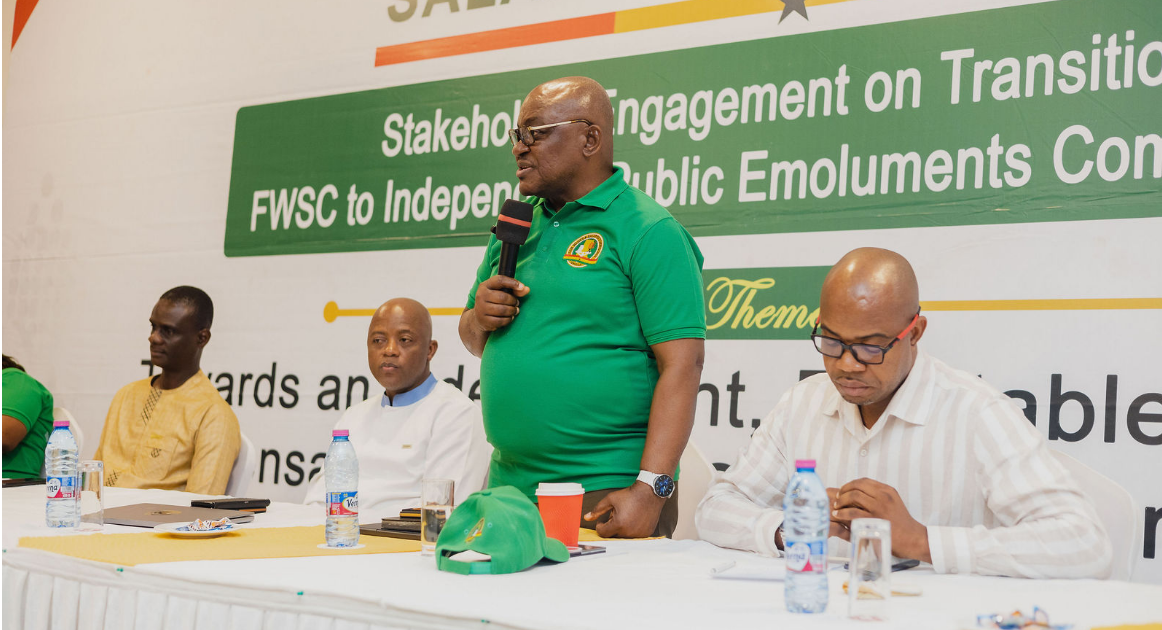
Ghana FWSC: IPEC Transition Meeting Addresses SOE Pay
Summary
- The Fair Wages and Salaries Commission (FWSC) engaged over 100 State-Owned Enterprises (SOEs) on the transition to the Independent Public Emoluments Commission (IPEC).
- The meeting included CEOs, Deputy CEOs, Finance and HR Directors from SOEs, alongside representatives from SIGA, Development Partners, and the media.
- SOE chief executive officers are demanding clarity regarding new policies on pay harmonization and board autonomy under the IPEC framework.
- The transition aims to standardize public sector emoluments, impacting executive remuneration and corporate governance within Ghana's SOEs.
Recent Engagement on Emoluments Transition
For lawyers advising Ghana's State-Owned Enterprises, closely monitoring the transition to IPEC and subsequent directives on pay harmonization and board autonomy is paramount.
The Fair Wages and Salaries Commission (FWSC) recently convened a significant stakeholder meeting with chief executive officers from Ghana's State-Owned Enterprises (SOEs). Held on a Friday, the primary agenda for this engagement was to discuss the impending transition to the Independent Public Emoluments Commission (IPEC), a development poised to reshape the landscape of public sector remuneration.
The gathering was comprehensive, drawing together a wide array of key personnel from more than 100 State-Owned Enterprises. Attendees included not only the chief executive officers but also their deputies, finance directors, and human resource directors, underscoring the broad impact of the proposed changes. Further broadening the scope of the discussion, representatives from the State Interests and Governance Authority (SIGA), various Development Partners, and members of the media were also present, highlighting the public and governmental interest in the Ghana FWSC IPEC transition SOE pay framework.
The Shift to IPEC and Pay Harmonization
The transition from the Fair Wages and Salaries Commission Ghana to the Independent Public Emoluments Commission marks a pivotal moment for public sector emoluments, particularly for State-Owned Enterprises. This shift is expected to introduce new directives and frameworks concerning pay structures across the public sector, including SOEs, aiming for greater harmonization and standardization.
This move toward a more centralized and independent body for emoluments is intended to streamline compensation policies and ensure equity. However, it also necessitates a clear understanding of how existing remuneration packages and employment contracts within SOEs will be integrated into the new system under the Independent Public Emoluments Commission. The Ghana State-Owned Enterprises pay harmonization efforts are a critical component of this transition, impacting a significant portion of the nation's workforce.
SOE Leaders Demand Clarity
During the engagement, chief executive officers of the State-Owned Enterprises voiced a strong demand for clarity on two critical issues: pay harmonization and board autonomy. These concerns reflect the potential for significant operational and governance changes that could arise from the IPEC transition and its subsequent directives.
The call for clarity on Ghana SOE pay harmonization underscores the need for detailed guidelines on how the new emoluments framework will affect executive and employee compensation within their respective organizations. Similarly, the demand for clarity on SOE board autonomy Ghana highlights anxieties about potential shifts in decision-making powers and operational independence, especially concerning remuneration matters that have historically been within the purview of individual SOE boards. This indicates a need for comprehensive guidance from bodies like SIGA on how the IPEC transition will redefine these aspects of corporate governance.
Why This Transition Matters
The ongoing discussions surrounding the Ghana FWSC IPEC transition SOE pay framework carry significant implications for the nation's public sector and its State-Owned Enterprises. The establishment of the Independent Public Emoluments Commission and its mandate for pay harmonization could lead to substantial restructuring of executive remuneration and overall compensation strategies within SOEs. This necessitates a proactive approach from legal advisors to ensure compliance and mitigate potential risks associated with contractual changes and governance adjustments.
For lawyers advising Ghana's State-Owned Enterprises, closely monitoring the transition to IPEC and subsequent directives on pay harmonization and board autonomy is paramount. This development signals potential changes to executive remuneration structures, employment contracts, and corporate governance frameworks within SOEs, requiring proactive legal review for compliance and risk management. The outcome of these discussions will shape the future financial and operational landscape for a crucial segment of Ghana's economy, making the clarity demanded by SOE leaders essential for a smooth and effective implementation of the new emoluments regime.
Practical Implications
Lawyers advising Ghana's State-Owned Enterprises (SOEs) must closely monitor the transition to the Independent Public Emoluments Commission (IPEC) and subsequent directives on pay harmonization and board autonomy. This development signals potential changes to executive remuneration structures, employment contracts, and corporate governance frameworks within SOEs, requiring proactive legal review for compliance and risk management.
Source
Source: Original reporting via GhanaWeb
How does this affect you?
Get an AI analysis of this article grounded in your jurisdictions, practice areas, and any policy documents you've uploaded to Wansom.
Finish Reading the Full Story and the Expert Analysis.
Get the latest legal & regulatory intelligence in Ghana
Wansom is AI and can make mistakes.