
Ghana Cyber Security Authority: Operation Blackout Was Ghana-Led, Not FBI
Summary
- The Ghana Cyber Security Authority (CSA) stated it led "Operation Blackout," a major cybercrime bust, not the FBI.
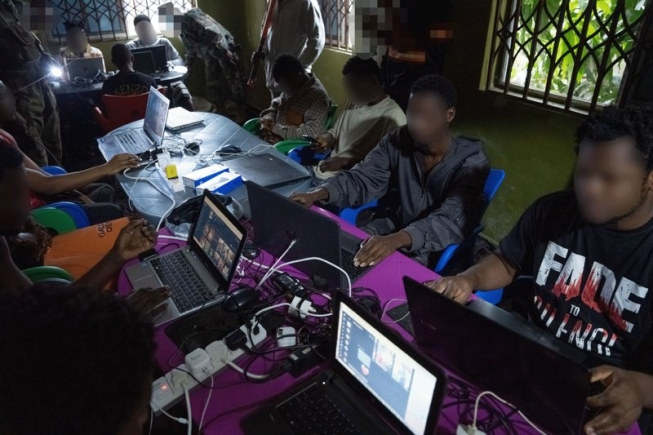
- The operation, also known as "Operation Cyber Hunt Ghana," resulted in eight Ghana cybercrime arrests and the rescue of 120 suspected trafficking victims.
- Ghanaian authorities emphasized that foreign law enforcement agencies have no independent power to conduct arrests within Ghana's sovereign territory.
- The CSA called on the FBI to clarify its public account to accurately reflect the roles of all participating agencies.
- Investigations are ongoing into the arrested suspects and seized digital equipment, with efforts underway to repatriate rescued victims.
Ghana Leads Major Cybercrime Bust Amidst Attribution Dispute
Foreign law enforcement agencies, while valuable partners, possess no independent authority to exercise police powers or conduct arrests within Ghana's borders.
The Ghana Cyber Security Authority (CSA) recently issued a definitive statement refuting claims by the United States Federal Bureau of Investigation (FBI) regarding the leadership of a significant cybercrime operation conducted in Ghana. In a press release dated Thursday, October 8, 2026, the CSA clarified that the extensive enforcement action, known interchangeably as Operation Blackout and Operation Cyber Hunt Ghana, was conceived, coordinated, and executed solely by Ghanaian authorities. This assertion directly countered any suggestion that the FBI had commanded or led the operation within Ghana's sovereign territory.
The multi-agency effort saw the active participation of several key Ghanaian institutions, including the National Security Council, the Criminal Investigations Department of the Ghana Police Service, the Ghana Immigration Service, and the Office of the Attorney-General. International partners such as the National Crime Agency of the United Kingdom, the FBI, the Economic and Financial Crimes Commission of Nigeria, and the Joint Case Team on Cybercrime also provided support. The operation itself was initiated following intelligence received on August 26, 2026, which identified multiple locations in the Greater Accra Region, specifically Ubuntu Haven Estate in Kpone Katamanso and Franko Estate in Ga North, along with other sites in Ga West, as hubs for organized cybercrime, particularly romance scams.
During the operation, Ghanaian law enforcement successfully uncovered several suspected cybercrime centers. Eight individuals were apprehended in connection with these illicit activities, marking significant Ghana cybercrime arrests. Furthermore, a crucial humanitarian aspect of the operation involved the rescue of one hundred and twenty individuals, primarily identified as Nigerians, who were suspected victims of human trafficking and exploitation for online fraud. Authorities seized a substantial cache of evidence, including 136 mobile phones, 130 laptops, various internet connection devices, and four motor vehicles, one of which was confirmed stolen from Canada. Additional items recovered included jewelry and ten Nigerian passports, all of which are now part of ongoing investigations.
Upholding National Sovereignty in International Law Enforcement
The Cyber Security Authority Ghana statement underscored a fundamental principle of international law: the absolute sovereignty of the Republic of Ghana. The CSA explicitly stated that all planning, coordination, and execution of Operation Blackout occurred strictly within Ghana's established legal and institutional frameworks. This firm stance was taken to clarify that the operation was neither an offshoot of an FBI-led global program nor conducted under any foreign operational command, despite the FBI's public accounts.
Ghanaian authorities emphasized that foreign law enforcement agencies, while valuable partners, possess no independent authority to exercise police powers or conduct arrests within Ghana's borders. Their involvement in any such activities must be predicated on lawful cooperation, requiring explicit authorization and direct involvement from relevant Ghanaian authorities. This protocol ensures that international law enforcement cooperation Ghana adheres to national laws and respects the country's constitutional governance. The CSA acknowledged the intelligence contributions from both the FBI and the National Crime Agency, recognizing their importance to effective investigations. However, it stressed the necessity for accurate descriptions of these partnerships, particularly in public discourse, to reflect the true nature of collaborative efforts.
The CSA specifically called upon the FBI to revise its public narrative concerning the Ghana-led operation. This request aims to ensure that the contributions of Ghanaian institutions and other international partners are properly acknowledged, thereby rectifying any misrepresentation of the command structure. The authority reiterated its readiness for constructive dialogue to ensure the public record accurately portrays the respective roles of all agencies involved in this critical cybercrime interdiction, addressing the Ghana FBI cybercrime dispute head-on.
Commitment to Combating Cybercrime and Strengthening Capabilities
The successful execution of Operation Blackout, or Operation Cyber Hunt Ghana, demonstrates Ghana's unwavering commitment to dismantling sophisticated cybercriminal networks that exploit individuals and undermine economic stability. While the immediate focus remains on the ongoing investigations into the arrested suspects and the analysis of seized digital devices, the Cyber Security Authority is also actively working towards the repatriation of the rescued victims, predominantly Nigerian nationals, ensuring their safe return.
Beyond the immediate operational success, the CSA reaffirmed Ghana's strategic objectives to protect its public from the pervasive threat of online fraud. This commitment translates into a continuous effort to strengthen various facets of its cyber defense infrastructure. Future initiatives will concentrate on enhancing intelligence-led investigations, fostering greater inter-agency coordination among domestic and international partners, and bolstering digital forensic capabilities. The emphasis on robust international cooperation Ghana remains a cornerstone of this strategy, provided such partnerships respect Ghana's sovereignty and legal frameworks. The clarity provided by the CSA in this instance serves as a vital precedent for how foreign agencies must engage with Ghanaian law enforcement, ensuring all operations are conducted with proper authorization and under local command.
Practical Implications
Lawyers advising on international investigations or compliance officers dealing with cross-border enforcement in Ghana must understand the strict jurisdictional limits and the requirement for foreign agencies to operate under Ghanaian legal frameworks, ensuring proper authorization and involvement of local authorities. This clarifies the protocol for foreign law enforcement engagement within Ghana's sovereign territory.
Source
How does this affect you?
Get an AI analysis of this article grounded in your jurisdictions, practice areas, and any policy documents you've uploaded to Wansom.
Finish Reading the Full Story and the Expert Analysis.
Get the latest legal & regulatory intelligence in Ghana
Wansom is AI and can make mistakes.