
Law Students' Network Ghana: Constitutional Review Executive Dominance Warning
Summary
- The Law Students’ Network Ghana issued a warning about potential executive dominance in the ongoing Ghana constitutional review process.
- Concerns were raised at an IEA roundtable on October 13, 2026, regarding the executive's significant control over reforms that could limit its own powers.
- The LSN highlighted the rejection of proposals to limit presidential appointment powers and strengthen independent oversight.
- The network cautioned against rushing two legislative bills for constitutional amendments, emphasizing the need for public scrutiny and adherence to Article 1(1) of the 1992 Constitution.
- Despite reservations, the LSN welcomed government acceptance of reforms like establishing an Independent Public Emoluments Commission and abolishing the death penalty.
Executive Dominance Concerns in Ghana's Constitutional Review
Constitutional reform must not become an exercise in legislative speed at the expense of democratic legitimacy.
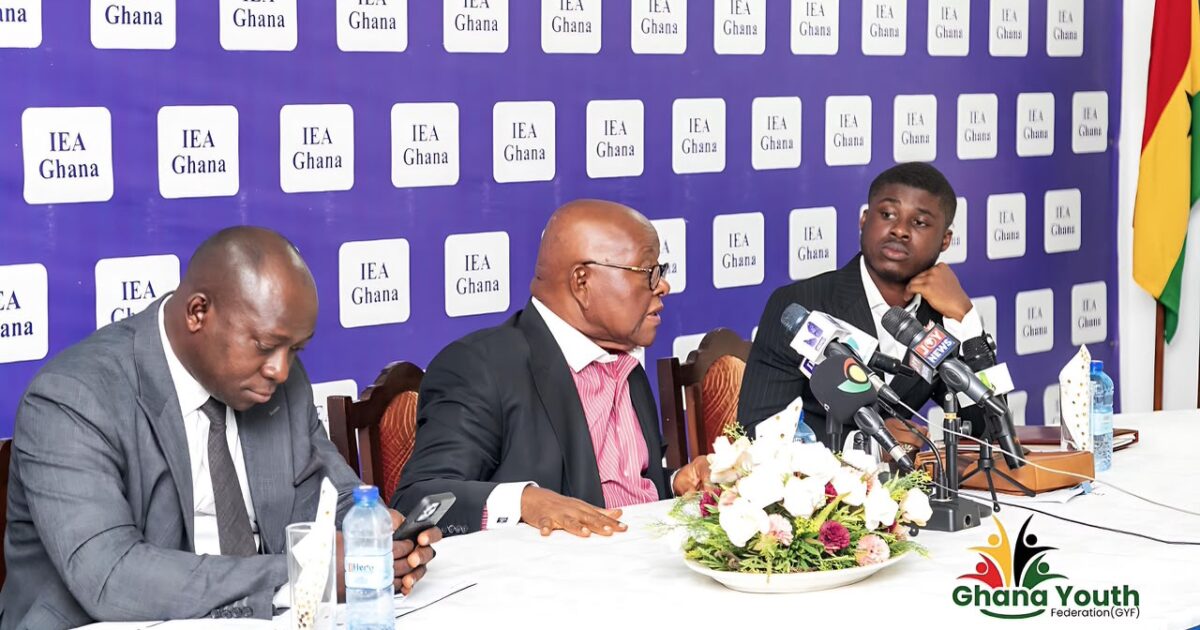
The Law Students’ Network (LSN) Ghana has issued a significant warning regarding the ongoing Ghana constitutional review process, highlighting a potential for executive dominance that could undermine its integrity. This concern centers on an institutional conflict of interest, where the executive arm of government maintains substantial influence over decisions concerning proposed reforms designed to curtail its own authority. Abraham Kwaku Gyasi, President of the LSN, articulated this apprehension during an Institute of Economic Affairs (IEA) roundtable constitutional review Ghana, held at the IEA Dialogue Centre in Accra on Tuesday, October 13, 2026.
The forum specifically reviewed the report from the Constitution Review Committee, which was chaired by Professor H. Kwasi Prempeh, alongside the government’s official response to the recommendations put forth. While the LSN acknowledged the government's prerogative to evaluate the committee's advisory, non-binding report, it underscored the inherent problem when the very institution whose powers are under scrutiny plays the primary role in determining which limitations should be adopted. This situation, according to the LSN, poses a direct threat to the impartiality and effectiveness of the entire Ghana constitutional reform process.
Scrutiny of Proposed Reforms and Legislative Process
Further elaborating on its concerns, the Law Students' Network pointed to specific instances where proposals aimed at limiting presidential appointment powers Ghana or enhancing the independence of oversight bodies were reportedly rejected. This selective acceptance raises questions about the executive's commitment to genuine checks and balances within the 1992 Constitution Ghana. The network also expressed reservations about the government's strategy to introduce two separate legislative bills for implementing the proposed reforms: one addressing non-entrenched provisions and another for entrenched provisions Ghana constitution, which necessitate a national referendum.
The LSN cautioned that an expedited drafting and parliamentary consideration of these bills could severely restrict public scrutiny of potentially contentious changes. It emphasized that "Constitutional reform must not become an exercise in legislative speed at the expense of democratic legitimacy," a statement reflecting the network's belief that the process must align with Article 1(1) of the 1992 Constitution, which unequivocally vests sovereignty in the people of Ghana. This principle demands a transparent and participatory approach to any amendments to the nation's foundational legal document.
Mixed Reception and Broader Implications
Despite these significant reservations, the Law Students’ Network did acknowledge and welcome certain positive developments within the Ghana constitutional reform process. These included the government's acceptance of proposals such as the establishment of an Independent Public Emoluments Commission, the abolition of the death penalty, and various measures designed to bolster the independence of specific public institutions. This mixed reception indicates a complex landscape for constitutional change in Ghana.
The network also referenced figures from an assessment conducted by the opposition New Patriotic Party (NPP), which indicated that out of 147 recommendations examined, 22 were fully accepted and 25 were partially accepted. While acknowledging that the methodology behind these figures warranted further scrutiny, the LSN's overall message remained a Ghana constitutional review executive dominance warning. The IEA roundtable, which also featured contributions from Titus Owusu Darko of the National Union of Ghana Students and Sharif Ghali of the Ghana Youth Federation, was moderated by Dr. William Kofi Osew, with former Speaker of Parliament Professor Aaron Mike Oquaye delivering the opening and closing remarks, underscoring the broad interest in these critical discussions.
Practical Implications
Lawyers advising on public law or constitutional matters in Ghana should closely monitor the ongoing constitutional review process and the subsequent legislative bills. They must scrutinize the final amendments for potential executive overreach or insufficient checks and balances, particularly concerning presidential powers and independent institutions, to advise clients on compliance risks or advocacy opportunities.
Source
How does this affect you?
Get an AI analysis of this article grounded in your jurisdictions, practice areas, and any policy documents you've uploaded to Wansom.
Finish Reading the Full Story and the Expert Analysis.
Get the latest legal & regulatory intelligence in Ghana
Wansom is AI and can make mistakes.