
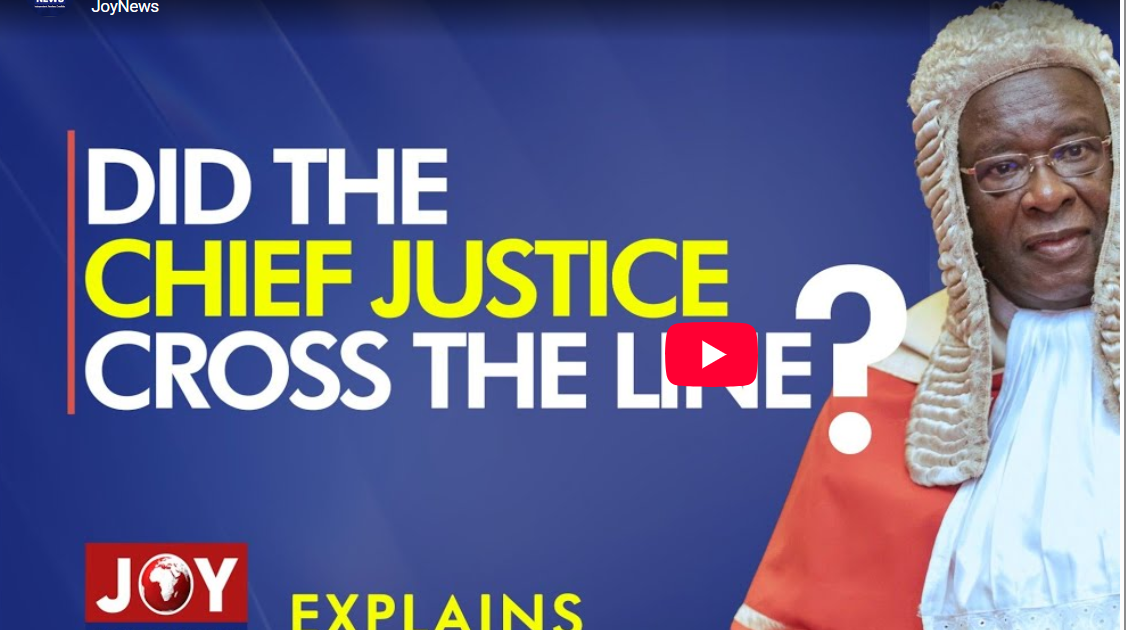
Ghana Chief Justice Baffoe-Bonnie: Comments Controversy Erupts
Summary
- Ghana's Chief Justice Paul Baffoe-Bonnie is under intense scrutiny for comments made during visits to the MIIF and SSNIT.
- His remarks appeared to compare the performance of state institutions under the current administration with that of the previous eight years.
- The controversy raises concerns about judicial impartiality and political neutrality in Ghana's judiciary.
- Such comments can influence public perception of the courts and potentially impact arguments regarding judicial independence or bias.
The Genesis of Controversy
This development highlights the ongoing scrutiny of judicial impartiality in Ghana, which could influence public perception of the courts and potentially be raised in arguments concerning judicial independence or bias in high-profile cases.
Ghana's Chief Justice, Paul Baffoe-Bonnie, has recently become the subject of considerable public and professional scrutiny following remarks he made during official engagements. The focus of this attention centers on comments delivered while visiting two significant state institutions: the Minerals Income Investment Fund (MIIF) and the Social Security and National Insurance Trust (SSNIT).
During these visits, Chief Justice Baffoe-Bonnie's statements appeared to draw a comparison between the operational performance of state entities under the current government and their performance during the preceding eight-year period. This perceived comparison has ignited a significant discussion, contributing to what is now widely referred to as the Ghana Chief Justice Baffoe-Bonnie comments controversy.
The nature of these Baffoe-Bonnie MIIF SSNIT remarks, particularly the 'past eight years' comments, has placed the Chief Justice Paul Baffoe-Bonnie Ghana in a position where his public utterances are being closely examined. The intense scrutiny underscores the delicate balance required of high judicial office holders in maintaining perceived neutrality in a politically charged environment.
Judicial Impartiality Under Scrutiny
The role of a Chief Justice inherently demands an unwavering commitment to political neutrality and impartiality, principles fundamental to the integrity of the judiciary. When a figure of such stature appears to weigh in on the performance of successive administrations, even indirectly, it inevitably raises questions regarding judicial ethics Ghana impartiality.
Such comments, which seemingly evaluate governmental performance over distinct political periods, can be interpreted as straying from the strictly apolitical stance expected of the head of the judicial branch. The concern is that any perceived alignment or criticism of a political administration, past or present, could undermine public confidence in the judiciary's ability to adjudicate disputes fairly and without bias. This situation highlights the ongoing challenge for the Ghana judiciary political neutrality, particularly when its leaders make public statements.
The intense scrutiny directed at Chief Justice Baffoe-Bonnie's remarks underscores the high standards of conduct and perceived detachment from political affairs that are essential for maintaining the judiciary's credibility. The appearance of comparing administrations, even if not intended as a political endorsement or critique, can nonetheless fuel perceptions of partisanship, which is antithetical to the core tenets of judicial independence.
Implications for Public Trust
This development highlights the ongoing scrutiny of judicial impartiality in Ghana, which could influence public perception of the courts and potentially be raised in arguments concerning judicial independence or bias in high-profile cases. The public's trust in the judicial system is inextricably linked to its belief in the judiciary's absolute independence from political influence.
When the Chief Justice, as the symbolic and administrative head of the judiciary, makes comments that appear to delve into political comparisons, it risks eroding this crucial public confidence. The ensuing controversy can lead to questions about whether the courts can truly remain impartial when presiding over cases that may involve political figures or state institutions, especially those whose performance has been publicly commented upon by the Chief Justice.
The long-term implications of such incidents can be significant, potentially affecting how the judiciary is viewed by both the public and legal practitioners. Maintaining a clear and unambiguous stance of political neutrality is paramount for the judiciary to effectively fulfill its constitutional mandate and ensure that justice is not only done but is also seen to be done, free from any hint of political favor or disfavor.
Practical Implications
This development highlights the ongoing scrutiny of judicial impartiality in Ghana, which could influence public perception of the courts and potentially be raised in arguments concerning judicial independence or bias in high-profile cases.
Source
Source: Original reporting via Explainer
How does this affect you?
Get an AI analysis of this article grounded in your jurisdictions, practice areas, and any policy documents you've uploaded to Wansom.
Finish Reading the Full Story and the Expert Analysis.
Wansom is AI and can make mistakes.