
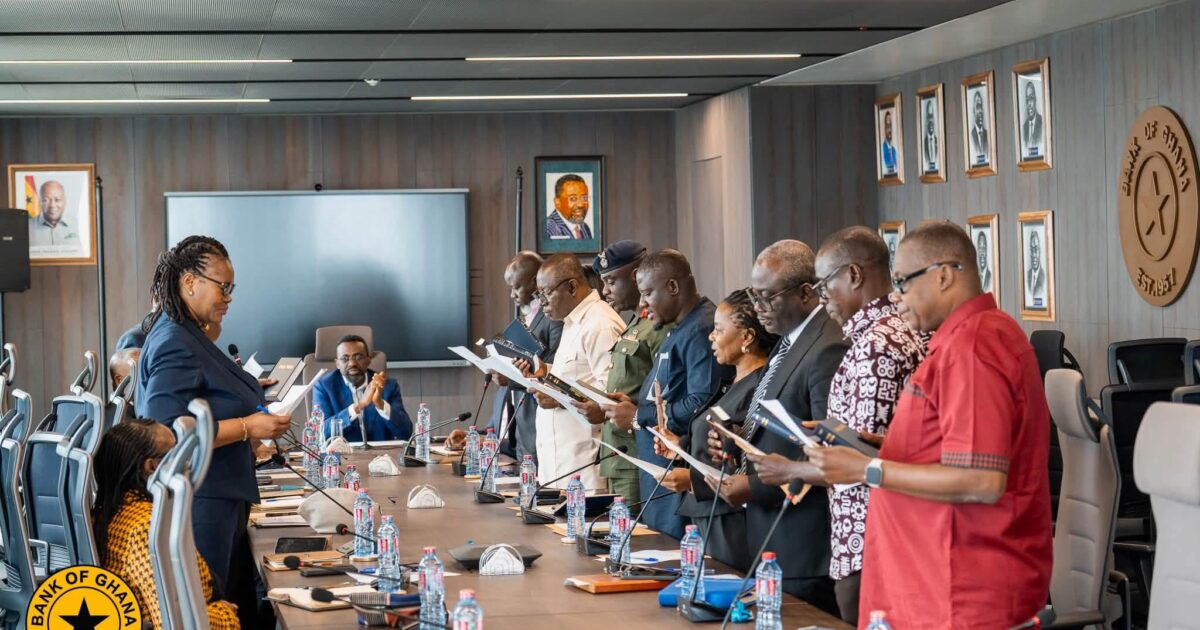
Ghana BoG: Establishes Foreign Currency Probe Committee to Tackle Illicit Flows
Summary
- The Bank of Ghana inaugurated a Preliminary Investigation Committee on Seized Foreign Currency on August 29, 2026.
- This committee aims to address the movement of undeclared foreign currency through Ghana’s airports and border points.
- Governor Dr. Johnson Pandit Asiama stated that these illicit flows weaken financial intelligence and enable money laundering and tax evasion.
- The initiative seeks to strengthen monitoring mechanisms and close a significant gap in Ghana's financial system.
- Multiple agencies, including EOCO and the Financial Intelligence Centre, are collaborating with the BoG to safeguard national resources.
New Committee Targets Illicit Flows
Undeclared currency flows pose significant risks to the integrity of Ghana’s financial sector, creating avenues for money laundering, tax evasion, and other illicit financial activities.
The Bank of Ghana (BoG) has officially established a new body, the Preliminary Investigation Committee on Seized Foreign Currency, on August 29, 2026. This significant move by the central bank is designed to tackle the persistent issue of undeclared foreign currency movements across Ghana’s various airports and border points. The formation of this Ghana BoG foreign currency probe committee underscores a concerted effort to enhance oversight of financial flows.
According to Dr. Johnson Pandit Asiama, the Governor of the Bank of Ghana, this initiative is crucial for addressing a notable vulnerability within the nation's financial framework. The committee's mandate is to bolster existing mechanisms for both monitoring and investigating foreign currency that has been seized by authorities. This strategic intervention aims to close a critical gap that has allowed substantial amounts of currency to bypass official declaration channels.
Addressing Financial System Vulnerabilities
The impetus behind the committee's formation stems from widespread reports of significant foreign currency volumes transiting Ghana’s borders without the mandatory declaration. Dr. Asiama emphasized that such undeclared currency flows present considerable risks to the overall integrity of Ghana’s financial sector. These illicit movements create fertile ground for activities such as money laundering, tax evasion, and various other forms of illicit financial activities, directly impacting the nation's economic stability.
Beyond facilitating criminal enterprises, the Governor noted that these undeclared currency flows also diminish the quality and quantity of financial intelligence available to authorities. This weakening of intelligence hampers the ability to effectively monitor the financial system, making it more challenging to identify and mitigate emerging threats. Furthermore, currency that circulates outside declared channels effectively diverts funds away from the formal market, impacting legitimate economic activities and government revenue. The Bank of Ghana seized currency investigation is therefore a critical step in restoring confidence and control.
Inter-Agency Collaboration for Border Security
To ensure a comprehensive and robust approach, the Bank of Ghana is not operating in isolation. The central bank is actively collaborating with a consortium of key national agencies to achieve its objectives of safeguarding Ghana's borders, markets, and resources. This includes partnerships with the Ghana Revenue Authority, which plays a vital role in tax compliance, and the Ghana Airports Company Limited, responsible for managing the nation's air entry points.
Further strengthening this inter-agency effort are National Security, the Economic and Organised Crime Office (EOCO), the Financial Intelligence Centre, and the Attorney General’s Office. The involvement of these diverse bodies, from intelligence to law enforcement and legal prosecution, highlights a unified front against financial malfeasance. This collaborative framework is specifically designed to enhance scrutiny over undeclared foreign currency Ghana borders, improve Ghana financial intelligence illicit flows, and combat money laundering Ghana customs, leveraging the expertise of agencies like EOCO Ghana currency seizures to ensure stricter enforcement and greater transparency in financial transactions.
Practical Implications
Lawyers and compliance officers should advise clients on heightened scrutiny and stricter enforcement of foreign currency declaration requirements at Ghana's borders, particularly concerning undeclared flows, to mitigate risks of money laundering and tax evasion investigations by the new BoG committee and associated agencies.
Source
How does this affect you?
Get an AI analysis of this article grounded in your jurisdictions, practice areas, and any policy documents you've uploaded to Wansom.
Finish Reading the Full Story and the Expert Analysis.
Wansom is AI and can make mistakes.