
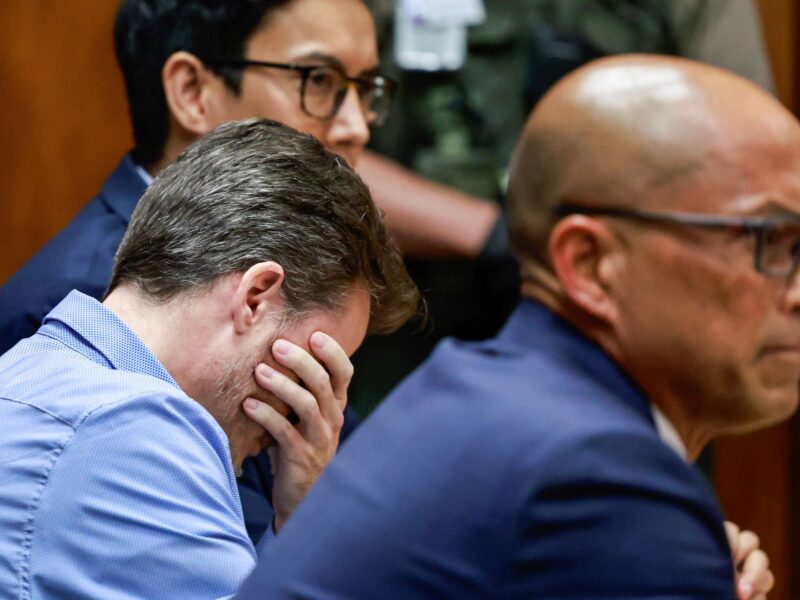
Gerhardt Konig: Hawaii New Trial Denied Over Juror Misconduct
Summary
- Maui doctor Gerhardt Konig was denied a new trial after his conviction for attempted manslaughter based on extreme mental or emotional disturbance.
- Konig alleged juror misconduct, citing an anonymous online comment claiming communication with a juror and a foreperson's affidavit questioning verdict unanimity.
- First Circuit Judge Paul Wong rejected the external influence claim, finding the anonymous comment lacked specific, substantial evidence.
- Judge Wong also dismissed the internal deliberation claim, stating Hawaii law protects jurors' internal thought processes and the verdict did not require unanimous intent to kill.
- All twelve jurors, when questioned, denied any awareness of external communication or discussion of the case or verdict with outsiders during deliberations.
Conviction and Challenge
The court's ruling establishes a clear distinction between admissible evidence of external influence and inadmissible probes into the jury's internal deliberations.
Gerhardt Konig, who previously worked as a Maui anesthesiologist, recently saw his bid for a new trial denied, following his conviction for attempted manslaughter. The ruling came after Konig, who remains in jail without bail, sought to overturn his April 8 conviction, which stemmed from a March 2025 incident on Oahu’s Pali Puka Trail. Konig had been charged with second-degree attempted murder after an attack on his wife, Arielle Konig, during which he admitted to striking her with a rock but asserted self-defense. His conviction for attempted manslaughter was based on a finding of extreme mental or emotional disturbance.
Konig’s appeal for a new trial was predicated on two distinct allegations of juror misconduct, which his legal team argued compromised the integrity of the verdict. These claims formed the basis of his Gerhardt Konig conviction challenge, aiming to secure a new trial in Hawaii.
The External Influence Claim
One of Gerhardt Konig's primary arguments for a new trial centered on alleged external influence on the jury. His attorney, Thomas Otake, highlighted an anonymous comment posted on a Law&Crime YouTube livestream during the jury's deliberations. This commenter claimed to be texting with one of the jurors and stated that the jury was "going for count three, attempted manslaughter," a term that appeared on the verdict form but was not used in the jury instructions. Otake contended that the timing of this comment, while deliberations were still active, rendered it highly significant, and he criticized the prosecution for not attempting to identify the anonymous individual.
However, Deputy Prosecuting Attorney Joel Garner countered that the defense had failed to meet its burden of proof, asserting that the comment amounted to mere speculation rather than the specific, substantial evidence required to demonstrate outside influence. Garner further argued that the state had no obligation to investigate without such a threshold showing. First Circuit Judge Paul Wong ultimately sided with the prosecution, dismissing the claim by noting that the alleged communication originated from an anonymous trial observer, not from a juror. This decision regarding the Hawaii jury external influence standard was reinforced by the fact that all twelve jurors, when questioned, unanimously denied any awareness of fellow jurors communicating about the case or verdict with outside parties during deliberations.
The Internal Deliberation Dispute
Gerhardt Konig's second claim of juror misconduct focused on the jury's internal deliberations, specifically challenging the unanimity of the verdict. This argument was supported by an affidavit from the jury foreperson, who stated that the jury did not unanimously believe Konig intended to kill his wife. The foreperson also personally expressed disbelief that Konig intended to kill her and did not believe he was guilty of attempted murder. Attorney Thomas Otake argued that these statements directly reflected the jury's actual verdict rather than merely their private mental processes, suggesting a fundamental flaw in the outcome. He emphasized that a foreperson's declaration of a non-unanimous verdict should be a significant concern.
Nevertheless, First Circuit Judge Paul Wong rejected this argument, citing Hawaii evidence law. This legal framework generally prohibits judicial inquiry into jurors' internal thought processes or the reasoning behind their verdict, while permitting examination of objective misconduct or verifiable external influences, reflecting the application of principles similar to Hawaii Rule of Evidence 606(b) concerning juror deliberations. Judge Wong further clarified that the jury's attempted-manslaughter verdict, based on extreme mental or emotional disturbance, did not legally necessitate a unanimous finding that Konig intended to kill his wife, noting that Hawaii law recognizes this specific form of attempted manslaughter but not attempted reckless manslaughter. This ruling directly impacted the Maui doctor attempted manslaughter appeal.
Clarifying the Bar for Misconduct Challenges
The denial of Gerhardt Konig's new trial bid by First Circuit Judge Paul Wong underscores the stringent evidentiary requirements for challenging jury verdicts in Hawaii, particularly concerning allegations of Gerhardt Konig Hawaii new trial juror misconduct. The court's ruling establishes a clear distinction between admissible evidence of external influence and inadmissible probes into the jury's internal deliberations. To successfully challenge a verdict based on outside contact, a defendant must present specific, substantial evidence of such influence, rather than relying on speculative claims or anonymous reports.
The unanimous denials from all jurors regarding any external communication during the Gerhardt Konig trial further solidified the court's position against the external influence claim. Moreover, the decision reinforces the protection afforded to the sanctity of jury deliberations, preventing courts from delving into jurors' subjective beliefs or the precise mental pathways that led to their verdict. This approach ensures that while objective misconduct can be addressed, the integrity of the deliberative process itself remains shielded from post-verdict scrutiny, unless clear, provable external factors are at play. A pre-sentence investigation report is still pending for Konig, with sentencing scheduled for January 8, 2027.
Practical Implications
This ruling clarifies the high evidentiary bar in Hawaii for challenging a jury verdict based on alleged juror misconduct, particularly distinguishing between provable external influence and inadmissible internal deliberation issues. Lawyers should note the court's strict interpretation of what constitutes actionable misconduct, emphasizing the need for specific, substantial evidence of outside contact rather than speculative claims or attempts to probe jurors' internal thought processes or unanimity on specific elements when the verdict form allows for alternative findings.
Source
How does this affect you?
Get an AI analysis of this article grounded in your jurisdictions, practice areas, and any policy documents you've uploaded to Wansom.
Finish Reading the Full Story and the Expert Analysis.
Get the latest legal & regulatory intelligence in United States
Wansom is AI and can make mistakes.