
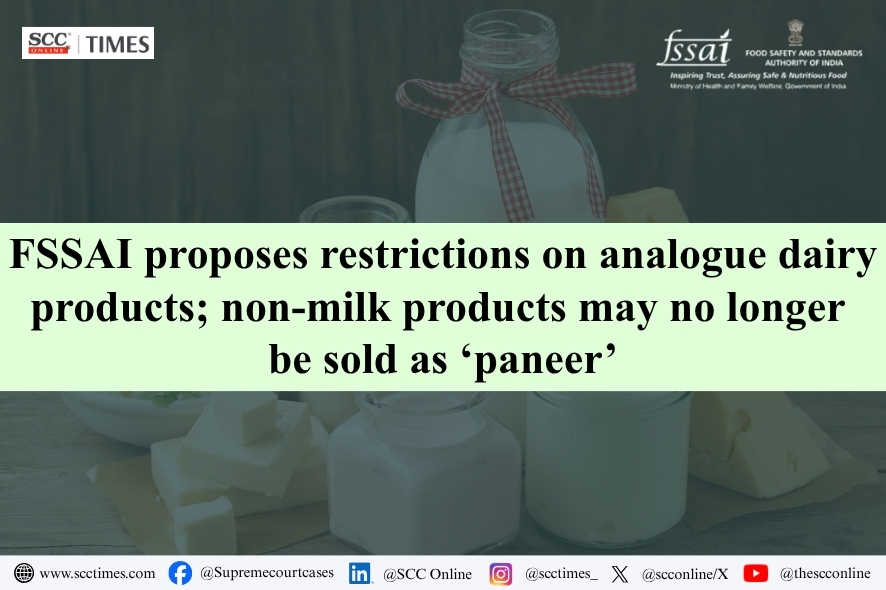
FSSAI India: Draft Paneer Regulations Prohibit Non-Milk Use
Summary
- The Food Safety and Standards Authority of India (FSSAI) has issued draft regulations.
- These regulations propose to ban the use of "paneer" for products not derived from milk.
- The objective is to prevent consumers from being misled about product nature and composition.
- The FSSAI aims to restrict analogue dairy products from using the "paneer" designation.
FSSAI Unveils Draft Regulations for Paneer Labeling
The term "paneer" would be explicitly prohibited for use on any product not exclusively derived from milk.
The Food Safety and Standards Authority of India (FSSAI) has recently introduced a set of draft regulations poised to significantly impact the labeling of dairy and dairy-like products across the nation. At the core of these proposed rules is a clear directive: the term "paneer" would be explicitly prohibited for use on any product not exclusively derived from milk. This initiative marks a crucial step by the FSSAI to define and regulate traditional food nomenclature, ensuring that product names accurately reflect their fundamental composition. The draft regulations aim to draw a distinct line between genuine milk-based products and their non-milk counterparts, thereby standardizing the market for this popular food item. This regulatory intervention specifically targets products whose primary constituents do not originate from milk, seeking to prevent any ambiguity regarding their dairy status.
Safeguarding Consumers from Misleading Product Claims
A primary driver behind the FSSAI's proposed restrictions on analogue dairy products is the imperative to prevent consumer deception. The regulatory body has articulated its objective as safeguarding consumers from being misled about the true nature and composition of products they purchase. By reserving the term "paneer" solely for items made from milk constituents, the FSSAI seeks to eliminate ambiguity and ensure transparency in the marketplace. This move is particularly relevant in the context of evolving food technologies and the proliferation of various FSSAI analogue dairy products, where consumers might inadvertently purchase non-milk alternatives believing them to be traditional dairy. The regulations are designed to reinforce India food labelling laws, making it unequivocally clear what constitutes "paneer" and thereby combating misleading food product claims that could erode consumer trust and distort market perceptions of authentic dairy products.
Industry-Wide Repercussions and Compliance Mandates
The introduction of these draft regulations carries substantial implications for food manufacturers and distributors operating within India. Companies currently marketing non-milk products under the "paneer" label will face a mandatory re-evaluation of their branding and packaging strategies. The proposed non-milk paneer prohibition necessitates a clear distinction in product naming, compelling manufacturers to adopt alternative descriptors for their plant-based or other non-dairy alternatives. This regulatory shift underscores the FSSAI's commitment to maintaining stringent dairy product standards FSSAI and ensuring that traditional food terms retain their integrity. Legal and compliance teams within the food industry must now meticulously review their product portfolios to anticipate the new requirements and potential enforcement actions stemming from these forthcoming standards. The move signals a broader effort by the Food Safety and Standards Authority of India to tighten controls over food product descriptions, ensuring that consumers receive accurate information about the items they consume.
Practical Implications
Legal and compliance teams for food manufacturers and distributors in India must review product labeling and marketing strategies for dairy and analogue products to align with FSSAI's proposed 'paneer' definition, anticipating new compliance requirements and potential enforcement actions.
Source
Source: Original reporting via SCC Times
How does this affect you?
Get an AI analysis of this article grounded in your jurisdictions, practice areas, and any policy documents you've uploaded to Wansom.
Finish Reading the Full Story and the Expert Analysis.
Get the latest legal & regulatory intelligence in India
Wansom is AI and can make mistakes.