
Frimpong-Boateng: Ghana Illegal Mining Concessions Easier Than Legal Path
Summary
- Former Minister Prof. Kwabena Frimpong-Boateng states Ghana's mining licensing system is inverted, making illegal concessions easier to obtain than lawful ones.
- He attributes this problem to influential actors, including politicians, traditional leaders, and security personnel, who allegedly capture land-use planning and state authority.
- Prof. Frimpong-Boateng proposes reforms including a faster cooperative licensing system, mechanization, traceability at the point of sale, and mandatory reclamation bonds.
- He also advocates for placing forest reserves and river bodies completely outside the mining licensing system, without ministerial discretion.
- The former minister argues that small-scale mining, which employs hundreds of thousands, should be governed and regulated rather than abolished, making compliance more beneficial than illegality.
The Challenge of Illicit Mining in Ghana
The ultimate goal of these reforms is to establish a licensing regime where compliance is not only easier but also more beneficial than engaging in illegal activities.
Former Minister for Environment, Science, Technology and Innovation, Professor Kwabena Frimpong-Boateng, has highlighted a critical flaw within Ghana’s mining licensing system, asserting that it has become so distorted that obtaining illegal concessions is now simpler than navigating the lawful process. This systemic inversion, he argues, actively encourages unlawful operations, undermining regulatory efforts and public trust in state institutions. The professor's remarks shed light on the deep-seated issues plaguing the nation's efforts to manage its valuable mineral resources responsibly.
According to Professor Frimpong-Boateng, the fundamental problem stems from the alleged capture of land-use planning and state authority by powerful, influential actors. These individuals, whom he identified as politicians, traditional leaders, and certain security personnel, are not merely peripheral figures but are central to the governance failures that perpetuate illegal mining, locally known as 'galamsey', and unchecked development across Ghana. Their alleged involvement creates an environment where the legal path to securing mining concessions is deliberately made cumbersome and slow, pushing operators towards illicit channels.
This challenging environment has significant repercussions for Ghana's environmental governance and economic stability. The ease with which illegal mining concessions can be secured, contrasted with the difficulty of lawful acquisition, weakens the state's ability to enforce regulations effectively. This erosion of enforcement capacity, coupled with the perceived corruption among influential figures, diminishes public confidence in the integrity of Ghana's mining concession process and its regulatory framework.
Systemic Failures and Environmental Governance
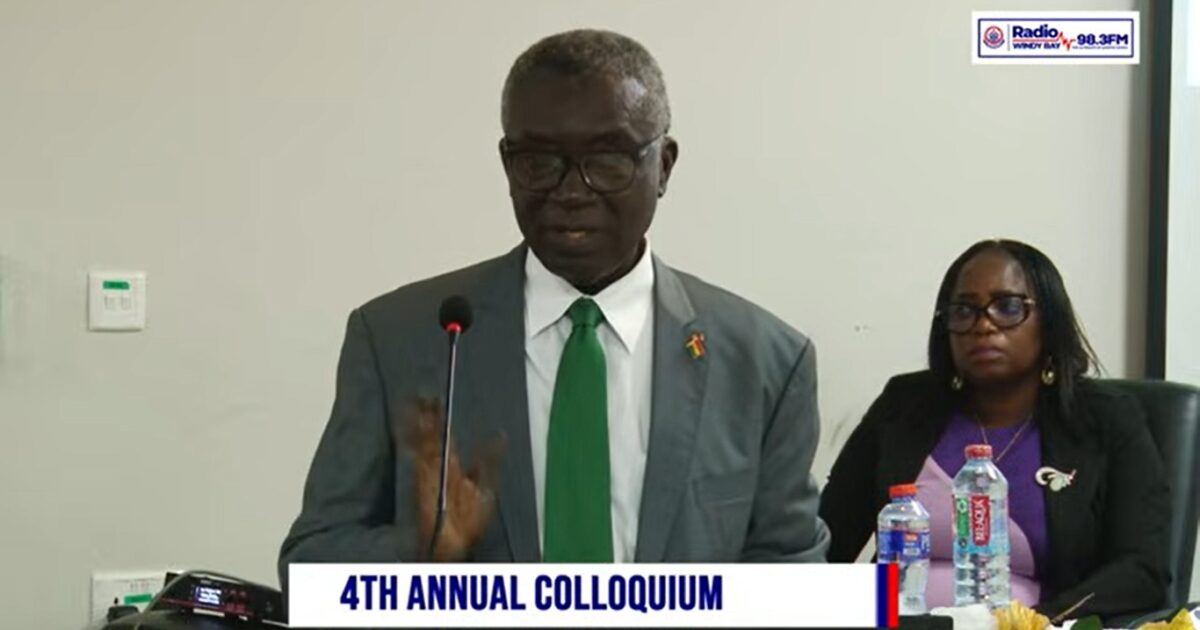
Professor Frimpong-Boateng articulated his concerns during a keynote lecture at the Fourth Annual Colloquium, hosted by the Department of Political Science Education at the University of Education, Winneba, on Wednesday, September 2, 2026. Speaking under the theme, "Politics, the Environment, and Our Future: Ghana at Crossroads?", he emphasized that the current system is not underfunded but rather "inverted," meaning its structure inherently favors illegality over compliance. This inversion makes unlawful mining operations significantly more attractive due to the protracted and difficult nature of obtaining legal permits.
He stressed that the influential actors he identified are directly responsible for sustaining the country’s environmental crisis. Their alleged manipulation of the system ensures that the slow and cumbersome process for legal mining concessions remains a barrier, inadvertently making unlawful operations the path of least resistance for many. This situation not only contributes to widespread environmental degradation but also highlights profound Ghana environmental governance failures, where the very mechanisms designed to regulate an industry instead facilitate its illicit counterpart.
The former minister's analysis underscores a critical need for Ghana mining licensing system reform. He argued that the current approach, which often relies on criminalization, is insufficient. Instead, a more pragmatic and structured approach is required to address the root causes of the problem, particularly the ease of obtaining illegal mining concessions compared to the arduous legal route.
Proposed Reforms for Sustainable Mining
To counteract these systemic issues, Professor Frimpong-Boateng proposed a comprehensive strategy centered on regularizing, mechanizing, and tracing small-scale mining activities, rather than solely focusing on their criminalization. He advocated for a faster, cooperative licensing system, underpinned by readily available and reliable geological information. The objective is to transform the landscape such that lawful mining becomes the most accessible and practical option for operators, thereby making illegal mining concessions unprofitable.
Key components of his proposed Ghana small-scale mining regulation reforms include the mandatory use of mercury-free processing equipment to mitigate environmental damage. Furthermore, he suggested the implementation of reclamation bonds, which would be required from operators before any licenses are issued, ensuring accountability for environmental restoration. Crucially, Professor Frimpong-Boateng highlighted the importance of traceability at the point of sale, arguing that by tracking the buyer, the market for gold produced through environmentally destructive activities could be effectively shut down, making illegal 'galamsey' operations financially unviable.
Recognizing the significant economic role of small-scale mining, which provides employment for hundreds of thousands of Ghanaians and contributes substantially to national gold production, Professor Frimpong-Boateng firmly stated that it cannot simply be abolished. Instead, he asserted, "It will not be abolished; it can be governed." He also called for absolute protection of sensitive ecological zones, specifically forest reserves and river bodies, by placing them entirely outside the mining licensing system, without any ministerial discretion or exemptions from any state institution. The ultimate goal of these reforms is to establish a licensing regime where compliance is not only easier but also more beneficial than engaging in illegal activities.
Practical Implications
Legal professionals advising mining clients in Ghana should be aware of the systemic challenges in obtaining lawful concessions and the increased compliance risks associated with illegal mining. They must monitor potential reforms to the licensing regime and supply chain traceability requirements to ensure client operations remain compliant and mitigate exposure.
Source
How does this affect you?
Get an AI analysis of this article grounded in your jurisdictions, practice areas, and any policy documents you've uploaded to Wansom.
Finish Reading the Full Story and the Expert Analysis.
Wansom is AI and can make mistakes.