
Paris Judicial Court: Launches Investigation Into Israeli War Crimes in Lebanon
Summary
- France has launched a judicial investigation into an alleged Israeli war crime in Lebanon.
- The complaint was filed by French-Lebanese artist Ali Cherri, whose parents were killed in a November 2024 strike on a Beirut residential building.
- The Paris Judicial Court's crimes against humanity unit has appointed two investigating judges, marking a first for such charges against Israeli forces in Lebanon.
- The strike, which killed seven civilians, occurred hours before a ceasefire, with Amnesty International finding no military objective or effective warning.
- This investigation is part of a broader trend of French authorities probing alleged war crimes in international conflicts, including other pending cases related to Israeli military actions.
The Investigation Commences
This development signals an increasing trend of national judicial bodies, particularly in France, asserting jurisdiction over alleged international war crimes, even when committed by foreign militaries in third countries.
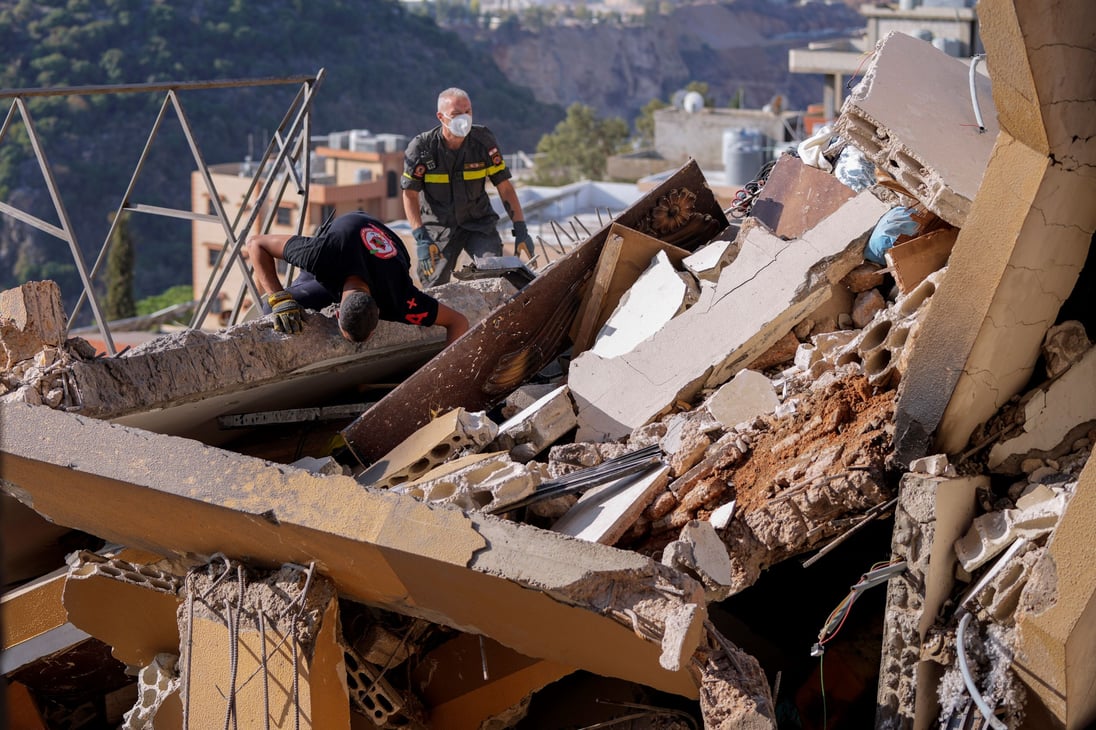
France has initiated a formal judicial investigation into a complaint alleging war crimes committed during an Israeli strike on a residential building in Lebanon. This significant legal action follows a complaint lodged by French-Lebanese artist Ali Cherri, whose elderly parents were among the seven civilians killed in the attack. The incident, which occurred on November 26, 2024, targeted a 12-story apartment complex in central Beirut, resulting in the destruction of three floors and the deaths of Cherri’s 87-year-old father and 77-year-old mother.
Cherri filed the complaint as a civil party, collaborating with the International Federation for Human Rights, with his lawyer Clemence Bectarte confirming the development. The artist stated his motivation was to uphold the dignity of all civilian victims and to ensure accountability for the bombing that claimed his parents and five other lives. He expressed hope that this investigation would contribute to dismantling the perceived impunity enjoyed by Israeli officials implicated in attacks against civilians in both Lebanon and Palestine.
The complaint highlights that the deadly strike took place merely hours before a ceasefire agreement between Israel and Hezbollah was scheduled to come into effect. Detailed research conducted by human rights organizations, including Amnesty International and Forensic Architecture, is cited within the complaint to support the allegations. Amnesty International's own investigation into the incident found no effective advance warning was issued and uncovered no evidence of a military objective in the vicinity, leading them to conclude that the attack warrants investigation as a war crime.
French Jurisdiction and Legal Precedent
The crimes against humanity unit of the Paris Judicial Court has taken a decisive step by appointing two investigating judges to oversee this case. This move has been hailed by Cherri’s legal representative as an unprecedented development, marking the first time such charges of war crimes by Israeli forces in Lebanon have led to a judicial investigation in France. This development signals an increasing trend of national judicial bodies, particularly in France, asserting jurisdiction over alleged international war crimes, even when committed by foreign militaries in third countries.
France’s National Anti-Terrorism Prosecutor’s Office (PNAT), which holds jurisdiction over war crimes investigations, has been actively pursuing similar inquiries. The PNAT previously launched an investigation into allegations of torture and war crimes concerning the interception of humanitarian flotillas bound for Gaza by Israeli forces in 2025 and 2026. Furthermore, the PNAT requested a Paris judge to open a war crimes investigation into the deaths of two French children during an Israeli bombing in Gaza in October 2023, although it ruled out charges of genocide and crimes against humanity in that specific instance.
Beyond Cherri’s case, other complaints against Israeli military actions in Lebanon are currently pending. A French-Lebanese individual, Mohamad H., is seeking legal action after his mother, sister, and two nephews were killed in strikes on the southern city of Tyre between April 16 and 17. Separately, a French entrepreneur born in Lebanon has accused the Israeli army of uprooting 600 olive trees, some over a century old, belonging to his family in a village in southern Lebanon, further illustrating the breadth of allegations being brought forward.
Broader Implications for Accountability
The initiation of this judicial inquiry has been met with strong support from human rights advocates. Heba Morayef of Amnesty International welcomed the decision, characterizing it as a "long-overdue step towards making a dent in the wall of pervasive impunity enjoyed by Israeli forces for war crimes committed in Lebanon." This sentiment underscores the broader international push for accountability for actions during armed conflicts, particularly those impacting civilian populations.
The hostilities between the Lebanese militant group Hezbollah, an ally of Palestinian militants Hamas, and Israel began shortly after Hamas’s attack on Israel on October 7, 2023. While a ceasefire was agreed upon in November 2024, major fighting resumed and escalated into an ongoing war in March 2026, leading to devastating consequences for Lebanon, including an Israeli ground invasion. The ongoing conflict has resulted in the deaths of more than 4,000 people in Lebanon and has forced over a million individuals to flee their homes, highlighting the severe humanitarian impact of the prolonged violence.
This French investigation into alleged Israeli war crimes in Lebanon represents a significant moment for international law and human rights. It reinforces the principle that national courts can play a crucial role in addressing grave violations, potentially setting a precedent for future accountability efforts and challenging the notion of impunity for military actions in conflict zones.
Practical Implications
This development signals an increasing trend of national judicial bodies, particularly in France, asserting jurisdiction over alleged international war crimes, even when committed by foreign militaries in third countries. Lawyers advising clients on international humanitarian law, human rights, or those with French connections involved in conflict zones, should note this precedent for potential future litigation, accountability efforts, and evolving compliance risks related to military actions and civilian protection.
Source
How does this affect you?
Get an AI analysis of this article grounded in your jurisdictions, practice areas, and any policy documents you've uploaded to Wansom.
Wansom is AI and can make mistakes.