
Frédéric Fekkai: New York Epstein Grooming Lawsuit Filed by Victims
Summary
- Seven women have filed a gender-motivated violence civil lawsuit against celebrity hairstylist Frédéric Fekkai and an employee in New York Supreme Court.
- The lawsuit alleges Fekkai played a "pivotal role" in Jeffrey Epstein's grooming schemes, using his salons to prepare victims to look "as young as possible."
- Plaintiffs claim Fekkai was an "enabler" who profited from his relationship with Epstein, facilitating a "vast and sophisticated sex trafficking operation."
- The Frédéric Fekkai Epstein grooming lawsuit New York is brought under the New York Gender-Motivated Violence Act, which allows civil actions beyond typical statutes of limitation.
- Fekkai has previously denied wrongdoing in connection with Epstein, including an earlier sexual assault allegation from Epstein's former aide.
Allegations Against Fekkai and His Salon
This civil action highlights the expanding reach of the New York Gender-Motivated Violence Act, enabling victims to pursue accountability against alleged enablers of abuse beyond traditional time limits.
A civil complaint has been lodged in New York Supreme Court by seven women, five of whom remain anonymous, accusing celebrity hairstylist Frédéric Fekkai of a "pivotal role" in Jeffrey Epstein's extensive grooming operations. The lawsuit, which also names Fekkai employee Patrick Coombs, contends that Fekkai's salons served as a critical network for Epstein to manipulate, coerce, and perpetrate acts of gender-motivated violence against young women and girls. According to the plaintiffs, Fekkai and Coombs routinely provided salon services at Epstein's specific direction, with the explicit aim of making the victims appear "as young as possible."
The complaint details how Epstein would instruct Fekkai to bleach victims' hair blond and "groom them like dolls" to suit his and others' preferences. The women characterize Fekkai as an "enabler" of Epstein's prolific sexual abuse, a role they claim he maintained for over 15 years. Fekkai's flagship Manhattan salon is specifically identified as "the epicenter for victim grooming," where Epstein frequently brought groups of young women, reportedly having them sit on his lap and stroke his hair.
Legal Framework and Business Implications
This Frédéric Fekkai Epstein grooming lawsuit New York seeks damages under the New York Gender-Motivated Violence Act (GMVA), a crucial legal provision that allows survivors of gender-based violence to pursue civil actions even after standard statutes of limitation have expired. The 17-page complaint argues that Fekkai, his employees, and associated entities were instrumental in enabling Epstein to construct a "vast and sophisticated sex trafficking operation," which he ruthlessly exploited to commit gender-motivated violence against hundreds of women and minor girls, including the plaintiffs.
The lawsuit further alleges that Fekkai leveraged his association with Epstein to significantly expand his line of hair products, Fekkai Brands, securing placement in major retailers such as Victoria's Secret, which was owned by longtime Epstein confidant Les Wexner. The plaintiffs contend that "Without Epstein, Fekkai Brands would not have grown into the billion-dollar beauty product mainstay." Conversely, they assert that "without Fekkai, Epstein would not have been able to control and commit gender-motivated violence against the victims," portraying the defendants as a vital "cog in the perks machine" that sustained Epstein's criminal enterprise.
A representative for Fekkai did not immediately respond to inquiries regarding the allegations. The legal action underscores a growing trend of holding third parties accountable for their alleged roles in facilitating abuse, particularly when financial or reputational benefits are involved.
Broader Context and Prior Scrutiny
The filing of this Jeffrey Epstein enabler civil action follows closely on the heels of heightened public scrutiny surrounding Fekkai's connections to Epstein. Just one day prior to the lawsuit, U.S. Representative Thomas Massie, a Kentucky Republican, publicly identified Fekkai as one of 14 alleged co-conspirators of Epstein, urging the Department of Justice to launch an investigation into these individuals. This recent attention is not the first time Fekkai has been linked to Epstein's illicit activities.
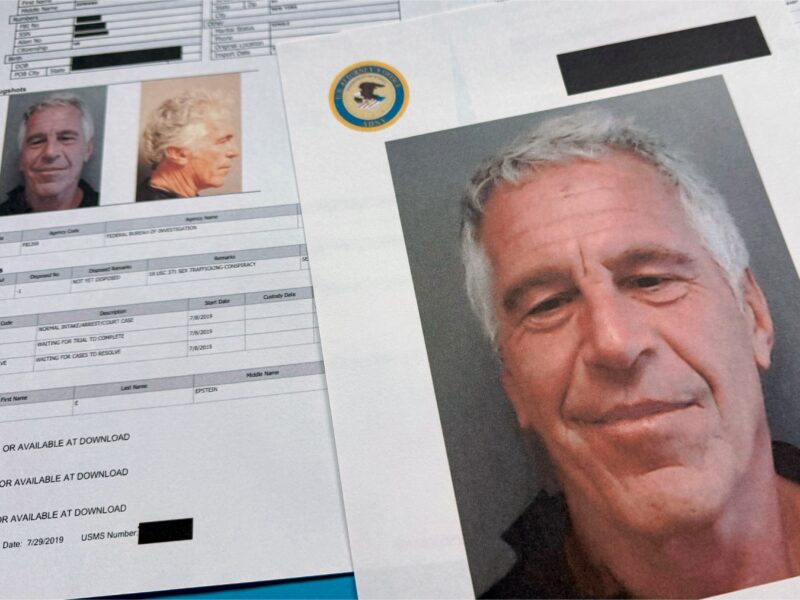
Earlier in the current year, during a closed-door interview with House Republicans, Sarah Kellen, a former aide to Epstein, reportedly accused Fekkai of sexually assaulting her in the early 2000s. Fekkai vehemently denied these allegations at the time, with a media representative informing CNN that he was "astonished" by Kellen's testimony and maintained he "did nothing wrong." Furthermore, Fekkai's Manhattan salon was a specific point of discussion in documents released by the Department of Justice related to Epstein, with photographs of these documents taken on Friday, January 2, 2026. This civil action highlights the expanding reach of the New York Gender-Motivated Violence Act, enabling victims to pursue accountability against alleged enablers of abuse beyond traditional time limits.
Practical Implications
This lawsuit highlights the expanded application of New York's Gender-Motivated Violence Act to hold third-party enablers accountable for facilitating abuse, bypassing standard statutes of limitation. Lawyers should consider this precedent when advising clients on civil actions against individuals or entities who enable gender-based violence, potentially broadening the scope of defendants in such cases.
Source
How does this affect you?
Get an AI analysis of this article grounded in your jurisdictions, practice areas, and any policy documents you've uploaded to Wansom.
Finish Reading the Full Story and the Expert Analysis.
Wansom is AI and can make mistakes.