
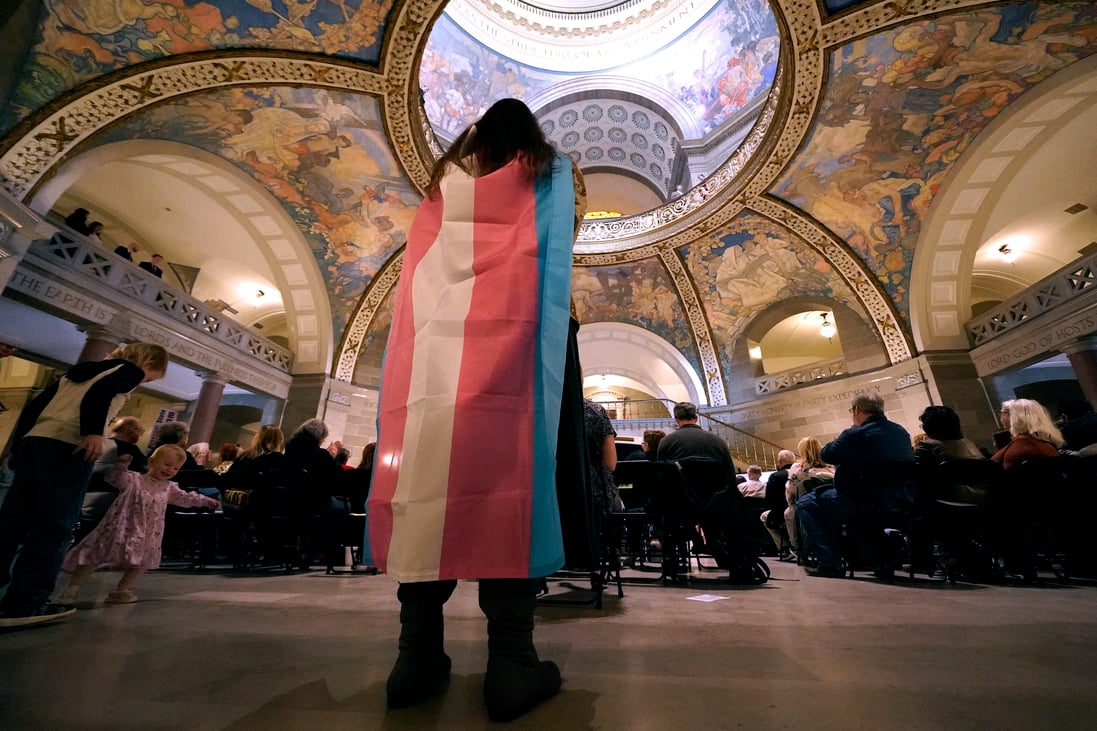
Fourth Circuit: Virginia Schools Challenge Title IX Funding Freeze Reinstated
Summary
- The Fourth Circuit revived a lawsuit by Fairfax and Arlington school districts against the U.S. Department of Education.
- The Department had designated the Virginia schools "high risk" and shifted their federal funding to a reimbursement-only model due to their inclusive transgender bathroom policies.
- The appellate court ruled that the case could proceed in federal district court, rejecting the lower court's assertion of sole jurisdiction for the Court of Federal Claims.
- The majority opinion clarified that the schools primarily seek a declaration of Title IX compliance and to challenge the "high risk" designation, not merely contractual payments.
- This decision allows the substantive debate over Title IX's application to transgender policies to be litigated in a broader federal forum, impacting future federal funding disputes.
Federal Funding Dispute Over Transgender Policies
This jurisdictional clarity means that school districts facing similar federal funding freezes over their transgender-inclusive policies can now pursue substantive Title IX arguments in federal district courts, rather than being confined to contract-specific claims.
The U.S. Court of Appeals for the Fourth Circuit has reinstated a significant legal challenge brought by two Virginia school districts against the U.S. Department of Education. Fairfax County Public School District and Arlington Public School District initiated the lawsuit after the federal agency designated them as "high risk" for potentially violating Title IX. This designation stemmed directly from the schools' policies allowing students to use restrooms and locker rooms that align with their gender identity, a stance that, under the current federal interpretation of Title IX, is explicitly considered non-compliant with federal anti-discrimination laws.
Fourth Circuit Clarifies Jurisdictional Path
A three-judge panel of the Fourth Circuit, however, disagreed with the lower court's jurisdictional assessment, thereby clearing the way for the Fairfax and Arlington schools to continue their legal battle in federal district court. U.S. Circuit Court Judge Allison Rushing, writing for the majority, clarified that the school districts' complaint was not purely contractual. She emphasized that the districts were not primarily asserting a right to advance payments based on specific grant terms. Instead, their core objective was to obtain a judicial declaration that their transgender bathroom policies fully comply with Title IX, to overturn the "high risk" designation, and to prevent future enforcement actions based on the Department's interpretation of Title IX.
Judge Rushing, a Trump appointee, reasoned that the relief sought extended beyond mere contractual claims, making the Tucker Act inapplicable as the sole jurisdictional basis. She highlighted that the essence of the school districts' claim was that the Department of Education lacked the authority to impose reimbursement status as a penalty for alleged Title IX violations when the districts maintained their policies were lawful. Chief U.S. Circuit Judge Albert Diaz, an Obama appointee, who became Chief Judge on July 9, 2023, concurred with this majority view. In contrast, U.S. Circuit Judge Julius Richardson, also a Trump appointee, dissented, arguing that the districts' demand for the restoration of advance payments under their grant contracts constituted the fundamental nature, or "gravamen," of their claims, thus placing it squarely within the Court of Federal Claims' jurisdiction.
Implications for Title IX Challenges
This ruling by the Fourth Circuit is a pivotal development for school districts nationwide grappling with federal funding disputes related to transgender-inclusive policies. By determining that challenges to federal funding freezes based on Title IX interpretations regarding transgender policies can proceed in federal district court, the appellate panel has provided a crucial avenue for substantive legal debate. This jurisdictional clarity means that school districts facing similar federal funding freezes over their transgender-inclusive policies can now pursue substantive Title IX arguments in federal district courts, rather than being confined to contract-specific claims.
The decision effectively allows the core question of whether inclusive transgender bathroom policies violate Title IX to be litigated in a forum capable of issuing broader declaratory relief. This is significant because it moves the "Virginia school transgender policy challenge" beyond a mere contractual dispute over funds and into a direct confrontation over the interpretation and application of Title IX in the context of gender identity. The U.S. Department of Education's funding dispute with these schools will now be addressed in a court that can potentially set precedent for other districts facing similar federal actions, impacting the landscape of "transgender bathroom policy Title IX" compliance.
Broader Impact on Virginia School Districts
The outcome of this jurisdictional battle has been met with approval by the affected parties and their advocates. Christina Arpante, Interim Assistant Superintendent for School and Community Relations at Arlington Public Schools, expressed satisfaction with the court's decision, reiterating the district's commitment to fostering a safe, welcoming, and supportive learning environment for all students. This sentiment underscores the broader goal of many school districts: to implement inclusive policies without the threat of losing vital federal resources.
Narissa Rahaman, executive director of Equality Virginia, an organization that filed an amicus brief supporting the divisions, also emphasized the importance of the ruling. Rahaman stated that school districts should be empowered to focus on providing inclusive educational opportunities without the constant fear of resource deprivation. This Fourth Circuit Virginia schools Title IX funding freeze case highlights the ongoing tension between federal agency interpretations of Title IX and local school district policies, setting the stage for further legal proceedings that will undoubtedly shape the future of transgender student rights and federal educational funding.
Practical Implications
Lawyers advising school districts should note this jurisdictional ruling clarifies that challenges to federal funding freezes based on Title IX interpretations regarding transgender policies can proceed in federal district court, not solely the Court of Federal Claims. This means the substantive debate over Title IX compliance for inclusive bathroom policies remains active and will be litigated in a forum that allows for broader declaratory relief, potentially setting precedent for other districts facing similar federal actions.
Source
Source: Original reporting via CN.
How does this affect you?
Get an AI analysis of this article grounded in your jurisdictions, practice areas, and any policy documents you've uploaded to Wansom.
Finish Reading the Full Story and the Expert Analysis.
Get the latest legal & regulatory intelligence in United States
Wansom is AI and can make mistakes.