
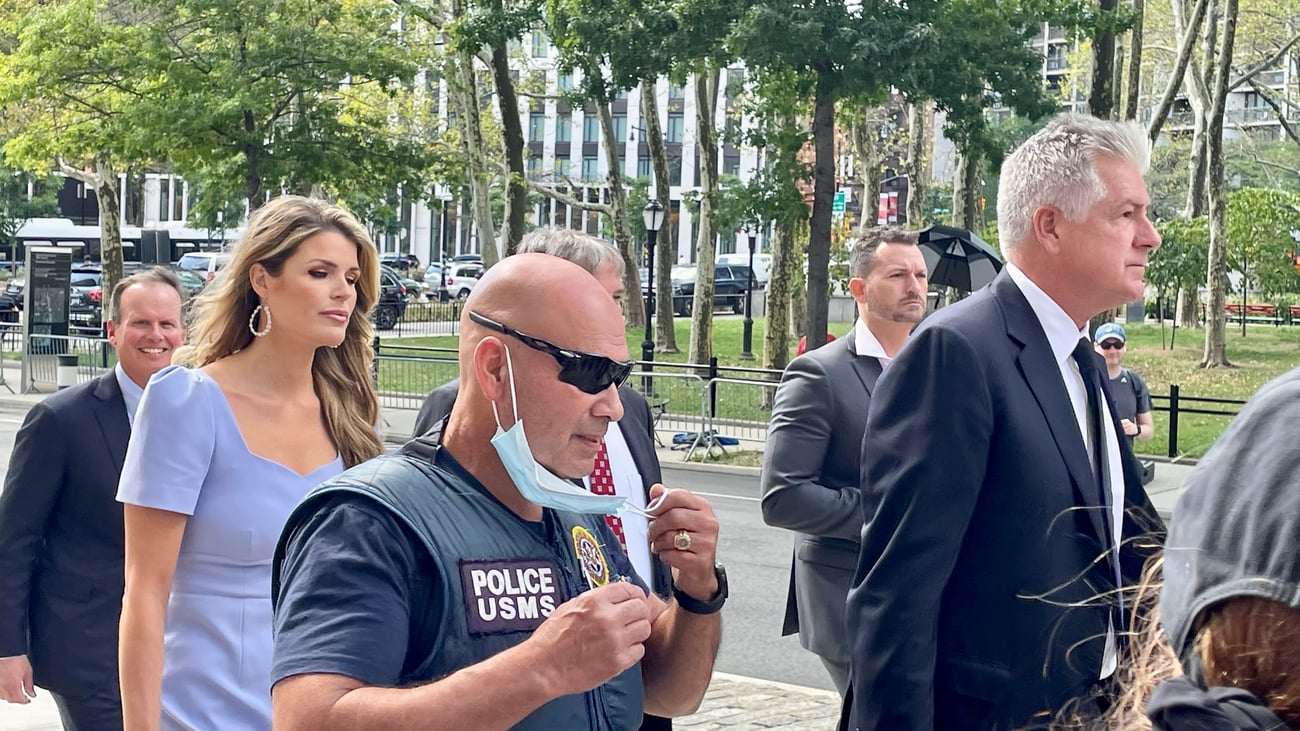
Fourth Circuit: Trump U.S. Attorney Appointment Challenge Examined
Summary
- A Fourth Circuit panel is reviewing the dismissal of federal indictments against James Comey and Letitia James.
- The indictments were dismissed due to the improper appointment of Lindsey Halligan as an interim U.S. attorney without Senate approval.
- The case questions whether the Attorney General can make limitless 120-day interim appointments, bypassing Senate confirmation and court authority.
- A lower court ruled that authority to fill U.S. attorney vacancies shifts to federal district courts after 120 days if no Senate confirmation occurs.
- This marks the fourth time a federal appellate court has considered challenges to former President Trump's method of appointing U.S. attorneys without Senate consent.
The Fourth Circuit Weighs In on Presidential Appointment Powers
The Fourth Circuit's decision in this Trump Fourth Circuit U.S. Attorney appointment challenge will have significant implications for the scope of presidential power in federal prosecutor appointments and the validity of actions taken by such interim officials.
A federal appellate court in the Fourth Circuit recently examined a challenge to former President Donald Trump's method of appointing U.S. attorneys without Senate confirmation. This marks the fourth instance where a federal appeals court has considered the legality of such appointments. The panel reviewed the dismissal of federal indictments that had been brought against two prominent figures critical of the former president: James Comey, the former FBI Director, and Letitia James, the Attorney General for New York. The core of the dispute revolves around the appointment of Lindsey Halligan as an interim federal prosecutor, a position she vacated in January 2026. Her appointment was deemed improper by a lower court, leading to the dismissal of the charges she secured against Comey and James. Halligan, who previously served as a special assistant to Mr. Trump, swiftly obtained these indictments last fall. This case highlights a significant legal question regarding the executive branch's authority to bypass traditional checks and balances in staffing key federal positions.
Unpacking the Interim Appointment Controversy
Typically, the process for appointing a U.S. attorney involves a presidential nomination followed by the Senate's advice and consent. However, federal law provides an alternative for interim appointments when Senate confirmation is not immediately feasible, allowing the Attorney General to install a temporary U.S. attorney for a period of 120 days. The central legal contention in this case, and others like it, is what happens once this 120-day window expires.
Senior U.S. District Judge Cameron McGowan Currie, an appointee of former President Bill Clinton, previously ruled on this matter, dismissing the indictments in November 2025. Judge Currie determined that if a U.S. attorney position remains vacant beyond the 120-day interim period, the authority to fill that vacancy shifts to the relevant federal district court. This authority, according to her ruling, remains with the court "where it remains until the president’s nominee is confirmed by the Senate." In contrast, the government contends that the Attorney General retains the power to make an unlimited number of successive 120-day temporary appointments, thereby circumventing the need for either congressional approval or court intervention. This interpretation, if upheld, would allow for a continuous bypass of the Senate confirmation process.
Lindsey Halligan's appointment as interim U.S. attorney for the Eastern District of Virginia occurred without Senate approval, following the refusal of her predecessor, Erik Siebert, to pursue criminal charges against Letitia James. James had previously successfully sued the president for fraud. The former FBI Director and the New York Attorney General argue that the procedure followed by past presidents, including Mr. Trump during his initial term, is designed to prevent the appointment of political allies over individuals committed to upholding the rule of law.
Judicial Skepticism and the Rule of Law
During the recent appellate hearing, the judges expressed considerable skepticism regarding the government's interpretation of the interim U.S. attorney 120-day limit. Senior U.S. Circuit Judge Henry Floyd, an appointee of former President Barack Obama, questioned the very purpose of the 120-day limit if the Attorney General could theoretically continue to appoint the same individual indefinitely. Government attorney Henry Whitaker attempted to mitigate concerns about potential abuse, asserting that the Trump administration was open to collaboration with district courts and acknowledged the impracticality of perpetually appointing attorneys to temporary terms.
However, this assertion was met with doubt. Carl Tobias, a law professor at the University of Richmond, stated in an interview that Whitaker's depiction of collaboration between the White House, the Department of Justice, and district courts was not an accurate reflection of reality. Chief U.S. Circuit Judge Albert Diaz, also an Obama appointee, further challenged Whitaker's claim that federal authorities were not attempting to circumvent the Senate approval process and were incentivized to adhere to standard procedures. Judge Diaz pointedly remarked that "Having an incentive is different from complying with the statute," suggesting that an executive's good faith in working with a district court might be questionable in practice, regardless of statutory interpretation. Attorney Abbe Lowell, representing Ms. James, echoed this sentiment, disputing the government's argument that it was incentivized against abusing the appointment process. The Fourth Circuit's decision in this Trump Fourth Circuit U.S. Attorney appointment challenge will have significant implications for the scope of presidential power in federal prosecutor appointments and the validity of actions taken by such interim officials.
Practical Implications
This case clarifies the legal boundaries of presidential power to appoint interim U.S. attorneys without Senate confirmation, potentially impacting the validity of actions taken by such appointees and setting precedent for future executive appointments. Lawyers should monitor the Fourth Circuit's decision for implications on challenges to indictments or other legal actions initiated by similarly appointed federal prosecutors.
Source
How does this affect you?
Get an AI analysis of this article grounded in your jurisdictions, practice areas, and any policy documents you've uploaded to Wansom.
Finish Reading the Full Story and the Expert Analysis.
Get the latest legal & regulatory intelligence in United States
Wansom is AI and can make mistakes.