
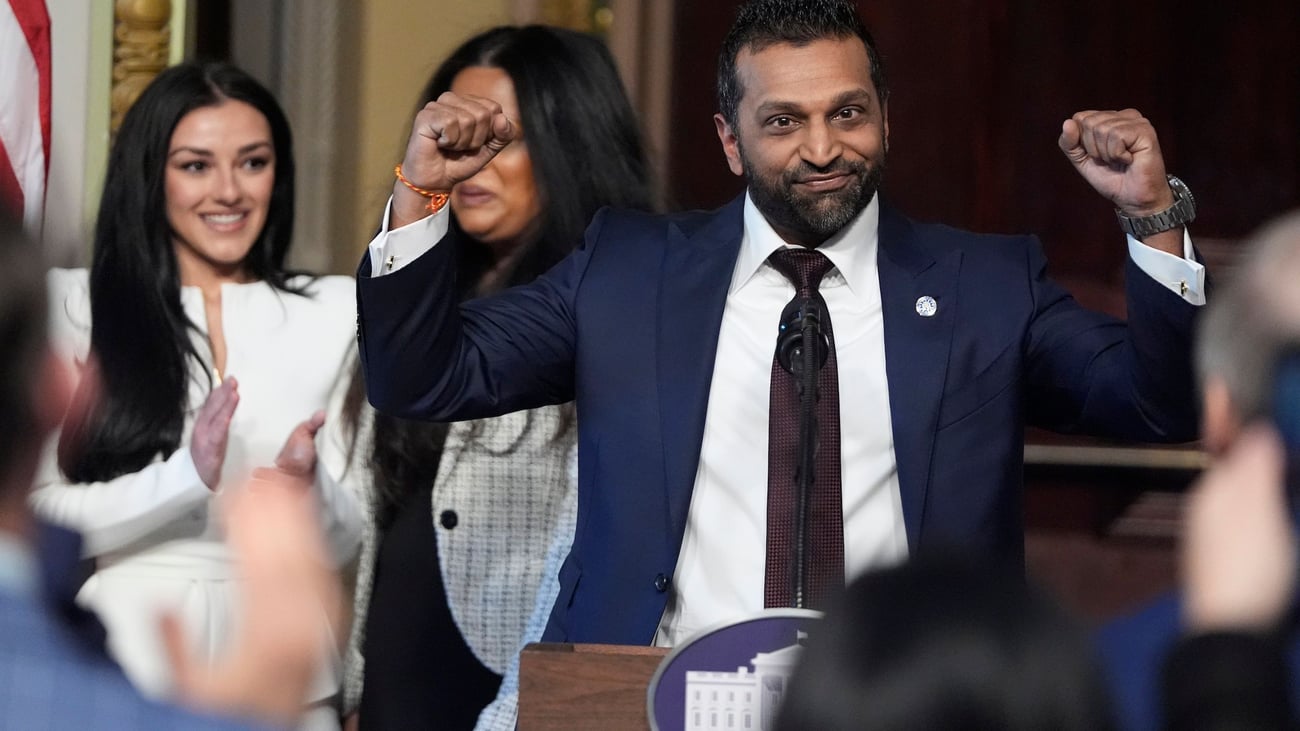
Kash Patel: FBI Bestiality Hiring Policy Defended in Senate
Summary
- FBI Director Kash Patel faced sharp questioning from the Senate Judiciary Committee regarding a new FBI employment policy change that removed bestiality and prostitution as automatic disqualifiers for employment.
- Patel defended the policy shift by arguing it aimed to avoid disqualifying individuals who were victims of human trafficking and forced into such acts, asserting that FBI hiring standards remain rigorous.
- Senators Dick Durbin and John Kennedy challenged Patel's explanation, particularly regarding voluntary engagement in bestiality, with Kennedy questioning how one could involuntarily participate.
- Patel ultimately clarified that voluntary participation in bestiality would disqualify an applicant, but maintained that victims of trafficking should not be barred from serving.
- Patel also faced scrutiny over a series of firings within the FBI, including employees involved in investigations related to former President Trump, which he defended by stating employees would not be allowed to 'participate in the weaponization of law enforcement'.
FBI Hiring Policy Under Intense Scrutiny
Patel reiterated his position, arguing that applicants who engaged in bestiality could have been victims, forced into such acts.
FBI Director Kash Patel faced a contentious Senate hearing on Tuesday, where lawmakers sharply questioned his leadership and a significant shift in the agency's employment guidelines. Appointed by President Donald Trump, Patel, who was ceremonially sworn in on Friday, February 21, 2025, in the Indian Treaty Room at the Eisenhower Executive Office Building, found himself defending a new FBI employment policy change that has removed previous disqualifications for individuals who have engaged in bestiality or prostitution.
The controversy emerged following media reports highlighting the updated FBI hiring standards. Historically, the agency's guidelines explicitly barred applicants found to have participated in these activities. The removal of these prohibitions under Patel's direction has drawn bipartisan concern, adding to existing criticisms of his tenure, which has been marked by scrutiny from both Democratic and Republican lawmakers. Democrats, in particular, have voiced concerns that the federal law enforcement agency has become a political instrument under the Trump administration.
The 'Victim' Defense and Senate Pushback
During the hearing, Illinois Senator Dick Durbin, the leading Democrat on the Senate Judiciary Committee, pressed Director Patel directly on the revised policy. Patel asserted that the FBI's intention was not to exclude potential employees who had been victims of such crimes, emphasizing that rigorous standards and application processes remain in place and that the agency's hiring bar has never been higher. He stated, "We are not going to target victims and prevent them from serving."
However, Senator Durbin challenged this explanation, pointing out that the dropped guidelines specifically referred to individuals who had "engaged" in bestiality. Patel reiterated his position, arguing that applicants who engaged in bestiality could have been victims, forced into such acts. He maintained that the FBI would not "criminalize and prevent victims from serving the United States of America in the premier law enforcement agency in the world," framing the policy adjustment as a move to eliminate "bureaucracy" that had previously excluded otherwise qualified candidates. This explanation, however, failed to satisfy members of the Senate Judiciary Committee, including some Republicans.
Senator Kennedy's Direct Challenge to FBI Bestiality Hiring Policy
Louisiana Senator John Kennedy further intensified the questioning regarding the FBI hiring standards bestiality aspect. Kennedy expressed bewilderment that the agency would invite such a controversial discussion about its employment criteria, particularly when potential recruits might already be wary of the FBI's perceived political leanings. He directly asked Patel why the agency would "even get into bestiality," and whether someone who voluntarily participated in bestiality should be disqualified.
Patel responded that the FBI was not condoning bestiality, stating that voluntary participation would indeed be a disqualifier, but that cases of individuals trafficked into such acts should be considered differently. When Senator Kennedy, unconvinced, questioned how one could involuntarily engage in such an act, Patel doubled down, citing specific instances he had encountered where individuals victimized by human traffickers and organized criminals were coerced into nonconsensual acts, including bestiality, and later sought to join the FBI. Ultimately, when Kennedy asked for a clear answer on whether a human who had sex with an animal could still become an FBI agent, Patel unequivocally replied, "No."
Broader Criticisms and Leadership Accountability
Beyond the contentious debate over the Kash Patel FBI bestiality hiring policy, Director Patel also faced scrutiny regarding a series of firings within the agency. Lawmakers grilled him on the dismissal of long-serving employees, some of whom had been involved in investigations concerning former President Donald Trump. Patel defended these actions, asserting that some departures had occurred during the Biden administration and that, under his leadership, FBI employees would not be permitted to "participate in the weaponization of law enforcement."
When questioned by California Senator Adam Schiff, Patel stated he was unsure of the exact number of FBI agents who had worked on the probe into Trump's handling of classified documents who were subsequently fired. This broader line of questioning underscored the intense political pressure and oversight surrounding Patel's leadership and the operational integrity of the FBI, highlighting how internal employment policies and personnel decisions can become flashpoints in the national political discourse.
Practical Implications
This development primarily concerns internal FBI hiring policy and political oversight, offering limited direct actionable implications for external legal or compliance practices. It serves as an example of the intense scrutiny federal agency employment standards and leadership can face, particularly regarding controversial interpretations of past conduct.
Source
How does this affect you?
Get an AI analysis of this article grounded in your jurisdictions, practice areas, and any policy documents you've uploaded to Wansom.
Finish Reading the Full Story and the Expert Analysis.
Get the latest legal & regulatory intelligence in United States
Wansom is AI and can make mistakes.