
Fourth Circuit: Cell-Site Simulator Search Warrant Required
Summary
- The Fourth Circuit Court of Appeals ruled that using a cell-site simulator for real-time cellphone tracking constitutes a search under the Fourth Amendment.
- Law enforcement agencies in the Fourth Circuit must now obtain a warrant before deploying such devices.
- The court emphasized that individuals have a reasonable expectation of privacy regarding their cellphones not being used as tracking devices.
- The ruling stemmed from the case of Kerron Andrews, whose civil suit against police was dismissed due to qualified immunity, despite the court's finding on the technology's use.
- This decision is the first by a federal court of appeals to squarely address the warrant requirement for cell-site simulator technology.
Fourth Circuit Mandates Warrants for Cell-Site Simulators
The court found that the precision of cell-site simulator technology is inherently invasive, likening its capabilities to advanced sense-enhancing tools that allow government intrusion into private spaces.
In a landmark decision, the Fourth Circuit Court of Appeals has ruled that law enforcement agencies must obtain a warrant before utilizing a cell-site simulator for real-time cellphone tracking. This ruling marks the first time a federal court of appeals has squarely addressed whether the use of this technology, often referred to as a Stingray device, constitutes a search under the Fourth Amendment. The panel's decision establishes a clear precedent within its jurisdiction, significantly impacting how police can gather location data.
The court found that the precision of cell-site simulator technology is inherently invasive, likening its capabilities to advanced sense-enhancing tools that allow government intrusion into private spaces. U.S. Circuit Judge Nicole Berner, writing for the majority, emphasized that individuals possess a reasonable expectation of privacy within their homes, and this extends to their cellphones not being used as constant real-time tracking devices by authorities. The ruling underscores the judiciary's recognition of evolving privacy concerns in the digital age, particularly concerning police cell-site simulator privacy.
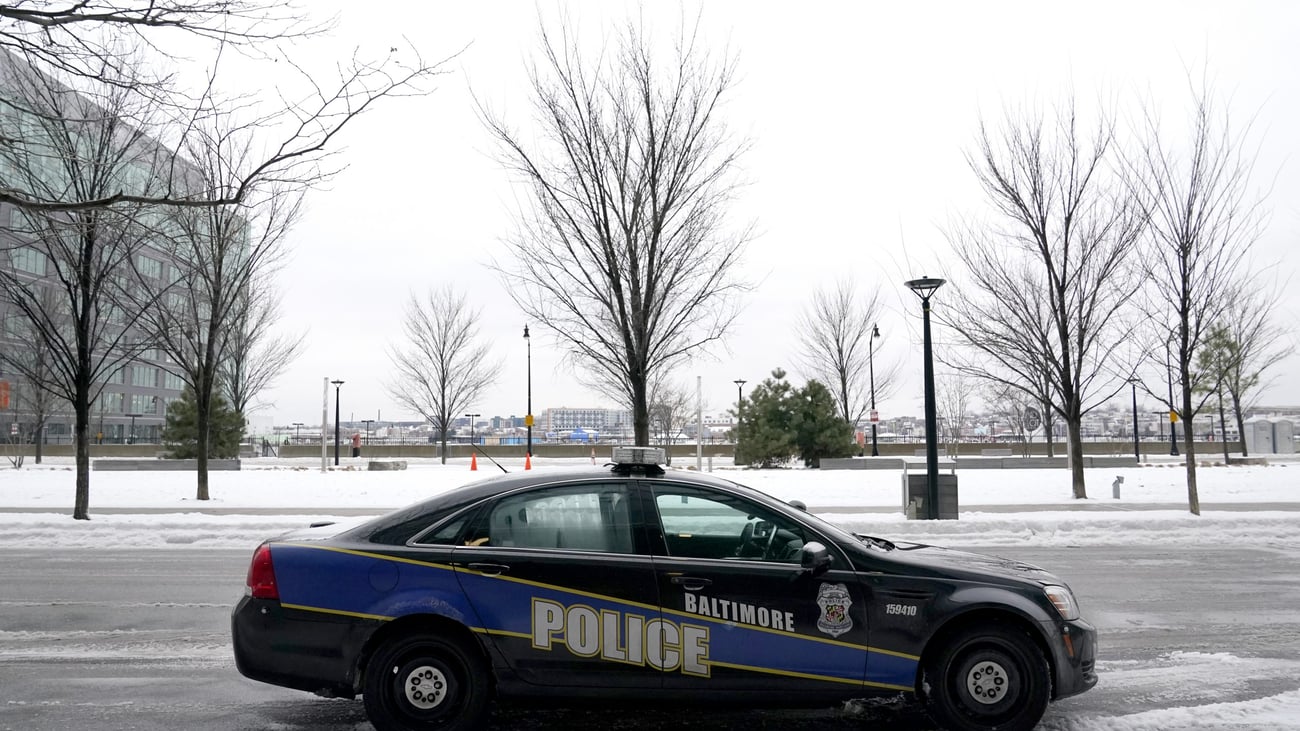
This pivotal judgment arose from the case of Kerron Andrews, who was arrested in May 2014 by the Baltimore Police Department. Authorities had secured a court order to deploy a cell-site simulator to pinpoint Andrews' exact location. After his cellphone provider initially narrowed his whereabouts to a few city blocks, the simulator was used to identify him within a specific townhouse. Andrews subsequently challenged the legality of this method, arguing that the court order did not satisfy the Fourth Amendment’s warrant requirement for such an intrusive search.
Background of the Andrews Case
Kerron Andrews' legal battle began following his arrest on charges of triple attempted murder, stemming from a shooting during a drug deal. Andrews, who had previously served as an informant for the police, spent nearly two years in pretrial detention. The prosecution ultimately dropped the case against him after a Maryland court determined that officers should have first secured a warrant before using the cell-site simulator to track his location.
Following the dismissal of his criminal charges, Andrews initiated a civil suit against the Baltimore Police Department and two detectives. He alleged violations of his Fourth and Fourteenth Amendment rights due to the warrantless use of the tracking device. The police department and the detectives countered that their actions were reasonable, citing an existing warrant for Andrews' arrest and a court order that they contended was functionally equivalent to a warrant for cellular tracking.
Despite the Fourth Circuit's definitive ruling that the use of a cell-site simulator constitutes a search requiring a warrant, Andrews' civil suit against the officers and the department cannot proceed. The panel upheld a lower court's judgment, concluding that the officers were protected by qualified immunity, which shields government officials from liability in civil lawsuits unless their conduct violates clearly established statutory or constitutional rights, and there is no dispute that the right was violated.
Legal Rationale and Fourth Amendment Protections
The Fourth Circuit's majority opinion, penned by Judge Berner and joined by U.S. Circuit Judge Toby Heytens, both appointees of President Joe Biden, firmly established that the use of a cell-site simulator to obtain real-time location data is a search under the Fourth Amendment. The court drew parallels to Supreme Court precedent regarding sense-enhancing technology, noting that such devices, when used to peer into a private home, invariably necessitate a warrant. Judge Berner vividly described the simulator's effect as effectively having "cracked open the front door" of the property to reveal Andrews' presence.
The panel underscored that individuals hold a reasonable expectation of privacy that their personal cellphones will not be transformed into real-time tracking devices by law enforcement without proper legal authorization. While Andrews had argued that the specific court order obtained by police did not meet the Fourth Amendment's warrant requirement, the panel ultimately did not issue a definitive ruling on whether that particular order satisfied the standard. They focused instead on the broader principle that a warrant is indeed required for such technology.
U.S. Circuit Judge A. Marvin Quattlebaum Jr., a Donald Trump appointee, concurred with the judgment but offered a separate opinion. Judge Quattlebaum suggested that the panel should have first determined whether Andrews' constitutional rights had been violated and then evaluated the validity of the specific pen register order used by the police as a warrant. This highlights a nuanced debate within the court regarding the precise scope and application of the Fourth Amendment reasonable expectation of privacy in cases involving advanced surveillance tools.
Implications for Law Enforcement and Privacy
This Fourth Circuit cell-site simulator search warrant ruling sets a significant precedent for law enforcement operations across Maryland, North Carolina, South Carolina, Virginia, and West Virginia. Agencies within these states must now ensure they secure a warrant, based on probable cause, before deploying Stingray devices or similar technology for real-time cellphone tracking. This decision will necessitate updates to evidence collection protocols and training for officers to avoid potential Fourth Amendment violations.
The ruling reinforces the constitutional protections against unreasonable searches and seizures in an era of pervasive digital technology. By classifying the use of cell-site simulators as a search, the court has provided a crucial safeguard for individual privacy, affirming that even in public spaces, the government's ability to precisely track a person's movements via their personal devices is not unfettered. This outcome will undoubtedly influence future criminal defense strategies and further shape the legal landscape surrounding digital surveillance.
Practical Implications
This ruling establishes a clear precedent within the Fourth Circuit that law enforcement must obtain a warrant for real-time cell-site simulator tracking, significantly impacting criminal defense strategies and requiring law enforcement agencies to update their evidence collection protocols to avoid Fourth Amendment violations.
Source
How does this affect you?
Get an AI analysis of this article grounded in your jurisdictions, practice areas, and any policy documents you've uploaded to Wansom.
Finish Reading the Full Story and the Expert Analysis.
Get the latest legal & regulatory intelligence in United States
Wansom is AI and can make mistakes.