
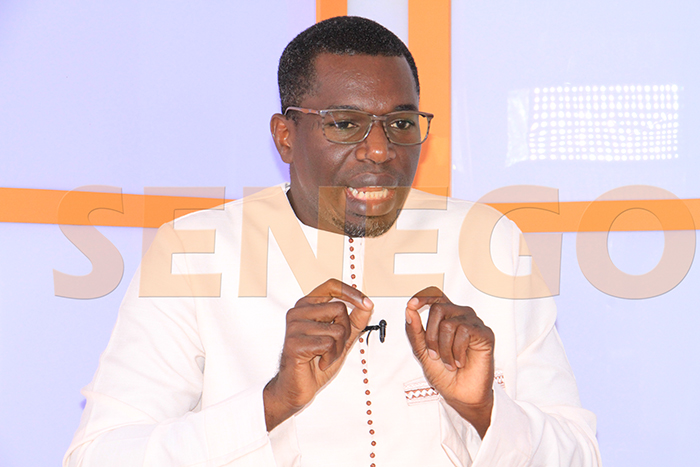
Hamidou Dème: Sénégal's Discours de Haine Faces Double Standards
Summary
- Ibrahima Hamidou Dème, a former magistrate and leader of the ETIC party, has publicly criticized Senegalese authorities.
- He alleges that administrative and judicial bodies exhibit "double standards" in addressing hate speech.
- Dème claims these authorities permit the proliferation of hate speech and xenophobia.
- His statement highlights an inconsistent approach to hate speech and its consequences.
What Happened
His public declaration specifically highlights what he describes as 'double standards' in the way such inflammatory rhetoric is addressed.
Ibrahima Hamidou Dème, a prominent figure in Senegalese politics and a former magistrate, has issued a strong critique regarding the handling of hate speech within the nation. As the leader of the ETIC party, which stands for Ensemble pour le travail, l’intégrité et la citoyenneté, Dème's statement directly challenges the administrative and judicial authorities of Senegal. He asserts that these bodies are allowing expressions of hatred and xenophobia to proliferate unchecked across the country.
His public declaration specifically highlights what he describes as "double standards" in the way such inflammatory rhetoric is addressed. Dème's concern is rooted in the perceived inconsistency of official responses to hate speech, suggesting that not all instances are treated with the same gravity or receive the appropriate legal and administrative action. This accusation points to a selective enforcement mechanism that, in his view, undermines efforts to combat harmful public discourse.
Legal Context and Alleged Inconsistencies
The core of Dème's criticism revolves around the differentiated treatment of hate speech and the subsequent reactions it elicits from authorities. He contends that the administrative and judicial systems in Senegal are not applying existing laws and principles uniformly when confronted with instances of xenophobia and hateful expressions. This alleged inconsistency suggests a significant gap between the legal framework designed to curb such speech and its practical implementation.
According to the former magistrate, this selective approach creates an environment where certain forms of hate speech are permitted to thrive, while others might face stricter scrutiny. Such a scenario raises questions about the impartiality and effectiveness of the legal mechanisms intended to protect public discourse from harmful content. His remarks imply that the current enforcement practices may inadvertently contribute to the problem rather than effectively mitigating it.
Why It Matters
The public denunciation by Ibrahima Hamidou Dème carries considerable weight, given his background as an ancien magistrat and his current leadership role within the parti ETIC. His insights into the workings of the justice system lend credibility to his claims of inconsistent application of hate speech laws in Sénégal. Such accusations from a figure with direct experience in the judiciary can erode public confidence in the fairness and equity of the legal system.
Moreover, the issue of "Sénégal double standards hate speech" has significant implications for the rule of law and social cohesion. If administrative and judicial authorities are indeed perceived to be selectively enforcing regulations against xenophobia and hate speech, it could foster a sense of injustice and impunity for those who engage in such harmful rhetoric. This situation presents a complex challenge for legal professionals and compliance officers, who must navigate an environment where the actual enforcement of laws may deviate from their stated intent, making it difficult to advise clients accurately on legal risks associated with public statements.
Practical Implications
Lawyers and compliance officers in Senegal should be aware of the public criticism by a former magistrate regarding the inconsistent application of hate speech laws by administrative and judicial authorities. This highlights a potential for selective enforcement and challenges in advising clients on the legal risks associated with public statements, requiring careful monitoring of actual enforcement practices.
Source
How does this affect you?
Get an AI analysis of this article grounded in your jurisdictions, practice areas, and any policy documents you've uploaded to Wansom.
Finish Reading the Full Story and the Expert Analysis.
Get the latest legal & regulatory intelligence in Senegal
Wansom is AI and can make mistakes.