
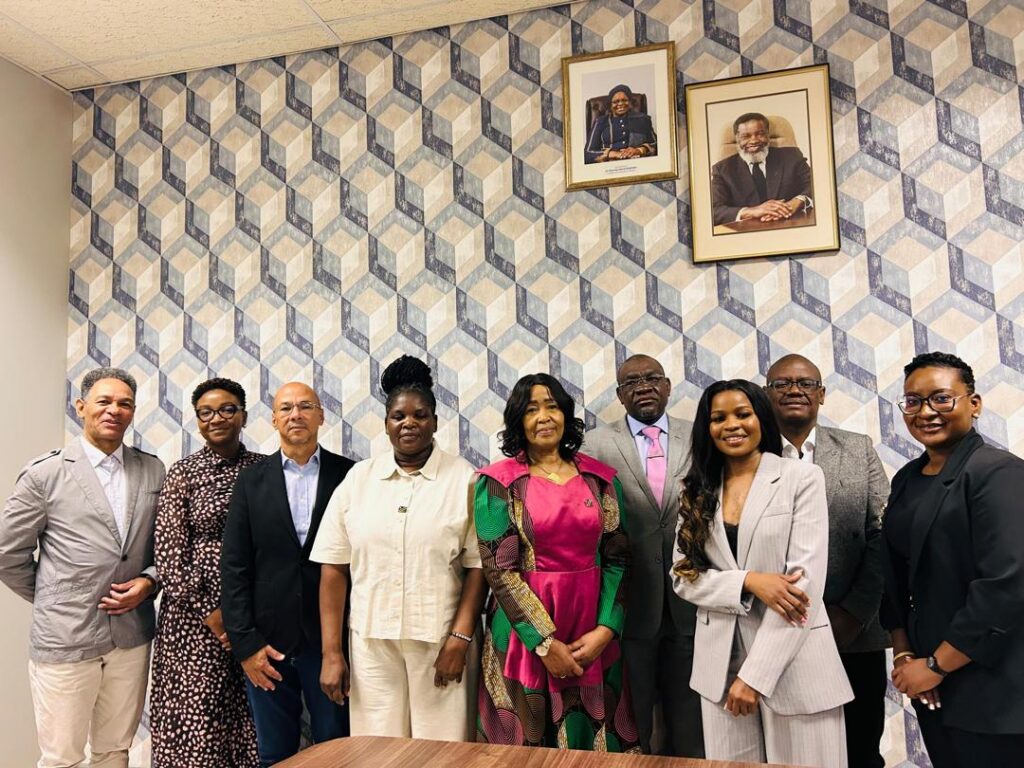
Minister Zaamwani: Fishcor Board Public Confidence Namibia, Financial Controls Mandate
Summary
- A new board has been appointed for the National Fishing Corporation of Namibia (Fishcor).
- Minister Inge Zaamwani tasked the new Fishcor board with strengthening financial controls and restoring public confidence.
- The appointment letters were handed over on Thursday by the Minister for Agriculture, Fisheries, Water, and Land Reform.
- This initiative highlights a governmental focus on corporate governance and compliance within Namibia's state-owned enterprises.
New Leadership for Fishcor
Minister Zaamwani explicitly tasked the newly constituted Fishcor board with two critical objectives: to significantly strengthen the company's financial controls and to actively work towards restoring public confidence in the state-owned entity.
The National Fishing Corporation of Namibia (Fishcor), a prominent state-owned enterprise within the country's fishing sector, recently saw the appointment of a new board of directors. The letters of appointment were formally handed over to the incoming members on Thursday by Inge Zaamwani, who serves as the Minister for Agriculture, Fisheries, Water, and Land Reform. This leadership transition marks a pivotal moment for the corporation, signaling an immediate focus on internal reforms and public perception.
Minister Zaamwani explicitly tasked the newly constituted Fishcor board with two critical objectives: to significantly strengthen the company's financial controls and to actively work towards restoring public confidence in the state-owned entity. This directive underscores a clear mandate for the new board to address both operational integrity and the broader perception of the Fishcor board in Namibia, particularly concerning its governance and accountability.
Mandate for Enhanced Governance
The directive from Minister Zaamwani places a strong emphasis on Fishcor corporate governance in Namibia. The instruction to reinforce financial controls indicates a proactive approach to ensuring fiscal responsibility and transparency within the state-owned fishing company. This focus is crucial for any state-owned enterprise (SOE), where robust financial oversight is paramount for sustainable operations and preventing mismanagement.
The call to restore public confidence directly addresses the need for greater trust and transparency from the Namibian populace regarding Fishcor's operations. This objective is intertwined with the strengthening of financial controls, as sound financial practices are often a cornerstone of public trust. The new National Fishing Corporation of Namibia board is therefore expected to implement measures that not only improve internal financial mechanisms but also communicate these improvements effectively to the public.
Implications for State-Owned Enterprises
This development at Fishcor carries broader implications for Namibia state-owned enterprise compliance across the board. The explicit mandate given to the new Fishcor board to enhance financial controls and rebuild public trust sets a precedent for heightened scrutiny on corporate governance within other SOEs. It suggests a governmental push for greater accountability and transparency in entities that manage public resources.
Legal and compliance professionals advising state-owned enterprises or entities engaging with Fishcor in Namibia should anticipate a period of increased oversight. The emphasis on a Fishcor financial controls review and the restoration of public confidence could lead to new compliance requirements, more rigorous internal audits, or even investigations into past practices. This environment necessitates a thorough review of existing policies and procedures to ensure alignment with evolving expectations for corporate governance and to mitigate potential exposure.
Practical Implications
Lawyers advising state-owned enterprises or entities dealing with Fishcor in Namibia should anticipate heightened scrutiny on corporate governance and financial controls. This development signals a potential for new compliance requirements, internal audits, or investigations, necessitating a review of existing policies and procedures to mitigate exposure.
Source
How does this affect you?
Get an AI analysis of this article grounded in your jurisdictions, practice areas, and any policy documents you've uploaded to Wansom.
Finish Reading the Full Story and the Expert Analysis.
Get the latest legal & regulatory intelligence in Namibia
Wansom is AI and can make mistakes.